Interest in drug repurposing for cancer research continues to grow, and few candidates have generated as much online discussion as fenbendazole (FBZ) — a benzimidazole compound used for decades in veterinary medicine. Yet a problem sits at the center of every serious fenbendazole study, and it has nothing to do with whether the molecule can kill cancer cells in a dish. The problem is delivery: getting enough of a stubbornly insoluble compound into the bloodstream, and then into a tumor, to matter.
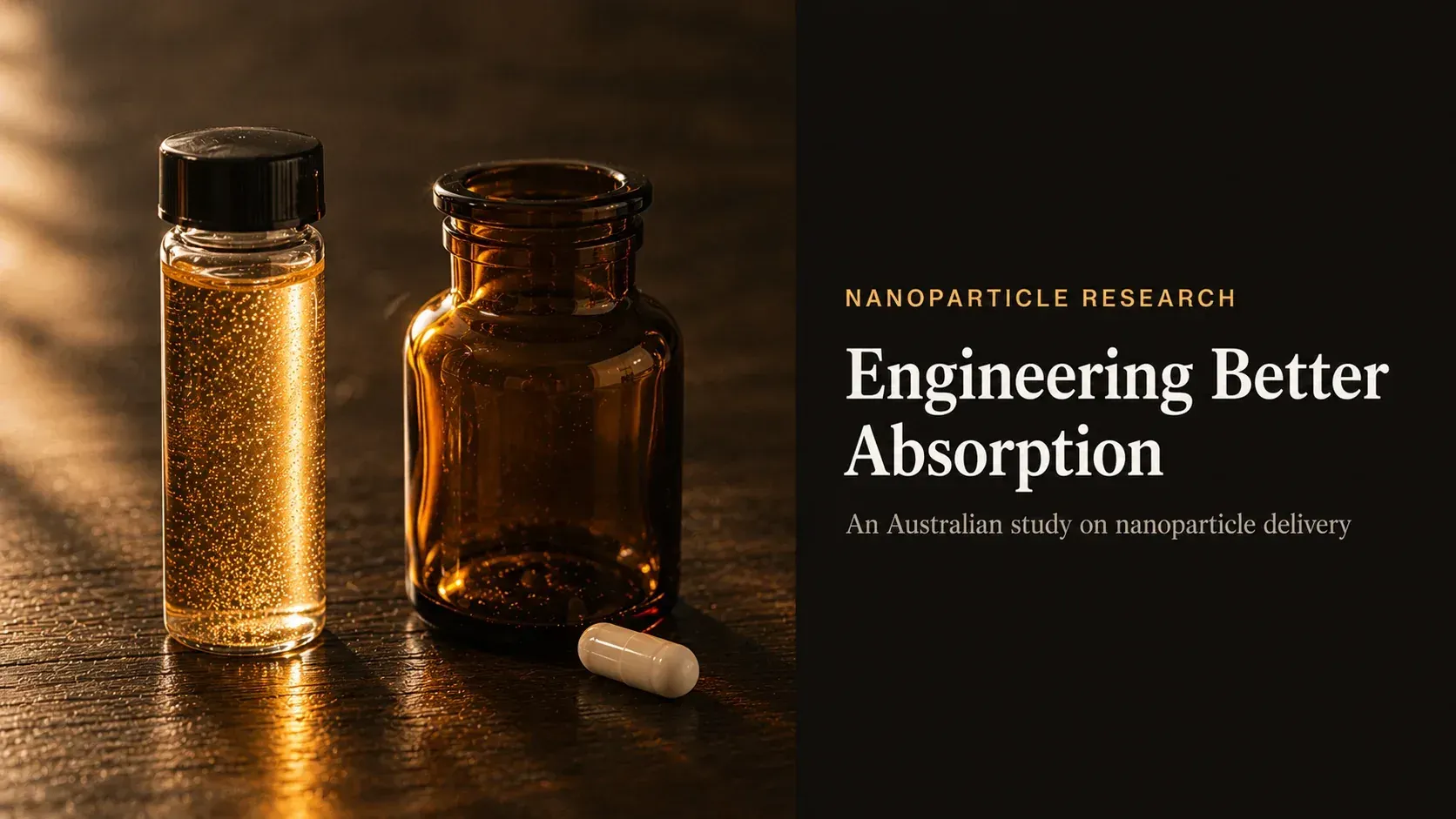
This is where nanotechnology enters the story. A peer-reviewed study by Australian researchers — Esfahani, Alavi, Cabot, Islam and Izake, published in Pharmaceutics in 2022 — showed that packaging fenbendazole inside engineered nanoparticles dramatically changed how the compound behaved against prostate cancer cells. This article takes that study as a starting point and then looks at the wider field of nanoparticle drug delivery: what nanocarriers actually are, how they find tumors, what has been learned from fenbendazole's chemical cousins, and why — despite the excitement — you cannot buy a nano-fenbendazole product today.
Why Delivery — Not Just the Drug — Decides the Result
In pharmacology, a molecule that works beautifully in a test tube is useless if the body cannot absorb it. Fenbendazole belongs to a group of drugs classified under the Biopharmaceutics Classification System (BCS) as Class II: high permeability, but low aqueous solubility. In plain terms, once fenbendazole crosses a membrane it moves well — but it barely dissolves in water in the first place, so very little of an oral dose ever reaches the point of absorption.
This single property, low solubility, cascades into every limitation researchers describe:
- Low and erratic bioavailability — the fraction of a dose that reaches circulation is small and varies between individuals.
- High doses required — to compensate for poor absorption, larger amounts must be taken, raising cost and the risk of side effects.
- Unpredictable tumor exposure — even when some drug is absorbed, little of it may reach a tumor at a meaningful concentration.
💡 Why this matters: A compound's intrinsic potency and its deliverability are two separate problems. Fenbendazole appears to have the first without the second. Nanotechnology is one of the most actively researched ways to fix the second without changing the molecule itself.
It is worth being precise about scope here. Improving oral absorption with fats and dissolution aids is a distinct strategy covered elsewhere on this site; this article is specifically about nanoparticle carriers — engineered particles that encapsulate the drug and change how it travels through the body.
Nanoparticles 101: What “Nano-Delivery” Actually Means
A nanoparticle is simply a particle measured in nanometers — billionths of a meter. For drug delivery, the useful range is roughly 10 to 200 nanometers, hundreds of times smaller than a human cell. At that scale, materials behave differently: surface area per unit mass becomes enormous, and particles can slip through biological barriers that block larger objects.
A drug-delivery nanoparticle typically has three functional parts:
- A core or carrier that holds the drug — this can be porous silica, a lipid droplet, a polymer sphere or a protein cage.
- The payload — the drug itself, either trapped inside pores, dissolved in a lipid matrix, or bound to the carrier.
- A surface coating that controls how the particle behaves: how fast it releases its payload, how long it survives in the bloodstream, and whether it sticks to specific tissues.
The reason this architecture matters for a compound like fenbendazole is that it decouples the drug's behavior from its own poor chemistry. A molecule that will not dissolve on its own can be dispersed across the vast surface of a nanoparticle, effectively presenting it to the body in a far more soluble form. This is why the same molecule can look inert as a raw powder and active once nano-formulated.
Why size is the master variable
Particle size governs almost everything downstream. Too large, and the particle is filtered out by the liver and spleen or cannot leave the bloodstream. Too small, and it is cleared by the kidneys before reaching a target. The sweet spot — commonly cited as 50 to 200 nm — is large enough to circulate yet small enough to exploit a quirk of tumor biology described in the next section.
The EPR Effect: How Nanoparticles Find Tumors
The single most important concept in nanoparticle oncology is the Enhanced Permeability and Retention (EPR) effect. It explains why particles of a certain size drift preferentially into tumors rather than healthy tissue — a phenomenon called passive targeting.
Tumors grow faster than orderly blood-vessel construction can keep up with. To feed themselves they trigger rapid, chaotic angiogenesis, producing vessels that are structurally defective and “leaky,” with gaps between the cells lining them. Two consequences follow:
- Enhanced permeability — nanoparticles in the 50–200 nm range can escape the bloodstream through these gaps and enter the tumor tissue, something they cannot easily do in normal, tightly sealed vasculature.
- Retention — tumors also have poor lymphatic drainage, so once particles accumulate they are not efficiently flushed away. They stay and release their payload locally.
🔬 Broader context: The EPR effect is the reason a nano-formulated fenbendazole could, in principle, deliver more drug to a tumor and less to healthy organs than the free compound — improving both efficacy and safety at once. It is also, honestly, one of the field's contested ideas: the strength of the EPR effect varies widely between tumor types and between patients, which is a major reason lab success does not automatically translate to the clinic.
Inside the Australian Study: MCM-48 Silica + β-Lactoglobulin
The 2022 study by Esfahani and colleagues is the most direct piece of nanoparticle research on fenbendazole itself. Rather than testing the raw drug, the team engineered a purpose-built carrier and measured what encapsulation did to fenbendazole's activity against PC-3 human prostate cancer cells.
The carrier design
The researchers used MCM-48 mesoporous silica nanoparticles — a form of silica riddled with an interconnected, three-dimensional network of nanoscale pores. That pore structure gives an exceptionally high surface area and pore volume, which is exactly what a poorly soluble drug needs: enormous internal “shelf space” onto which fenbendazole molecules can be loaded in a dispersed, more soluble state.
The particles were then amine-functionalized and coated with succinylated β-lactoglobulin (BLG), a milk-derived protein. This coating was not decorative. Its job was to control release kinetics — specifically, to prevent an early “burst release,” where a drug dumps out all at once instead of releasing steadily. The protein layer also helped protect the payload during transit through the harsh, acidic environment of the gastrointestinal tract.
| Component | Role | Benefit |
|---|---|---|
| MCM-48 silica nanoparticles | Mesoporous carrier structure | High surface area for drug loading |
| β-lactoglobulin (BLG) coating | Protein-based surface functionalization | Controlled release + improved stability |
| FBZ-MCM-BLG (final formulation) | Combined nano-delivery system | Significantly increased water solubility |
Release behavior: the Higuchi model
When the team measured how the drug came off the carrier over time, the release profile fit the Higuchi kinetic model — a mathematical description of drug diffusing steadily out of a porous matrix, proportional to the square root of time. In practical terms, that is the signature of a sustained, controlled release rather than an all-at-once dump. For a drug you want to keep circulating at a useful level, slow and steady is the desirable pattern.
What happened to the cancer cells
Against PC-3 prostate cancer cells, the encapsulated formulation (FBZ-MCM-BLG) substantially outperformed free fenbendazole across several measures reported by the authors:
📊 Key results — FBZ-MCM-BLG vs free fenbendazole:
- 5.6× higher cytotoxicity than free fenbendazole
- 1.8× higher activity than an earlier nanoparticle formulation without the BLG refinement
- 1.6× increase in reactive oxygen species (ROS) — a driver of cancer-cell death
- Reduced cancer-cell migration — relevant to how tumors spread
The migration finding deserves emphasis. Because metastasis — the spread of cancer to distant sites — is responsible for the majority of cancer deaths, any intervention that slows cell movement at the laboratory level is of particular interest, even at this early stage.
The safety control
Crucially, the study did not only measure cancer-cell killing. It also tested the formulation against HEK-293 cells, a non-cancerous human cell line used as a biocompatibility check. Comparing activity against tumor cells versus normal cells is how researchers gauge selectivity — whether a treatment preferentially harms cancer while sparing healthy tissue. This kind of paired testing is what separates a serious formulation study from a simple “it killed cells” claim.
Performance Comparison
| Metric | Free FBZ | FBZ-MCM-BLG (nano) | Improvement |
|---|---|---|---|
| Cytotoxicity | Baseline | Significantly higher | Up to 5.6× |
| ROS generation | Baseline | Elevated | 1.6× |
| Cell migration | Not inhibited | Reduced | Significant reduction |
| Water solubility | Very low | Significantly increased | Major improvement |
One caveat frames all of these numbers: this was an in vitro study, performed on cells in culture. Impressive fold-changes in a dish are a necessary first step, not proof of benefit in a living body. The authors themselves called for comprehensive in vivo (animal) studies as the next stage.
Why MCM-48 Silica in Particular
The choice of MCM-48 was not arbitrary, and understanding it explains a lot about why mesoporous silica keeps appearing in drug-delivery research. Mesoporous silica materials come in several architectures, distinguished by how their pores are arranged:
- MCM-41 has a honeycomb of straight, parallel, one-dimensional channels — simple, but a blockage anywhere along a channel can trap the drug behind it.
- MCM-48 has a three-dimensional, interconnected, cubic pore network. Because the channels cross and reconnect, molecules have multiple paths in and out, which supports more reliable loading and more even, sustained release.
- SBA-15 offers larger pores and thicker walls for greater stability, used when bigger payloads are needed.
For a poorly soluble drug like fenbendazole, MCM-48's interwoven geometry is a meaningful advantage: it maximizes the internal surface where drug molecules sit in a dispersed, more soluble state, and its multiple diffusion routes reduce the risk of the erratic release that plagues simpler carriers. Silica also has a well-studied surface chemistry — the silanol (Si–OH) groups on its surface are easy to modify, which is exactly what allowed the researchers to graft on the amine groups and β-lactoglobulin coating that fine-tuned the release. In short, MCM-48 was chosen because it is both a superb sponge and an easy canvas for surface engineering.
How Scientists Measure Whether a Nanoparticle Works
When a paper reports that a formulation is “5.6× more cytotoxic,” that number rests on a battery of standardized measurements. Knowing what they are makes it far easier to judge whether a nanoparticle claim is serious or superficial. A credible nanoparticle study characterizes its carrier along several axes:
- Particle size and distribution — usually measured by dynamic light scattering (DLS). Size determines circulation time and whether the EPR effect applies, so it is the first thing reported.
- Zeta potential — the particle's surface charge, which predicts colloidal stability (whether particles repel each other and stay dispersed) and influences interaction with cell membranes.
- Morphology — shape and structure, imaged by electron microscopy (TEM or SEM), confirming the particles are what the design intended.
- Entrapment efficiency & drug loading — what percentage of the drug actually made it into the carrier, and how much drug each unit of carrier holds. High entrapment (the ~94% seen in some albendazole carriers) means little drug is wasted.
- Release kinetics — how the drug comes off the carrier over time, fitted to models such as the Higuchi equation to distinguish steady diffusion from an undesirable burst.
- Cytotoxicity assays — typically MTT or similar tests that quantify how many cancer cells survive exposure, yielding the IC50 (the concentration that kills half the cells).
📐 How to read a nano claim: A trustworthy study reports size, charge, loading and release and tests against a normal cell line for selectivity. A marketing page that borrows the word “nano” without any of these numbers is not describing the same thing at all.
The Nanocarrier Toolbox: Formats Under Investigation
Mesoporous silica is only one of several nanocarrier families being explored for benzimidazole drugs. Each has a different way of solving the same solubility problem, with its own trade-offs. Understanding the menu makes it clear that “nano-fenbendazole” is not one thing but a whole design space.
| Nanocarrier type | How it works | Key advantage |
|---|---|---|
| Mesoporous silica (e.g. MCM-48) | Drug loaded into a porous silica scaffold | Very high loading capacity; tunable release |
| Solid lipid nanoparticles (SLNs) | Drug dissolved in a solid fat matrix | Biocompatible; good for lipophilic drugs |
| Nanostructured lipid carriers (NLCs) | Blend of solid and liquid lipids | Higher loading, less drug expulsion than SLNs |
| Polymeric nanoparticles (PLGA, PEG, chitosan) | Drug encased in a degradable polymer | Precise, sustained release; surface tunable |
| Protein-based carriers (e.g. albumin) | Drug bound to a natural protein | Biodegradable; can aid tumor uptake |
| Nanocrystals / nanosuspensions | Pure drug milled to nanometer size | No carrier needed; huge dissolution boost |
The nanocrystal approach is worth a special note because it is the most literal solution to the solubility problem. By milling a drug down to nanometer-sized crystals, the surface area explodes, and according to the Noyes–Whitney relationship, dissolution rate rises with surface area. No foreign carrier is required — the “nano” is the drug itself.
Lessons From Albendazole: The Lipid-Carrier Playbook
Because dedicated fenbendazole nanoparticle studies are still scarce, the most informative evidence often comes from its closest chemical relatives. Albendazole (ABZ), another benzimidazole with the same low-solubility handicap, has a much deeper nanoformulation literature — and it reads like a preview of what fenbendazole research may follow.
Investigators have wrapped albendazole in solid lipid nanoparticles and nanostructured lipid carriers with striking results. In one representative line of work on chitosan-coated NLCs tested against HepG2 liver cancer cells, optimization via a Box–Behnken statistical design achieved an entrapment efficiency around 94% — meaning almost all of the drug was successfully captured in the carrier. The chitosan coating shifted the particles' surface charge (zeta potential) to positive, which improved their interaction with negatively charged cancer-cell membranes. The coated carriers were markedly more potent than either uncoated carriers or free albendazole, reaching a lower IC50 of roughly 8.9 µM in those cells.
The albendazole work also demonstrated flexibility of route: beyond systemic delivery, researchers built lipid-carrier gels for localized skin-cancer treatment and even used beeswax-derived lipid nanoparticles to overcome drug tolerance in resistant parasites. The transferable lesson for fenbendazole is that the same molecule can be engineered for very different clinical scenarios by changing the carrier and the route.
Lessons From Mebendazole: Crossing the Blood-Brain Barrier
Mebendazole (MBZ) is the benzimidazole with the most advanced anticancer reputation, especially in brain tumors, and its nanoformulation story adds a dimension the others do not: the blood-brain barrier (BBB).
Mebendazole shares the family flaw — poor water solubility and high first-pass metabolism — so researchers turned to nanocrystals and nanosuspensions made by wet media milling. Reducing the drug to nanoscale crystals sharply increased its saturation solubility and dissolution rate. To keep the tiny crystals from clumping or growing (a process called Ostwald ripening), stabilizers such as albumin and polysorbate-80 were added — and these same surface agents did something clever: they helped the particles slip across the blood-brain barrier, which normally blocks most drugs from reaching the brain.
In glioblastoma models, albumin/polysorbate-coated mebendazole nanosuspensions lowered the IC50 in U-87 MG and LN-229 tumor cell lines and cut tumor growth by around half in 3D spheroid models. The formulations could even be sterilized by gamma irradiation without falling apart — a mundane but essential detail for anything meant to become a real medicine.
⚗️ Why the cousins matter: Albendazole and mebendazole show that benzimidazole nanoformulation is not theoretical — it has repeatedly turned poorly absorbed powders into high-performing experimental therapeutics. Fenbendazole sits in the same chemical family, which is precisely why the Australian silica study drew attention as an early proof of concept for this member of the group.
Active Targeting: Giving a Nanoparticle an Address
The EPR effect delivers particles to tumors passively, by size alone. The next level of sophistication is active targeting — decorating the nanoparticle surface with molecules that recognize and bind to cancer cells specifically.
Cancer cells often over-express certain surface receptors. By attaching matching “homing” ligands to a nanoparticle, researchers can encourage receptor-mediated endocytosis — the cell actively pulling the particle inside. Commonly studied ligands include:
- Folic acid, which binds folate receptors that many tumor types display in abundance.
- Transferrin, which targets transferrin receptors linked to the high iron demand of dividing cells.
- RGD peptides, which recognize integrins involved in tumor blood-vessel growth.
Layering active targeting on top of a fenbendazole nanocarrier could, in theory, push even more drug into cancer cells while sparing healthy ones. It also adds manufacturing complexity and new safety questions — a recurring theme in this field, where every gain in precision costs something in simplicity.
Smart Release: Nanoparticles That Respond to the Tumor
A further refinement is the stimuli-responsive carrier — engineered to hold its payload tight in the bloodstream and let go only when it senses the tumor microenvironment. The triggers researchers exploit are the very features that make tumors abnormal:
- Low pH — tumor tissue tends to be more acidic than healthy tissue. pH-sensitive carriers such as lipid-coated calcium phosphate nanoparticles are built to release their cargo in that acidity.
- High glutathione (GSH) — the interior of cancer cells is chemically reducing; carriers with cleavable bonds can be designed to break apart there.
- Tumor enzymes — molecules like matrix metalloproteinases (MMPs), abundant around tumors, can act as the “key” that unlocks release.
The goal of all three is the same: maximize drug concentration inside the tumor while minimizing exposure everywhere else. None of this has been demonstrated for fenbendazole specifically — but it maps the direction the field is heading, and explains why nanoparticle delivery is treated as a platform rather than a single trick.
The Safety Questions Nanoparticles Raise
It would be a mistake to present nanotechnology as risk-free. Wrapping a drug in an engineered particle introduces a second thing the body must deal with — the carrier — and that carrier has its own safety profile.
- Clearance and accumulation: Where do the particles go after they release the drug? Inorganic carriers like silica must ultimately be broken down or excreted; questions about long-term accumulation in the liver, spleen and kidneys are central to nanotoxicology.
- Immune response: The immune system may recognize nanoparticles as foreign, potentially causing inflammation or rapid removal from circulation before they reach a tumor.
- Consistency and scale-up: Nanoparticles must be manufactured with tightly controlled size and surface properties, batch after batch. Small variations can change behavior significantly — a serious hurdle for turning a lab formulation into an approved product.
- Variable EPR effect: As noted earlier, the passive-targeting effect that the whole approach relies on is inconsistent across tumor types and patients, complicating any prediction of real-world benefit.
This is why studies like the Australian one deliberately include non-cancerous cell lines: demonstrating that a formulation is selective and reasonably biocompatible is as important as showing it kills cancer cells.
Why There Is No Nano-Fenbendazole on the Market
Given the promising laboratory data, a fair question is why you cannot simply buy a nano-fenbendazole product. The answer lies in the enormous distance between a cell-culture result and an approved medicine.
The Australian study, like almost all fenbendazole nanoparticle research, was in vitro. The standard translational path from there runs through:
- In vivo animal studies — to confirm the formulation is safe, reaches tumors, and works in a living system.
- Formal toxicology — characterizing the carrier's own risks over time.
- Manufacturing validation — proving the nanoparticles can be made reproducibly at scale under regulated conditions.
- Human clinical trials — the multi-phase process that actually establishes safety and efficacy in people.
Each step takes years and substantial funding, and most candidates fail somewhere along the way. Because fenbendazole is an inexpensive, off-patent veterinary compound, there is also limited commercial incentive for any company to underwrite that expensive journey. The result is a genuine scientific signal stuck at an early stage — interesting, unproven, and not available as a finished product.
💊 The honest status: As of 2026, no nanoparticle fenbendazole formulation is approved or sold for human use. Any product marketed as “enhanced,” “nano” or “high-bioavailability” fenbendazole should be scrutinized carefully; the peer-reviewed nano-delivery systems described here exist in research laboratories, not on retail shelves.
What This Means If You Are Researching Fenbendazole Today
For readers following fenbendazole out of personal or scientific interest, the nanoparticle story carries a few grounded takeaways:
- The solubility problem is real and central. It is the single biggest reason enthusiasm around fenbendazole outpaces the evidence, and the main thing every delivery strategy is trying to solve.
- Nano-delivery is a legitimate research direction, not a product category. The science is real; the shelf products are not equivalent to it.
- Fold-change headlines describe cells in dishes. A “5.6× more effective” result is a laboratory measurement against cultured prostate-cancer cells, not a clinical outcome.
- Marketing claims deserve skepticism. Terms borrowed from nanotechnology research are sometimes attached to ordinary supplements. The genuine formulations discussed here are experimental.
The most defensible position is also the simplest: nanoparticle delivery is one of the most scientifically credible ways fenbendazole's real limitation might one day be overcome — and it is exactly because that day has not arrived that careful, sourced information matters more than hype.
Key Takeaways
📌 Summary — what the nanoparticle research shows:
- Fenbendazole is a BCS Class II compound: potent in principle, but crippled by poor water solubility.
- Nanoparticle carriers — silica, lipids, polymers, proteins and nanocrystals — raise solubility and can exploit the tumor EPR effect for passive targeting.
- The Australian FBZ-MCM-BLG study reported up to 5.6× higher cytotoxicity, elevated ROS, and reduced cell migration against prostate cancer cells in vitro.
- Albendazole and mebendazole nanoformulations provide a deeper evidence base for what benzimidazole nano-delivery can achieve, including blood-brain-barrier crossing.
- Active targeting and stimuli-responsive release point to where the field is heading.
- Real safety and manufacturing hurdles remain, and no nanoparticle fenbendazole product exists for human use.
For full experimental details, refer to the original publication by Esfahani et al. (2022) in Pharmaceutics. Ongoing research in animal models will determine whether these laboratory advantages hold up in living systems.
Sources & Further Reading
Free · No spam · Unsubscribe anytime
Get the research before the sellers spin it
Join readers getting evidence-based fenbendazole protocols, dosing guides, and honest product investigations — straight to your inbox. We read the studies so you don’t get sold a story.
Subscribe free →📚 References & Sources
References to be added.
Frequently Asked Questions
What is nanoparticle fenbendazole?
It is fenbendazole encapsulated in an engineered carrier — typically 10–200 nm — such as mesoporous silica, a lipid particle or a polymer sphere. The goal is to overcome the drug's poor water solubility and improve how much reaches a tumor. All such formulations are experimental.
How do nanoparticles reach tumors?
Mainly through the Enhanced Permeability and Retention (EPR) effect: tumors have leaky blood vessels and poor lymphatic drainage, so particles of the right size drift in and stay. Some designs add homing ligands like folic acid or transferrin for more precise, active targeting.
Does nano-delivery actually make fenbendazole more effective?
In laboratory studies, yes — the Australian FBZ-MCM-BLG formulation showed up to 5.6× higher cytotoxicity against prostate cancer cells than the free drug. But these are in vitro (cell-culture) results, not evidence of benefit in humans.
Why is fenbendazole so hard to absorb?
It is classified as BCS Class II: highly permeable but very poorly soluble in water. Because so little dissolves, only a small, variable fraction of an oral dose ever reaches the bloodstream — the core problem nanoparticle delivery aims to solve.
What can albendazole and mebendazole tell us about fenbendazole?
All three are benzimidazoles with the same solubility problem. Albendazole and mebendazole have far more nanoformulation research — including lipid carriers reaching ~94% drug entrapment and nanosuspensions crossing the blood-brain barrier — which suggests what may be achievable for fenbendazole with further study.
Are nanoparticle products safe?
The carrier introduces its own considerations — how it is cleared from the body, potential immune responses, and long-term accumulation. This is why rigorous studies test formulations against normal cells and call for animal and toxicology work before any human use.
Can I buy nanoparticle fenbendazole?
No. As of 2026, no nanoparticle fenbendazole formulation is approved or commercially available for human use. The systems described in this article exist in research laboratories. Treat any retail product using “nano” or “enhanced bioavailability” language with caution.
Disclaimer — This content is for educational and informational purposes only. It does not constitute medical advice. Fenbendazole is not approved for human use, and no nanoparticle fenbendazole formulation is commercially available. Always consult a qualified healthcare professional before starting any treatment protocol.
🔬 How we research & review this article
This article is an independent, evidence-based review. Every clinical claim is sourced from primary literature (PubMed, ClinicalTrials.gov, FDA/WHO). Sources are selected for methodological quality, uncertainties are stated plainly, and conflicts of interest are disclosed. Content is reviewed and updated on a rolling schedule — see the “Last reviewed” date at the top (July 2026).