Fenbendazole Dosing Guide: Protocols Compared
The most common practical question people ask — answered honestly. How the popular protocols differ, what the pharmacology explains, and why none of this is medical advice.
Table of Contents
- Why Dosing Information Is So Confusing
- The Joe Tippens Protocol (The Reference Point)
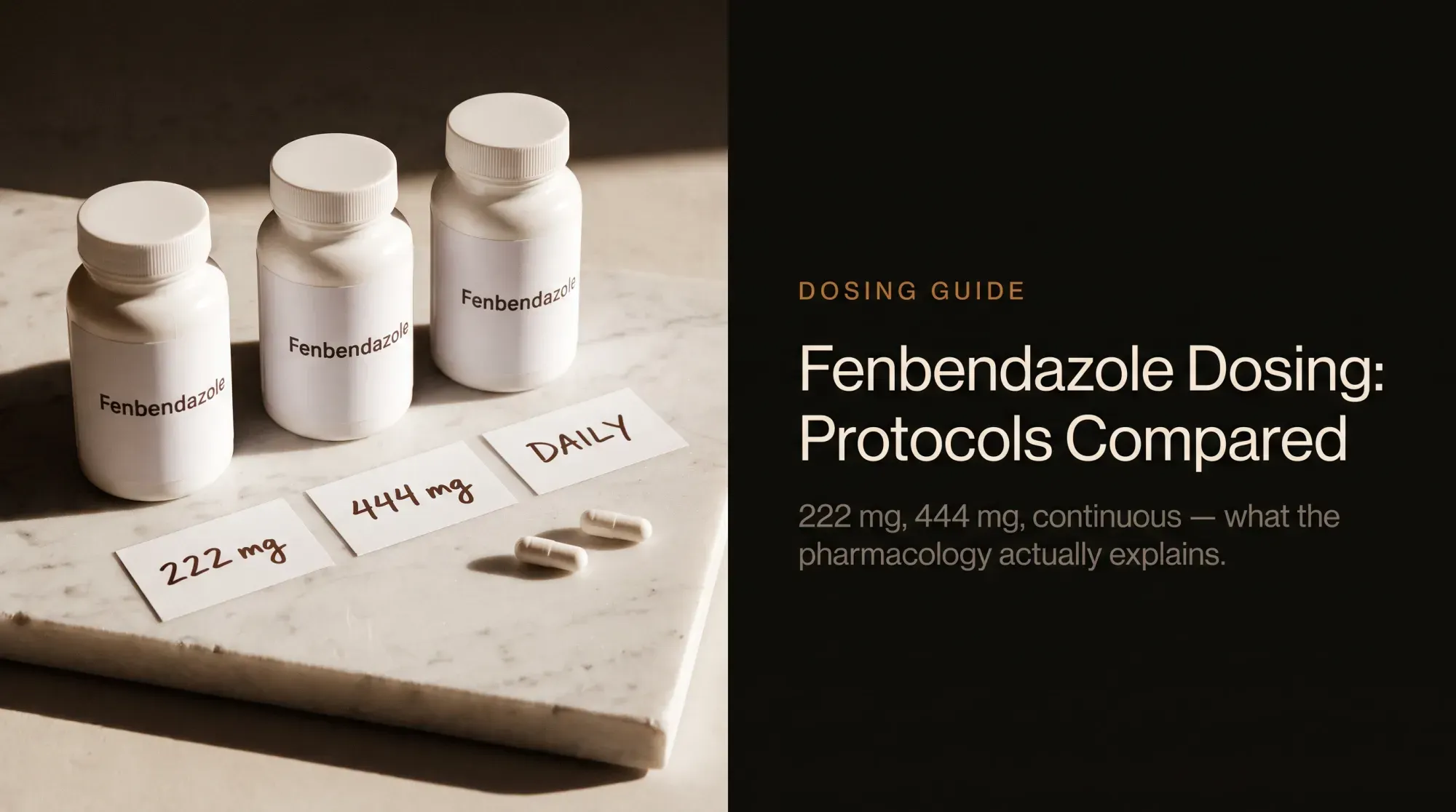
- 222 mg vs 444 mg: What Changes
- Cycling vs Continuous Dosing
- How to Take It: Absorption Basics
- The Supporting Ingredients — and Why They're There
- Panacur C Granules vs Capsules
- A Caution on Veterinary Powder
- Combination Protocols at a Glance
- Monitoring: The Part People Skip
- Does Body Weight or Cancer Type Change the Dose?
- How Long Do People Stay On It?
- Common Dosing Mistakes
- The Bottom Line
Why Dosing Information Is So Confusing
If you have searched for fenbendazole dosing, you have probably found a dozen slightly different answers. That confusion is real, and it has a few honest causes:
- There is no clinically established human dose for cancer — because there are no human cancer trials. Every number circulating online is derived from anecdote or from veterinary/parasite dosing.
- Fenbendazole comes in different forms (granules, capsules, liquids) at different strengths, so "one packet" or "one capsule" can mean different amounts.
- Protocols evolved informally in online communities, so variations multiplied.
The Joe Tippens Protocol (The Reference Point)
Nearly every dosing conversation traces back to the Joe Tippens protocol, the regimen popularized after his self-reported lung cancer remission. As commonly described, it is:
| Component | Amount | Schedule |
|---|---|---|
| Fenbendazole (Panacur C) | 222 mg (1 packet) | 3 consecutive days on, 4 days off |
| Curcumin | 600 mg | Daily |
| CBD oil | ~25 mg | Daily |
| Vitamin E (tocotrienol form) | 800 mg | Daily |
Key features people often miss:
- Fenbendazole is taken with food, ideally high-fat, to aid absorption.
- The 3-on/4-off cycle is intended to give the liver recovery time.
- The protocol is described as long-term (months to years).
- Crucially, Joe Tippens was also receiving pembrolizumab (immunotherapy) — a detail routinely dropped from retellings and one that makes it impossible to isolate fenbendazole's contribution.
222 mg vs 444 mg: What Changes
The two most common dose levels are 222 mg and 444 mg. Here is how they compare in the way protocols describe them:
| Factor | 222 mg | 444 mg |
|---|---|---|
| Origin | Standard Joe Tippens dose | Higher-dose variant |
| Approximate plasma exposure | Baseline | Roughly double |
| Liver burden | Lower | Higher |
| Reported tolerance | Generally well tolerated | More side effects reported |
| Suggested monitoring | Monthly liver function tests | Every ~2 weeks |
The general pattern in community protocols is to start at 222 mg and only consider escalating if it is tolerated and deemed necessary — with more frequent liver testing at the higher dose. Again: whether to do any of this at all is a medical decision, not a lifestyle choice.
Cycling vs Continuous Dosing
Two scheduling philosophies exist:
3 days on / 4 days off (cycling) — the original Tippens approach. The rationale is to let hepatic enzymes recover during the off-days, reducing cumulative liver exposure while maintaining intermittent pressure on the tumor. This is the more conservative and more commonly recommended pattern.
Daily continuous — fenbendazole every day with no break. This produces higher sustained plasma levels but a greater liver burden, and it is generally reserved (in anecdotal practice) for aggressive disease. It calls for closer, more frequent liver monitoring.
How to Take It: Absorption Basics
This is the single most important practical point, and it is pure pharmacology rather than protocol folklore. Fenbendazole is poorly water-soluble (BCS Class II) with low oral bioavailability — often estimated at 20–30%. Absorption improves substantially with fat:
- Take it with a high-fat meal or oil — this can increase absorption two- to threefold. Coconut oil, olive oil, avocado, eggs, or fatty fish are commonly used.
- Peak blood levels occur roughly 2–6 hours after a dose.
- Consistency matters more than timing of day; taking it at the same point in a meal routine helps.
Without fat, a meaningful fraction of any dose simply passes through unabsorbed — which is why the "with food" instruction is not optional in the protocols.
A few finer points come up often. Splitting a dose across two fatty meals is sometimes done to smooth absorption, though there is no comparative data showing it is better than a single dose. Coffee, tea, and plain water do nothing for absorption — it is dietary fat specifically that matters, because fenbendazole dissolves into the fat phase of a meal. And micronized or smaller-particle powders dissolve more readily than coarse granules, which is one reason product form and quality influence how much of a labeled dose is actually usable by the body.
The Supporting Ingredients — and Why They're There
The Tippens stack is not random. Each companion ingredient has a stated rationale:
- Curcumin — may act as a bioenhancer (P-glycoprotein modulation) and has its own studied anti-cancer properties; taken with food for its own poor absorption.
- Vitamin E (tocotrienols) — fat-soluble, may aid absorption and contribute antioxidant activity. The tocotrienol form is specified rather than ordinary tocopherol.
- CBD oil — included in the original protocol largely for symptom and quality-of-life reasons.
Some protocols add ivermectin, berberine, or vitamin D3. Every addition, however, increases the potential for drug interactions and cumulative liver load, and none of these stacks has been validated in a trial.
Panacur C Granules vs Capsules
The two most common forms deliver the same active compound differently:
| Form | Typical strength | Notes |
|---|---|---|
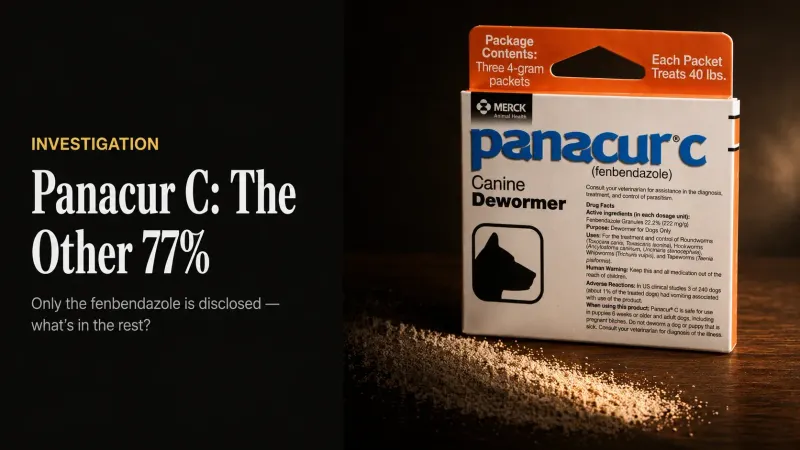
| Panacur C granules (Merck) | 222 mg per 1 g packet | Veterinary dewormer; easy to measure; most referenced in Tippens protocol; sold for dogs |
| Capsules (various) | 222 mg or 444 mg | Easier to swallow; quality varies widely by seller; not pharmaceutically regulated |
Capsule products vary enormously in quality and actual content, which is a major topic in its own right — see our dedicated comparison of veterinary versus pharmaceutical-grade fenbendazole.
A Caution on Veterinary Powder
Combination Protocols at a Glance
Beyond the core stack, several combination approaches circulate. Reported here for completeness only:
- Fenbendazole + ivermectin — complementary proposed mechanisms; often taken on the same on-days.
- Fenbendazole + berberine — both taken with food; overlapping metabolic rationale.
- Fenbendazole + DCA (dichloroacetate) — a metabolic pairing; DCA carries its own neuropathy risk.
- Mebendazole substitution — some prefer mebendazole (100 mg twice daily) because it is a human-approved drug with human safety data.
Monitoring: The Part People Skip
Dosing and monitoring are inseparable. Because fenbendazole is metabolized by the liver, the protocols that take safety seriously build in liver function testing:
- Baseline liver panel (ALT, AST, ALP, bilirubin) before starting.
- Every 2 weeks for the first month.
- Monthly thereafter on the 222 mg cycling schedule; every 2 weeks on 444 mg or continuous dosing.
- Pause if ALT/AST exceed 3× the upper limit of normal; stop and seek care above 5× or with rising bilirubin.
Our companion safety-monitoring guide covers exactly which tests to run and how to interpret them.
Does Body Weight or Cancer Type Change the Dose?
Two questions come up constantly: should the dose scale with body weight, and should it change by cancer type? Honestly, the community protocols do not scale precisely by either — and that itself reveals how far this is from validated medicine.
In veterinary use, fenbendazole is dosed by body weight (milligrams per kilogram). But the popular human protocols fixed on a flat 222 mg figure derived from a single well-known case, not from any dose-finding study. So a 60 kg person and a 100 kg person following the Tippens protocol take the same amount, despite very different body sizes. There is no validated milligram-per-kilogram human cancer dose to point to.
Similarly, protocols do not meaningfully differentiate by tumor type. The same 222 mg cycling appears in discussions of lung, colorectal, breast, and prostate cancer alike — even though the underlying biology (and the relevance of specific mechanisms like p53 reactivation) differs substantially between them. This one-size-fits-all quality is a feature of folklore, not of evidence-based dosing.
How Long Do People Stay On It?
The protocols describe fenbendazole as a long-term regimen — months, and in some accounts years — rather than a short course. This matters for two reasons that pull in opposite directions:
- Cumulative liver exposure grows with duration, which is the entire reason cycling and periodic liver testing are emphasized. The longer someone continues, the more important consistent monitoring becomes.
- No defined endpoint exists. Without trials, there is no evidence-based guidance on how long is "enough," when to stop, or how to taper. People tend to make these decisions based on imaging results from their conventional care and on how they feel — which again underscores that fenbendazole use is happening around real medical treatment, not in place of a defined protocol.
Anyone continuing a supplement for months or years should be doing so with a physician tracking both the disease and the liver — not on autopilot.
Common Dosing Mistakes
- Taking it on an empty stomach — wastes most of the dose.
- Escalating too fast — jumping to 444 mg or daily dosing without monitoring liver enzymes.
- Ignoring interactions — stacking with taxane/vinca chemotherapy, warfarin, or multiple hepatically-metabolized drugs without medical oversight.
- Assuming "more is better" — higher doses mostly increase side effects and liver load, not proven benefit.
- Hiding it from the oncologist — the most dangerous mistake of all.
The Bottom Line
The practical answer people come here for is simple to state: the reference protocol is 222 mg, three days on and four days off, taken with fat, alongside curcumin, vitamin E, and CBD, monitored with regular liver tests. Higher and continuous variants exist and demand closer monitoring.
The honest caveat is just as important: none of these doses is clinically validated, fenbendazole is not approved for human cancer, and the most-cited success story was confounded by concurrent immunotherapy. Treat every number here as reporting on what people do — not as a prescription — and make any real decision with a physician who knows your full medical picture.
Frequently Asked Questions
What is the standard fenbendazole dosage?
The most referenced dose is 222 mg (one Panacur C packet) taken 3 days on, 4 days off, with a high-fat meal for absorption, alongside curcumin, vitamin E, and CBD — the Joe Tippens protocol. This is an anecdotal regimen, not a clinically validated dose, and fenbendazole is not approved for human use.
Should I take 222 mg or 444 mg of fenbendazole?
Community protocols generally start at 222 mg because it has a lower liver burden and is better tolerated, escalating to 444 mg only if tolerated and considered necessary — with more frequent (roughly biweekly) liver function testing at the higher dose. Any dosing decision should be made with a physician.
Why do I need to take fenbendazole with fat?
Fenbendazole is poorly water-soluble with low oral bioavailability (around 20–30%). Taking it with a high-fat meal or oil (coconut oil, olive oil, avocado, eggs) can increase absorption two- to threefold. On an empty stomach, much of the dose passes through unabsorbed.
What is cycling (3 days on, 4 days off)?
Cycling means taking fenbendazole for 3 consecutive days, then pausing for 4 days. The rationale is to let liver enzymes recover and reduce cumulative liver exposure while maintaining intermittent anti-tumor pressure. It is the more conservative and commonly recommended schedule versus daily continuous dosing.
What supporting supplements are in the Joe Tippens protocol?
The classic stack adds curcumin (~600 mg), vitamin E in tocotrienol form (~800 mg), and CBD oil (~25 mg), taken daily. Curcumin and vitamin E have absorption-enhancing rationales; CBD was included largely for symptom relief. These additions also increase interaction and liver-load considerations.
Is Panacur C safe to use as a fenbendazole source?
Panacur C is a veterinary dewormer. Roughly 77.8% of each sachet is undisclosed excipients (lactose, povidone, corn starch) formulated for dogs, which can cause hypersensitivity reactions in some people and means it is not a pure product. This is an important caution if veterinary powder is being considered on cost grounds.
How often should liver function be checked?
A common monitoring pattern is a baseline liver panel before starting, every 2 weeks for the first month, then monthly on 222 mg cycling (or every 2 weeks on 444 mg/continuous). Pause if ALT/AST exceed 3× the upper limit of normal, and stop above 5× or with rising bilirubin.
Can fenbendazole be combined with chemotherapy?
Not without oncologist supervision. Some chemo regimens use microtubule-targeting drugs (taxanes, vinca alkaloids) that overlap with fenbendazole's mechanism, and fenbendazole can affect drugs metabolized by the liver such as warfarin. Combining anything with active cancer treatment is strictly a medical decision.
Free · No spam · Unsubscribe anytime
Get the research before the sellers spin it
Join readers getting evidence-based fenbendazole protocols, dosing guides, and honest product investigations — straight to your inbox. We read the studies so you don’t get sold a story.
Subscribe free →References
- Dogra N, Kumar A, Mukhopadhyay T — Fenbendazole acts as a moderate microtubule destabilizing agent... (Scientific Reports, 2018)
- Fenbendazole pharmacokinetics and bioavailability — benzimidazole absorption review (PMC)
- Merck Animal Health — Panacur C (fenbendazole) product information
- Curcumin bioavailability and P-glycoprotein modulation — review (PMC)
- Hidden Excipients in Panacur C and Why They Matter
- Michelakis ED et al. — Dichloroacetate (DCA) metabolic effects and neuropathy risk
⚖️ Conflict of Interest Disclosure
This article is an independent, evidence-based review. We have no financial relationship, sponsorship, or affiliate agreement with any pharmaceutical or supplement manufacturer. Our assessments are based on publicly available data including peer-reviewed research, regulatory guidance, and laboratory analyses. We receive no compensation for favorable or unfavorable coverage.
Disclaimer: This article is for informational and educational purposes only and does not constitute medical advice. Fenbendazole is not approved by the FDA or any regulatory agency for the treatment of cancer or any disease in humans. Nothing here should be used to diagnose, treat, cure, or prevent any condition. Always consult a qualified healthcare professional before starting, stopping, or combining any supplement, medication, or protocol.
Continue Your Research
Explore more evidence-based articles on our blog.
🔬 How we research & review this article
This article is an independent, evidence-based review. Every clinical claim is sourced from primary literature (PubMed, ClinicalTrials.gov, FDA/WHO). Sources are selected for methodological quality, uncertainties are stated plainly, and conflicts of interest are disclosed. Content is reviewed and updated on a rolling schedule — see the “Last reviewed” date at the top (July 2026).