Repurposed Antiparasitic Drugs in Oncology: A Landscape Overview
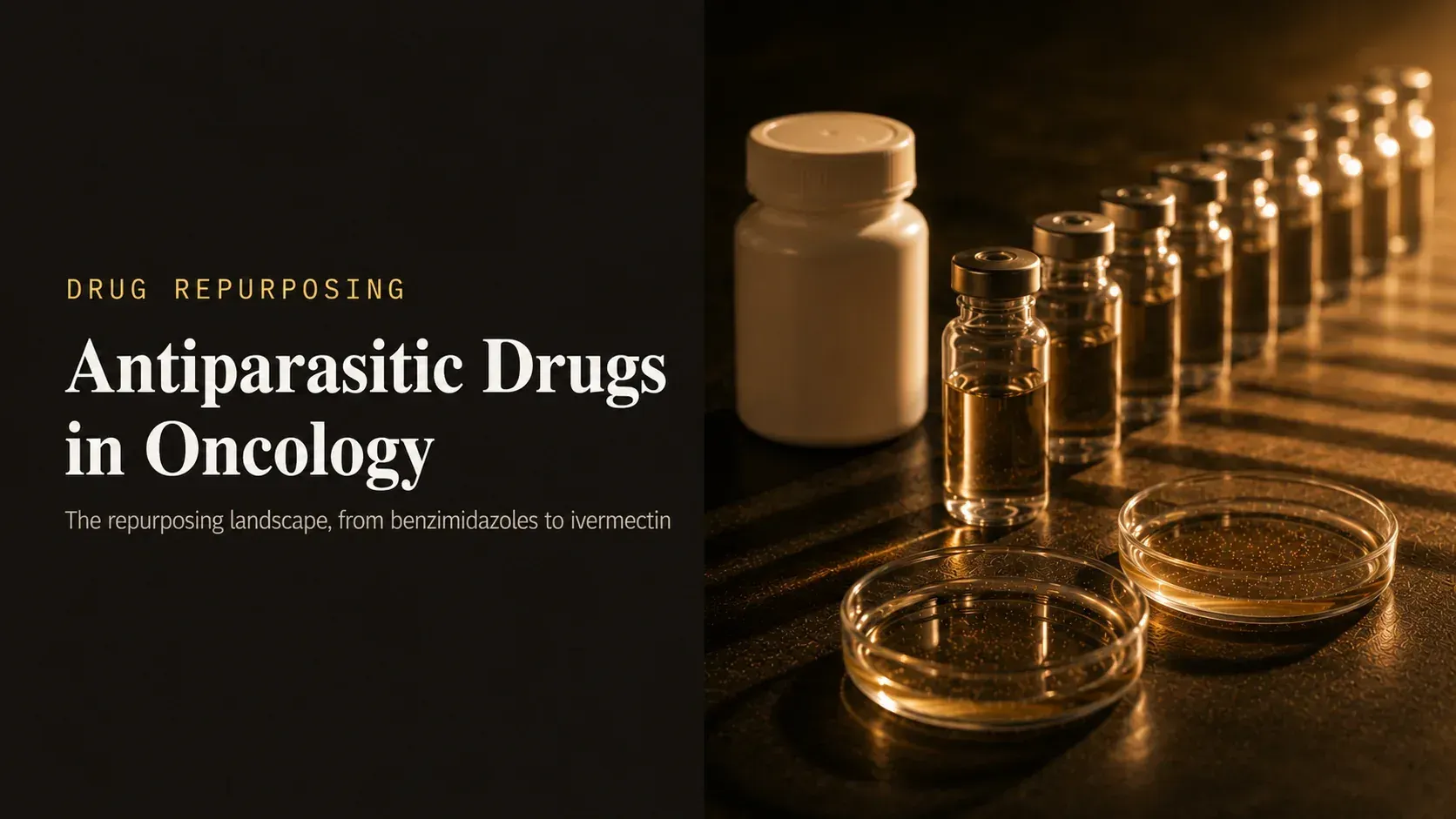
Drug repurposing — the application of existing approved compounds to new therapeutic indications — has become an active area in oncology research. Antiparasitic drugs are among the most studied compound classes in this space, offering the advantage of established safety profiles, known human pharmacokinetics, and existing regulatory approval, which can significantly shorten the pathway to clinical investigation.
This overview surveys the major antiparasitic drug classes currently under investigation in cancer research, summarizing key laboratory and early clinical findings for each. The agents covered include benzimidazoles (fenbendazole, mebendazole), ivermectin, niclosamide, pyrvinium pamoate, chloroquine and hydroxychloroquine, nitazoxanide, and artemisinin derivatives. Each operates through distinct mechanisms, targeting different vulnerabilities in cancer cell biology.
Why Antiparasitic Drugs Are Being Studied in Cancer
Many antiparasitic compounds evolved to disrupt fundamental cellular processes — microtubule dynamics, mitochondrial energy metabolism, ion channel function — that are also critical to cancer cell survival. Because these mechanisms differ substantially from those targeted by conventional chemotherapy, antiparasitic drugs may offer activity in drug-resistant tumors and potential for synergy when combined with existing treatments.
A comprehensive 2021 review by Huang et al. in Drug Design, Development and Therapy surveyed multiple antiparasitic drug classes and documented mechanistic diversity spanning ferroptosis induction, autophagy regulation, mitochondrial disruption, immunomodulation, and metabolic interference — categories that largely do not overlap with the DNA-damaging and antimetabolite mechanisms of first-line chemotherapy. This mechanistic complementarity forms the scientific rationale for current repurposing research.
Additionally, the safety profiles of these compounds — many used by hundreds of millions of people globally for parasitic infections — provide a foundation of human tolerability data that de novo oncology drugs must establish from scratch. The Son et al. 2020 review in Immunity & Network explicitly identifies this existing safety record as a key advantage for benzimidazoles in rapid clinical translation.
Key Findings Across the Landscape
- Benzimidazoles (fenbendazole, mebendazole): Disrupt tubulin polymerization and the ubiquitin-proteasome system; active in colorectal, lung, pancreatic, and hepatocellular cancer cell lines; retain activity in drug-resistant cells.
- Ivermectin: Most mechanistically diverse antiparasitic in cancer research; targets PAK1/Akt, WNT-TCF, Hippo, purinergic, and epigenetic (SIN3) pathways; antitumor activity demonstrated at clinically feasible concentrations.
- Niclosamide: Identified as one of the most potent anti-cancer hits in a 1,600-compound approved-drug screen; active in hypoxic dormant tumor cells typically resistant to conventional therapy via STAT3 and mTOR inhibition.
- Nitazoxanide: Activates AMPK and suppresses c-Myc and mTOR; synergized with irinotecan in colorectal cancer animal models.
- Pyrvinium pamoate: Kills triple-negative breast cancer stem-like cells and reduces metastases via lipid anabolism inhibition — specifically targeting chemotherapy-resistant cancer stem cell populations.
- Chloroquine/HCQ: The most clinically advanced antiparasitic class in oncology; meta-analysis of clinical trials shows improved response rates and survival when used as autophagy inhibitors.
- Artemisinins: Induce iron-dependent ferroptosis; artesunate synergizes with sorafenib in hepatocellular carcinoma; active in lung, breast, colorectal, and ovarian cancer models.
Benzimidazoles: Fenbendazole, Mebendazole, and Relatives
Benzimidazoles constitute the most extensively characterized antiparasitic class in oncology research. The class includes fenbendazole, mebendazole, albendazole, and flubendazole, among others. Their primary anti-cancer mechanism involves binding to tubulin — the building block of microtubules — and disrupting polymerization, analogous to the mechanism of taxane and vinca alkaloid chemotherapy agents but with distinct binding sites and kinetics.
The 2020 review by Son, Lee, and Adunyah in Immunity & Network surveyed eight benzimidazoles across published cancer cell line, animal model, and early clinical data, documenting consistent anticancer effects via microtubule disruption, apoptosis induction, G2/M cell cycle arrest, anti-angiogenesis, and glucose transporter blockade. Importantly, the review noted that benzimidazoles retained activity in cancer cells resistant to conventional chemotherapy agents and enhanced efficacy when used in combination with existing treatments.
A 2021 screening study by Florio et al. (Pharmaceuticals) tested multiple benzimidazoles against paraganglioma, pancreatic, and colorectal cancer cell lines, finding IC50 values in the low micromolar to nanomolar range for several compounds including fenbendazole. The 2022 review by Song et al. in Cancers examined 11 benzimidazoles and identified consistent anticancer activity while noting that improving oral bioavailability — currently a limiting factor — through novel formulation strategies could enhance clinical utility.
Ivermectin: Multi-Target Anticancer Activity
Ivermectin is a macrocyclic lactone antiparasitic used by over 200 million people annually for infections including onchocerciasis (river blindness) and lymphatic filariasis. In oncology research, it stands out for the breadth of cancer-relevant pathways it appears to affect. The comprehensive 2018 review by Juarez et al. in the American Journal of Cancer Research catalogued ivermectin targets including the Akt/mTOR pathway, WNT-TCF signaling, P2X purinergic receptors, PAK1, SIN3A/B epigenetic co-repressors, RNA helicase, and chloride channel receptors.
A particularly notable finding came from a 2016 study by Dou et al. in Cancer Research: ivermectin induces cytostatic autophagy in breast cancer cells by blocking PAK1 through ubiquitination-mediated degradation, reducing Akt phosphorylation, and suppressing Akt/mTOR signaling — with tumor growth suppression demonstrated in xenograft models. In a subsequent 2020 study, Juarez et al. tested ivermectin at 5 µM (a clinically feasible concentration) across 28 malignant cell lines and found breast cancer lines were among the most sensitive, with documented synergy with docetaxel, cyclophosphamide, and tamoxifen.
Ivermectin also inhibits P-glycoprotein (MDR1), a major mediator of multidrug resistance that pumps conventional chemotherapy drugs out of cancer cells. This MDR inhibition property, first established by Pouliot et al. in 1997, suggests potential for restoring chemosensitivity in drug-resistant tumors — a clinically significant application if confirmed in controlled studies.
Niclosamide: Activity in Hypoxic and Dormant Tumor Cells
Niclosamide is an antitapeworm drug with a long safety record in human medicine. Its cancer biology was brought into focus by a landmark 2015 study by Senkowski et al. in Molecular Cancer Therapeutics, which screened 1,600 approved drugs in three-dimensional hypoxic tumor spheroids — a model designed to mimic the nutrient-deprived, low-oxygen core of solid tumors where conventional chemotherapy is typically ineffective.
Niclosamide emerged as one of five potent antiparasitic hits in this screen. Its mechanisms in cancer cells include inhibition of STAT3 transcription factor activity, suppression of Wnt/β-catenin signaling, downregulation of mTOR, and inhibition of NF-κB. These pathways regulate cancer cell survival, proliferation, metastasis, and therapy resistance. The ability to target dormant hypoxic cells — which frequently give rise to disease recurrence after treatment — is a mechanistic property not shared by most standard chemotherapy regimens.
Nitazoxanide: AMPK Activation and Metabolic Interference
Nitazoxanide is an FDA-approved antiprotozoal used for intestinal parasitic infections. In cancer models, it activates AMPK (AMP-activated protein kinase), a master regulator of cellular energy homeostasis, while simultaneously downregulating c-Myc, mTOR, and Wnt signaling at concentrations achievable with clinical oral dosing.
In the Senkowski et al. 2015 screen, nitazoxanide specifically inhibited mitochondrial respiration in glucose-deprived tumor cells — targeting the metabolic flexibility that allows cancer cells in hypoxic tumor cores to survive. Importantly, combination of nitazoxanide with irinotecan demonstrated in vivo anticancer activity in colorectal cancer models, suggesting that metabolic disruption by nitazoxanide may enhance the efficacy of cytotoxic chemotherapy.
Pyrvinium Pamoate: Targeting Cancer Stem Cells
Pyrvinium pamoate is an antihelminthic compound that appeared in the same 1,600-compound screen as nitazoxanide and niclosamide, demonstrating potent activity in nutrient-deprived tumor conditions via mitochondrial respiration inhibition. Its significance in cancer research has grown substantially due to findings in cancer stem cells — a subpopulation believed responsible for tumor initiation, recurrence, and metastasis, and typically resistant to conventional chemotherapy.
A 2020 study by Dattilo et al. in Cancer Research demonstrated that pyrvinium pamoate kills triple-negative breast cancer stem-like cells and reduces metastases through inhibition of lipid anabolism. This mechanism — disrupting the biosynthetic pathways that cancer stem cells depend on for membrane production and signaling lipid generation — is distinct from mechanisms targeted by existing cytotoxic or targeted agents. The ability to specifically eliminate cancer stem cell populations addresses a major limitation of current cancer therapy.
Chloroquine and Hydroxychloroquine: The Most Clinically Advanced Class
Chloroquine (CQ) and hydroxychloroquine (HCQ) are antimalarial drugs that inhibit lysosomal function and block autophagy — the cellular process by which tumor cells recycle damaged organelles to maintain survival under metabolic stress. Cancer cells under treatment with chemotherapy or targeted agents often activate autophagy as a survival mechanism, and blocking this pathway may prevent resistance development.
Among antiparasitic compounds repurposed for oncology, chloroquine and hydroxychloroquine have accumulated the most clinical evidence. A meta-analysis published in Medicine by Xu et al. in 2018 analyzed seven clinical trials enrolling 293 patients and found that autophagy inhibitor-based therapy (CQ or HCQ combined with other treatments) showed significantly higher overall response rate (relative risk 1.33), six-month progression-free survival (relative risk 1.72), and one-year overall survival (relative risk 1.39) compared to controls without autophagy inhibition.
These clinical findings, while based on relatively small total patient numbers, represent the strongest human evidence among the antiparasitic drug classes discussed in this overview. Ongoing clinical trials continue to evaluate HCQ in various cancer types and treatment combinations.
Artemisinin Derivatives: Ferroptosis and Targeted Synergy
Artemisinin derivatives — including artesunate, artemether, and dihydroartemisinin — are antimalarial compounds that induce ferroptosis, a form of iron-dependent cell death driven by lipid peroxidation and reactive oxygen species (ROS) generation. This mechanism is distinct from classical apoptosis and has attracted significant interest in oncology given that some cancer cells appear to be selectively vulnerable to ferroptotic death due to high intracellular iron and elevated lipid peroxidation.
A 2021 study by Li et al. in Acta Pharmacologica Sinica demonstrated that artesunate synergizes with sorafenib — a targeted therapy used in hepatocellular carcinoma — to induce ferroptosis in liver cancer cells, producing greater tumor cell killing than either agent alone. Broader reviews have confirmed activity of artemisinin derivatives in lung, breast, colorectal, and ovarian cancer models, with the ferroptosis mechanism providing a rationale for combination with iron-loading strategies or other pro-oxidant approaches.
| Drug / Class | Primary Cancer Mechanisms | Cancer Types Studied | Evidence Stage |
|---|---|---|---|
| Fenbendazole / Mebendazole | Tubulin disruption, proteasome inhibition, glycolysis suppression, p53 reactivation | Colorectal, lung, breast, pancreatic, hepatocellular | Preclinical (cell lines, animal models) |
| Ivermectin | PAK1/Akt, WNT-TCF, P2X7 purinergic, SIN3 epigenetic, MDR inhibition | Breast, ovarian, colorectal, esophageal, leukemia | Preclinical; early clinical signals |
| Niclosamide | STAT3 inhibition, Wnt/β-catenin suppression, mTOR inhibition, NF-κB downregulation | Colorectal, breast, prostate, AML, hypoxic solid tumors | Preclinical; some early clinical trials |
| Nitazoxanide | AMPK activation, c-Myc/mTOR/Wnt suppression, mitochondrial respiration inhibition | Colorectal, pancreatic, hypoxic solid tumors | Preclinical |
| Pyrvinium pamoate | Mitochondrial respiration inhibition, lipid anabolism inhibition, cancer stem cell targeting | Triple-negative breast cancer, colorectal, pancreatic | Preclinical |
| Chloroquine / HCQ | Lysosomal autophagy inhibition, prevention of therapy-resistance recycling | Multiple solid tumors and hematologic malignancies | Clinical trials (meta-analysis published) |
| Artemisinins (artesunate) | Iron-dependent ferroptosis via ROS, lipid peroxidation, synergy with targeted agents | Hepatocellular, lung, breast, colorectal, ovarian | Preclinical; early clinical investigation |
Common Themes and Shared Vulnerabilities
Across these diverse compound classes, several shared themes emerge that may explain why compounds selected against parasites also show activity against cancer cells. Both parasites and cancer cells are rapidly proliferating systems that depend heavily on glycolysis, require intact microtubule dynamics for cell division, and rely on efficient protein turnover. Disrupting any of these fundamental processes tends to have more severe consequences for rapidly dividing malignant cells than for the relatively quiescent normal cells of most adult tissues.
A second shared theme is the ability to target cells in metabolically stressed conditions — hypoxia, nutrient deprivation, and acidosis — that characterize the tumor microenvironment of solid tumors. The Senkowski et al. 2015 screen was specifically designed to identify this property, and multiple antiparasitic compounds emerged because parasites also evolved to survive in metabolically inhospitable host environments.
A third consistent pattern is activity against drug-resistant cancer cell populations, whether through direct bypass of resistance mechanisms (benzimidazoles in 5-FU-resistant colorectal cells), inhibition of MDR efflux pumps (ivermectin), or targeting of cancer stem cells (pyrvinium pamoate). Resistance to standard therapy remains one of the primary causes of cancer mortality, making this activity pattern of particular research interest.
The Clinical Trial Reality Check: Where Each Drug Actually Stands
The scientific literature is rich with preclinical evidence showing that antiparasitic drugs can kill cancer cells in vitro and shrink tumors in animal models. However, preclinical promise does not equal clinical proof. The table below summarizes the current clinical trial status for the major antiparasitic drugs discussed in this post as of 2026:
| Drug class / compound | Highest phase human trial completed | Current active trials (Phase) | FDA approval for any cancer indication | Key limitations |
|---|---|---|---|---|
| Chloroquine / Hydroxychloroquine | Phase II (multiple trials as autophagy inhibitor) | Phase I/II ongoing in various solid tumors | No | Myelosuppression (thrombocytopenia, neutropenia) limits dosing. MTD 100 mg daily with gemcitabine+carboplatin. Mixed efficacy signals — some trials show no OS benefit. |
| Ivermectin | Phase I/II (NCT05318469: ivermectin + pembrolizumab in TNBC) | Phase I: NCT07487805 (ICONIC trial, metastatic solid tumors) | No | Early trial data: majority of evaluable patients experienced progressive disease. No Phase III RCT. NCI preclinical research ongoing but no clinical validation yet. |
| Mebendazole | Phase I (safety, tolerability in recurrent GBM; small case series) | No large-scale active Phase II/III trials registered | No | No FDA orphan drug designation for glioblastoma despite academic interest. Pharmacokinetic challenges (poor oral bioavailability, erratic absorption). No industry sponsor for large trials. |
| Fenbendazole | Zero human cancer trials | None registered | No | Purely anecdotal (Joe Tippens). No human pharmacokinetic data for cancer dosing. No safety studies. No regulatory pathway. |
| Niclosamide | Phase I/II (small trials in colorectal cancer, prostate cancer) | Phase I/II in various tumor types | No | Poor oral bioavailability (10% or less). Requires high doses (2000 mg) or novel formulations (nanoparticles). No Phase III breakthrough. |
| Nitazoxanide | Phase I (safety in advanced solid tumors) | Limited; mostly preclinical focus | No | AMPK activation promising in vitro, minimal human efficacy data. No large trials. |
| Pyrvinium pamoate | Phase I (cancer stem cell targeting hypothesis) | No active large-scale trials | No | Preclinical CSC data attractive, but no human efficacy proof. Very limited clinical development. |
| Artemisinin derivatives | Phase I/II (small trials in breast, lung, colorectal cancer) | Phase I/II ongoing in various cancers | No | Ferroptosis mechanism plausible. Some trials combined with chemotherapy. No Phase III RCT showing survival benefit as monotherapy or in combination. |
The pattern is clear: All antiparasitic drugs remain in early-phase (Phase I/II) clinical development for cancer indications. None have completed Phase III randomized controlled trials demonstrating survival benefit. None have FDA approval for any cancer indication. The most clinically advanced class — chloroquine/hydroxychloroquine — has been studied for decades but is limited by toxicity and has not achieved breakthrough status.
The harsh reality: The gap between preclinical excitement and clinical validation is enormous. Patients reading about "promising" antiparasitic drugs are often unaware that the evidence comes from cell cultures and mouse models, not human efficacy trials.
Limitations and the Path to Clinical Translation
Despite the breadth of preclinical evidence, the clinical translation of antiparasitic drugs as cancer treatments faces several practical obstacles. Bioavailability — the fraction of an orally administered dose that reaches systemic circulation at therapeutically relevant concentrations — is a limiting factor for several compounds, particularly the benzimidazoles. The 2022 Song et al. review in Cancers identified this as the primary barrier for benzimidazole class development and suggested that novel delivery systems (lipid nanoparticles, nanoemulsions) could potentially overcome this limitation.
Clinical trial design presents additional challenges: patient selection criteria, optimal dosing schedules, identification of predictive biomarkers, and choice of combination partners all require systematic investigation. The existing safety data from antiparasitic use provides a head start on toxicity characterization, but efficacy in human cancer patients cannot be inferred from laboratory models and must be rigorously established through controlled clinical trials.
Important:
The compounds discussed in this article are approved antiparasitic agents and antimalarials; they are not approved for cancer treatment (with the exception of chloroquine/hydroxychloroquine, which are being studied in clinical trials for oncology indications). Laboratory evidence of anti-cancer activity in cell culture or animal models does not establish clinical efficacy or safety in human cancer patients. This article is intended for informational and educational purposes only. Individuals with cancer or other medical conditions should consult qualified healthcare professionals for guidance on diagnosis and treatment options.
Sources
The Repurposing Paradox: Why Cheap Drugs Don't Get Tested
If antiparasitic drugs show such promise in preclinical studies, why haven't pharmaceutical companies or academic institutions conducted the large-scale Phase III trials needed to prove they work in humans? The answer lies in the "missing market" problem — a fundamental economic barrier that prevents the clinical validation of off-patent drugs.
The economics of drug repurposing:
- Phase III trials are expensive. A typical Phase III randomized controlled trial for a cancer drug costs $50–150 million USD and takes 4–7 years to complete. This requires thousands of patients, multiple clinical sites, rigorous monitoring, and statistical analysis to demonstrate survival benefit or progression-free survival improvement.
- Off-patent drugs have no exclusivity. Drugs like mebendazole, ivermectin, chloroquine, and niclosamide are off-patent — the composition-of-matter patents expired decades ago. This means that even if a company successfully completes a Phase III trial proving efficacy for a new indication (e.g., glioblastoma), generic competitors can immediately enter the market the day after FDA approval. The innovator company cannot recoup its $100 million investment because it has no market exclusivity.
- The appropriability problem. Even worse, off-label prescribing allows physicians to prescribe these drugs for cancer without FDA approval for that indication. If a Phase III trial generates clinical evidence showing efficacy, doctors can simply prescribe the generic version off-label, and generic manufacturers can capture the market without having contributed a single dollar to the research. This is called the "appropriability problem" — the innovator cannot "appropriate" (capture) the value of the clinical evidence it generates.
Why repurposing activity drops to zero after patent expiration:
- Data from drug development economics shows that while repurposing activity is robust early in a drug's lifecycle (when patent protection still exists), it drops to near zero once market exclusivity expires. Private companies have no financial incentive to fund expensive clinical validation when they cannot protect their investment.
- This creates a "valley of death" where scientifically promising off-patent drugs remain stuck in preclinical or early Phase I/II stages indefinitely because no one can justify the Phase III investment.
Strategic responses and limitations:
- Building a "patent moat." Some companies attempt to create a patent thicket around off-patent molecules by securing secondary patents on novel formulations (e.g., nanoparticle delivery systems, extended-release versions), unique dosage regimens, or combination therapies. However, these strategies are difficult to enforce against off-label generic use and are often criticized as "evergreening" (anti-competitive lifecycle management).
- Method-of-use patents. Companies can patent the specific new therapeutic application (e.g., "mebendazole for treating glioblastoma"), but these patents are weak because physicians can still prescribe the generic drug off-label, and generic manufacturers are not liable for contributory infringement unless they actively promote the off-label use.
The role of public funding:
- Because private incentives have failed, public funding and academic-led trials are the only realistic pathway for validating repurposed drugs. However, government agencies (NIH, NCI) and cancer charities have limited budgets and must prioritize funding across thousands of potential projects. Repurposed antiparasitics compete with novel immunotherapies, targeted agents, and other high-profile research areas.
- Public-private partnerships and "push-pull" mechanisms (grants for R&D + advance purchase commitments) have been proposed, but real-world implementation remains in early stages.
The cruel irony: The very fact that these drugs are cheap, off-patent, and widely available — the qualities that make them attractive to patients — is precisely why they will likely never be rigorously tested in Phase III trials. The economic incentives are broken.
The Orphan Drug Designation Mirage: Why Mebendazole Didn't Get It
Patients and advocates often assume that if a repurposed drug shows promise in a rare, deadly cancer like glioblastoma, it should qualify for FDA Orphan Drug Designation. This designation provides regulatory and economic incentives, including seven years of market exclusivity upon approval, tax credits for clinical trial costs, and exemptions from FDA user fees. However, mebendazole — despite years of academic interest and preclinical evidence in glioblastoma — has not received orphan drug designation.
What orphan drug designation requires:
- Rare disease criterion. The disease must affect fewer than 200,000 people in the United States. Glioblastoma qualifies — approximately 12,000–15,000 new cases annually in the U.S.
- Sponsor with regulatory pathway. The designation must be requested by a sponsor (typically a pharmaceutical company or academic institution) that is actively developing the drug and intends to file an Investigational New Drug (IND) application and ultimately a New Drug Application (NDA) or Biologics License Application (BLA).
- Evidence of plausible benefit. The sponsor must provide preclinical or early clinical data suggesting the drug may be effective for the rare disease. The FDA does not require Phase III proof at the designation stage, but the sponsor must demonstrate a credible development plan.
Why mebendazole has not received orphan drug designation for glioblastoma:
- No industry sponsor. Mebendazole is off-patent and manufactured as a generic by multiple companies. No single company has a financial incentive to sponsor the expensive orphan drug development process, file an IND, and conduct Phase III trials. Generic manufacturers are not equipped or motivated to do this — their business model is to produce existing approved drugs at low cost, not to conduct clinical research.
- Academic researchers cannot be "sponsors" in the traditional sense. While individual researchers or institutions can file INDs for investigator-initiated trials (IITs), obtaining orphan drug designation typically requires a commercial entity willing to take the drug through the full regulatory pathway to approval. Academic labs do not have the infrastructure, funding, or regulatory expertise to do this at scale.
- Lack of a clear formulation or dosing regimen. Mebendazole has poor and erratic oral bioavailability, making it difficult to achieve consistent therapeutic concentrations. Until a pharmaceutical company develops a novel formulation (e.g., nanoparticle, lipid-based delivery) that can be patented and commercialized, there is no clear "product" to designate and approve.
The orphan drug designation landscape for glioblastoma:
- Between 1983 and 2020, only a small percentage of orphan drug designations for glioblastoma were successfully approved. Examples include temozolomide (Temodar), which received orphan designation and subsequent marketing approval. However, other candidates, such as marizomib (a proteasome inhibitor), received designations that were later withdrawn or revoked after Phase III trials failed.
- The shift in GBM drug development has moved from traditional cytotoxic agents toward immunotherapeutic approaches and small molecules with defined molecular targets. Repurposed antiparasitics do not fit neatly into this landscape because they lack the intellectual property protection and commercial backing necessary to navigate the regulatory pathway.
The designation mirage: Orphan drug designation is not a scientific endorsement of a drug's efficacy — it is a regulatory and economic tool designed to incentivize commercial development of drugs for rare diseases. Without a sponsor willing to invest in full-scale clinical trials, designation is irrelevant. Mebendazole remains an academic curiosity, not an FDA-designated orphan drug.
Pharmacokinetic and Safety Comparison: Beyond the Mechanisms
Understanding the anticancer mechanisms of antiparasitic drugs is only part of the picture. Pharmacokinetics (PK) — how the body absorbs, distributes, metabolizes, and excretes a drug — determines whether therapeutic concentrations can be achieved in tumor tissue. Many antiparasitics have poor bioavailability, short half-lives, or significant drug-drug interactions that complicate their use in cancer patients already taking multiple medications. The table below compares key PK and safety parameters:
| Drug | Oral bioavailability | Half-life | Major drug-drug interactions | Key safety concerns in cancer context |
|---|---|---|---|---|
| Chloroquine / HCQ | High (~75-80%) | Long (40-50 days for CQ, 30-60 days for HCQ) | CYP2D6 substrate; interacts with tamoxifen, metoprolol. Can prolong QT interval. | Myelosuppression (thrombocytopenia, neutropenia) when combined with chemotherapy. Retinal toxicity with prolonged use. Cardiac arrhythmias. |
| Ivermectin | Moderate (~50%) | ~18 hours | CYP3A4 substrate; avoid with strong CYP3A4 inhibitors (ketoconazole, ritonavir) or inducers (rifampin). | Neurological (dizziness, ataxia, tremor). P-glycoprotein substrate — may interact with chemotherapy efflux. No established safe dose for cancer. |
| Mebendazole | Very low (2-10%) | 2.5-5.5 hours | CYP1A2 inducer. Reduced absorption with antacids, food. | Erratic, highly variable plasma levels. Hepatotoxicity at high doses (>1000 mg/day). Bone marrow suppression reported. Therapeutic dosing for cancer undefined. |
| Fenbendazole | Unknown in humans | Unknown in humans for cancer dosing | Unknown; veterinary use only. No human PK studies. | Zero human safety data for cancer dosing. Veterinary doses (~5 mg/kg) far lower than speculated "Tippens protocol" doses (222-444 mg/day). Hepatotoxicity risk unknown. |
| Niclosamide | Very low (~10%) | Short (~1.5 hours) | Minimal systemic absorption limits interactions, but also limits efficacy. | GI side effects (nausea, abdominal pain). Requires very high doses (2000 mg) or novel formulations (nanoparticles) to achieve systemic anticancer effect. Poor CNS penetration. |
| Nitazoxanide | Moderate (prodrug → tizoxanide) | ~1-2 hours (tizoxanide) | Competes for glucuronidation pathways; theoretical interaction with other glucuronidated drugs. | Generally well-tolerated at antiparasitic doses (500-1000 mg/day). Cancer dosing not established. GI side effects common. |
| Pyrvinium pamoate | Negligible (<1%) | Unknown (minimal systemic absorption) | Not absorbed; acts locally in GI tract only at approved doses. | Cannot achieve systemic anticancer concentrations at safe doses. Novel formulations (nanoparticles) required. Stains stool/urine red-orange. |
| Artemisinin derivatives | Variable (artesunate high, artemether moderate) | Short (~1-2 hours) | CYP2B6, CYP3A4 substrates and inducers. May reduce efficacy of hormonal contraceptives, anticoagulants. | Generally safe at antimalarial doses. Cancer dosing requires much higher, prolonged exposure — safety at those doses uncertain. Neurotoxicity reported in animal studies at very high doses. |
Key takeaways from pharmacokinetic realities:
- Bioavailability barriers. Mebendazole, niclosamide, and pyrvinium pamoate have extremely poor oral bioavailability, meaning that even high oral doses may not achieve therapeutic systemic concentrations. This is why novel formulations (nanoparticles, lipid carriers) are being investigated in preclinical studies — but these formulations are not commercially available and have not been tested in humans.
- Half-life and dosing frequency. Short half-lives (niclosamide, artemisinin) require frequent dosing or continuous infusion to maintain therapeutic levels. Patients attempting to self-dose based on online protocols may be taking drugs at intervals that result in subtherapeutic exposure.
- Drug-drug interactions. Cancer patients are typically on polypharmacy regimens (chemotherapy, antiemetics, corticosteroids, antihypertensives, anticoagulants). Antiparasitics metabolized by CYP450 enzymes (ivermectin, chloroquine) can interact with these drugs, either reducing their efficacy or increasing toxicity.
- Unknown cancer dosing. For most of these drugs, the "optimal" dose for anticancer effect in humans has never been established. Preclinical studies use concentrations that may be impossible to achieve safely in human plasma. Patients extrapolating from veterinary doses (fenbendazole) or antimalarial doses (artemisinin) are operating in a pharmacokinetic void.
The PK reality: Even if these drugs have genuine anticancer mechanisms, achieving therapeutic concentrations in human tumors — safely, consistently, and at tolerable doses — is a monumental challenge that remains unsolved for most antiparasitics.
Free · No spam · Unsubscribe anytime
Get the research before the sellers spin it
Join readers getting evidence-based fenbendazole protocols, dosing guides, and honest product investigations — straight to your inbox. We read the studies so you don’t get sold a story.
Subscribe free →📚 References & Sources
- Chloroquine/HCQ Phase I/II autophagy inhibitor trials, myelosuppression MTD 100mg. Frontiers in Oncology. Article
- Ivermectin cancer clinical trials Phase I/II NCT05318469, majority progressive disease. Cancer Aesthetics Advisor. Article
- Ivermectin oncology consensus: not standard treatment, preclinical only. Binay Tara Foundation. Article
- Mebendazole no FDA orphan drug designation for glioblastoma. PMC8263276. PMC
- Repurposing paradox: missing market, off-patent drugs no patent exclusivity, appropriability problem. ITIF. Report
- Drug repurposing economic barriers: off-label prescribing, generic competition, $50-150M Phase III cost. Frontiers in Pharmacology. Article
- Patent thicket strategy for repurposed drugs: method-of-use, formulation patents. Drug Patent Watch. Analysis
Frequently Asked Questions
What are repurposed antiparasitic drugs used for in oncology?
Antiparasitic drugs like fenbendazole, mebendazole, ivermectin, and niclosamide are being investigated for anticancer properties in preclinical studies. They may disrupt cancer cell division, inhibit metabolic pathways, and enhance immune response, though human clinical trials remain limited.
Is fenbendazole FDA-approved for cancer treatment?
No. Fenbendazole is FDA-approved only as a veterinary anthelmintic. Its use in cancer is off-label and experimental. Always consult a qualified oncologist.
What anticancer mechanisms do these drugs use?
Key mechanisms include microtubule destabilization, glucose uptake inhibition via GLUT transporters, p53 reactivation, VEGF suppression, and apoptosis induction.
Disclaimer — This content is for educational and informational purposes only. It does not constitute medical advice. Always consult a qualified healthcare professional before starting any treatment protocol.
🔬 How we research & review this article
This article is an independent, evidence-based review. Every clinical claim is sourced from primary literature (PubMed, ClinicalTrials.gov, FDA/WHO). Sources are selected for methodological quality, uncertainties are stated plainly, and conflicts of interest are disclosed. Content is reviewed and updated on a rolling schedule — see the “Last reviewed” date at the top (July 2026).