⚠️ CRITICAL SAFETY WARNING
This protocol has NOT been validated in human clinical trials for cancer treatment. The substances described carry serious risks including toxicity from supratherapeutic ivermectin doses and unknown long-term effects from high-dose liquid fenbendazole. Fenbendazole is approved only as a veterinary anthelmintic (dewormer); it is not an approved human cancer therapy.
Do NOT attempt this protocol without direct supervision by a board-certified oncologist. Self-medicating with unproven substances can delay effective treatment and cause serious harm. This article is published for educational purposes only and does not constitute medical advice.
⚠️ IVERMECTIN NOTE: While ivermectin is FDA-approved as an antiparasitic, its use in oncology is entirely experimental. Anti-cancer effects observed in vitro require concentrations far exceeding safe human blood levels. The FDA has not approved ivermectin for cancer treatment. Source: Juarez et al., Acta Tropica 2018 (PMID: 29595784).
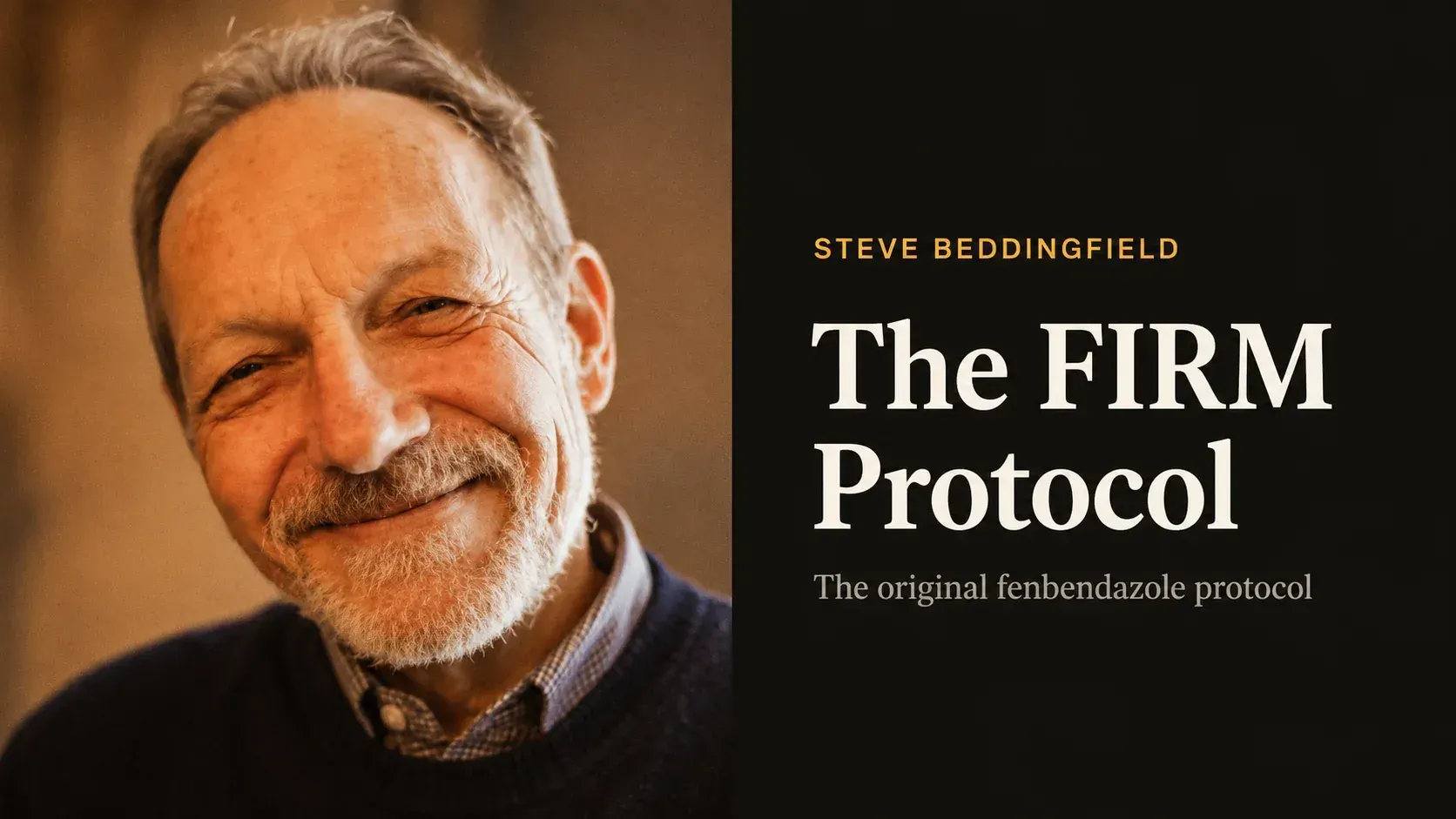
Steve Beddingfield’s FIRM Protocol
Quick Overview
- Author: Steve Beddingfield (microbiologist)
- Goal: Parasite elimination, immune modulation, and systemic detoxification
- Duration: 4–8 weeks initial phase; up to 6 months with cycling
- Key compounds: Fenbendazole, Magnesium, Red Reishi Mushroom, Vitamin D3
- Cycles: Initial daily use, then 1 week on / 1 week off maintenance cycling
Overview
The FIRM Protocol (Fenbendazole, Immune support, Reishi, Magnesium) was developed in the early 2010s by Steve Beddingfield, a microbiologist who applied the protocol to his own health challenges, which included thyroid cancer, Lyme disease, and Morgellons disease. Drawing on his background in microbiology, Beddingfield combined an antiparasitic agent with immune-supportive supplements to address what he described as underlying parasitic and pathogenic contributors to chronic disease.
The protocol gained community traction through online sharing, particularly in groups focused on fenbendazole as an off-label intervention. Beddingfield continued refining and distributing the protocol until his death in 2022. The version documented here reflects the core structure of the protocol as he published it, along with updates made to the regimen after his passing.
The FIRM Protocol is not an approved medical treatment, and it has not been evaluated in a formal clinical trial as a combined regimen. It is used by individuals seeking adjunctive or alternative approaches to disease management.
Dosage and Schedule
Phase 1: Initial Treatment (4–8 Weeks)
- Fenbendazole: Approximately 222 mg per 50 lbs (22.7 kg) of body weight, taken daily. This is based on the body-weight dosing formula Beddingfield used, starting from a baseline of 222 mg for smaller individuals and scaling upward.
- Magnesium: Taken as needed to support bowel regularity and elimination. Magnesium oxide or citrate is most commonly referenced. Dosing is adjusted to individual tolerance.
- Red Reishi Mushroom: 1–2 teaspoons of powdered extract daily, taken with water or blended into food.
- Vitamin D3: 5,000–10,000 IU daily. Beddingfield included D3 as an immune modulator; later versions of the protocol de-emphasized this component (see Updated Considerations below).
Phase 2: Maintenance Cycling (Beyond 8 Weeks, Up to 6 Months)
- Fenbendazole: 1 week on, 1 week off. Dosing per body weight continues as in Phase 1.
- Magnesium, Reishi, Vitamin D3: Continued at the same dosages during active weeks; cycling follows the fenbendazole schedule.
Dietary Adjustments
- Whole-foods, organic diet where possible
- Reduced sugar and refined carbohydrate intake
- Reduced or eliminated dairy
- Purified water (reverse osmosis or equivalent) for drinking and food preparation
Mechanism of Action
Fenbendazole
Fenbendazole is a benzimidazole anthelmintic that disrupts microtubule polymerization by binding to beta-tubulin. In a 2018 study published in Scientific Reports, Dogra et al. demonstrated that fenbendazole exhibits moderate microtubule-destabilizing activity in human cancer cell lines and causes cell death through multiple pathways, including mitochondrial translocation of p53, downregulation of GLUT transporters and hexokinase II (effectively reducing glucose uptake), and interference with proteasomal function. These findings suggest that fenbendazole’s antitumor activity may be distinct from its antiparasitic mechanism, though both rely on disruption of tubulin dynamics.
Red Reishi Mushroom (Ganoderma lucidum)
Red Reishi (Ganoderma lucidum) has been studied for immunomodulatory and potential antitumor properties. A 2016 Cochrane-affiliated meta-analysis (Jin et al., PMC6353236) found that patients receiving G. lucidum alongside chemotherapy or radiotherapy were more likely to respond positively than those receiving oncological treatment alone, and that its use was associated with modest increases in CD3, CD4, and CD8 immune cell percentages. A 2013 PLOS ONE study (Suarez-Arroyo et al.) demonstrated that Reishi suppressed protein synthesis and reduced tumor growth in inflammatory breast cancer models by downregulating PI3K/AKT/mTOR and MAPK pathway activity. Evidence is preliminary, and effects in humans as a standalone agent are not well established.
Magnesium
Magnesium is an essential cofactor in numerous enzymatic reactions, including those central to immune cell activation. A 2023 narrative review (PMC10375690) documented magnesium’s role in T-cell activation, macrophage function, B-cell immunoglobulin production, and antioxidant defense. The protocol uses magnesium primarily to support bowel motility and detoxification, with secondary interest in its immune-modulatory properties.
Vitamin D3
Vitamin D3 (cholecalciferol) influences immune cell proliferation, differentiation, and apoptosis through its active metabolite 1,25-dihydroxycholecalciferol. An umbrella review published in Clinical Nutrition ESPEN (PubMed ID 39178988) found strong evidence that vitamin D3 supplementation reduced total cancer mortality (OR 0.9, 95% CI 0.87–0.92), with highly suggestive evidence for prevention of several site-specific cancers. The review also noted that maintaining sufficient vitamin D3 levels was associated with reduced risk of renal cell and thyroid cancer. Evidence for cancer incidence reduction from supplementation remains mixed across individual trials.
The Combination Hypothesis: Scientific Rationale for Multi-Agent Protocols
The FIRM Protocol is predicated on the idea that combining agents with complementary mechanisms produces a more robust effect than any single substance alone. This approach mirrors the logic of combination chemotherapy, which has become the standard of care for most cancers precisely because targeting multiple pathways simultaneously reduces the likelihood of resistance and enhances tumor cell kill.
Complementary Mechanisms in the FIRM Regimen
Fenbendazole's primary action—microtubule destabilization—is direct and cytotoxic, but it also downregulates glucose metabolism through inhibition of GLUT1/GLUT4 transporters and hexokinase II (Dogra et al., Scientific Reports 2018). Reishi mushroom polysaccharides and triterpenes target the immune system and tumor microenvironment, modulating cytokine production, natural killer (NK) cell activity, and regulatory pathways like PI3K/AKT/mTOR. Magnesium acts at the interface of immune cell activation and metabolic support, ensuring that cytotoxic T cells remain in a state of high functional readiness (discussed in detail below).
This tripartite attack—cellular, immunological, and metabolic—addresses three fundamental vulnerabilities in cancer biology:
- Tumor cell proliferation: Fenbendazole directly disrupts mitosis and glucose uptake.
- Immune surveillance: Reishi and magnesium support the host immune system's ability to identify and eliminate malignant cells.
- Chronic inflammation and microenvironment: Reishi's anti-inflammatory activity and magnesium's role in oxidative stress management create a less permissive environment for tumor survival.
Evidence for Benzimidazole Combination Therapy
A 2025 observational report by OneDayMD documented outcomes in over 700 patients using combinations of ivermectin, fenbendazole, and mebendazole for advanced-stage cancers including triple-negative breast cancer (TNBC), pancreatic adenocarcinoma, and metastatic lung cancer. Although the data is confounded by concurrent conventional treatments and lacks randomization, the report noted tumor regression in approximately 40% of cases and biomarker stabilization in an additional 30%. The authors hypothesized that the complementary mechanisms of the three benzimidazoles—each with slightly different binding affinities to beta-tubulin and secondary pathway effects—provided additive or synergistic cytotoxicity.
Similarly, a 2024 preclinical study in Translational Lung Cancer Research demonstrated that combining fenbendazole with diisopropylamine dichloroacetate (DADA), a hepatoprotective metabolic modulator, reduced A549 lung cancer tumor volume by 62% compared to 38% for fenbendazole alone and 21% for DADA alone. The combination was also associated with reduced liver enzyme elevation, suggesting that multi-agent strategies can be designed not only for efficacy but also to mitigate toxicity.
While the FIRM protocol does not include ivermectin or mebendazole, the principle remains analogous: layering agents with distinct yet compatible mechanisms of action to maximize therapeutic pressure on malignant cells while supporting the host's own defenses.
The Magnesium-T Cell Connection: A 2022 Discovery
In January 2022, a groundbreaking study published in Cell by Lötscher et al. (University of Basel and University of Cambridge) revealed a previously unknown mechanism by which magnesium directly enhances the ability of cytotoxic CD8+ T cells to eliminate cancer cells and infected cells. The discovery has significant implications for immunotherapy and provides a mechanistic rationale for the inclusion of magnesium supplementation in cancer treatment protocols.
LFA-1 Activation and the Magnesium Gate
The research identified that lymphocyte function-associated antigen 1 (LFA-1), a key integrin receptor on the surface of T cells, requires extracellular magnesium to remain in its active, extended conformation. When magnesium levels are low, LFA-1 collapses into a bent, inactive state, preventing the T cell from docking onto target cells expressing the cognate antigen (via ICAM-1). In this inactive state, T cells lose their cytotoxic capacity.
When sufficient magnesium is present in the extracellular space, it binds to a specific site on LFA-1, stabilizing the extended form and enabling the formation of a functional immunological synapse. This allows the T cell to deliver perforin and granzymes, inducing apoptosis in the target cell.
Implications for Cancer Immunotherapy
Retrospective analysis of clinical trial data in the study found that cancer patients with low serum magnesium levels (<0.8 mmol/L) who received immune checkpoint inhibitors (ICIs) had significantly faster disease progression and shorter overall survival compared to those with normal or elevated magnesium. The correlation held across tumor types, suggesting that magnesium deficiency creates a universal immune disadvantage.
Experimental work in mouse tumor models demonstrated that increasing the local magnesium concentration within the tumor microenvironment enhanced T cell infiltration and tumor control, particularly when combined with anti-PD-1 therapy. This suggests that magnesium supplementation could serve as a low-cost, low-toxicity adjunct to immunotherapy.
Relevance to the FIRM Protocol
Steve Beddingfield's inclusion of magnesium in the FIRM protocol predates this discovery by approximately a decade. His original rationale was functional: to maintain bowel motility and support detoxification. However, the 2022 discovery provides an additional, mechanistically grounded justification for magnesium's role. By ensuring adequate extracellular magnesium, the protocol may be inadvertently supporting endogenous antitumor immunity—an effect that would be synergistic with Reishi's immunomodulatory properties and potentially beneficial in the context of any residual or subclinical immune activity against tumor cells.
Source: Lötscher J et al. "Magnesium sensing via LFA-1 regulates CD8+ T cell effector function." Cell. 2022;185(4):585-602. PMID: 35063072.
Liver Monitoring and Long-Term Safety Protocols
One of the most critical elements of the FIRM protocol—and one that sets it apart from more casual, community-disseminated fenbendazole regimens—is the emphasis on routine liver function monitoring. This recommendation reflects the known hepatotoxicity risk associated with prolonged benzimidazole use.
Benzimidazole-Induced Liver Injury: Mechanisms and Risk Factors
Benzimidazoles, including fenbendazole, mebendazole, and albendazole, are generally well-tolerated at standard antiparasitic doses (e.g., 100–200 mg of mebendazole for 3 days). However, extended use—particularly at doses exceeding standard antiparasitic regimens—has been associated with transient elevations in serum aminotransferases (ALT, AST) in up to 50% of patients (NCBI Bookshelf, "Albendazole" LiverTox chapter).
The mechanism is multifactorial:
- Direct metabolic burden: Benzimidazoles undergo hepatic metabolism via CYP450 enzymes. Chronic exposure to the drug and its metabolites can overwhelm detoxification pathways, particularly in individuals with pre-existing liver compromise or polymorphisms in metabolic enzymes.
- Immunoallergic reaction: A subset of cases involve hypersensitivity reactions characterized by fever, rash, eosinophilia, and hepatocellular injury. This pattern is more common with mebendazole than fenbendazole, but the risk exists across the class.
- Gilbert's syndrome interaction: Individuals with Gilbert's syndrome—a common genetic variant affecting bilirubin conjugation—are at higher risk of symptomatic liver dysfunction when taking benzimidazoles. A 2019 case series (PMID: 31423600) documented severe hyperbilirubinemia and hepatotoxicity in three patients with Gilbert's syndrome who were using mebendazole off-label for cancer.
Recommended Monitoring Schedule
For individuals using the FIRM protocol or any extended-duration fenbendazole regimen, the following monitoring schedule is advised based on clinical pharmacology literature and expert consensus from integrative oncology practices:
| Timepoint | Tests | Action Threshold |
|---|---|---|
| Baseline (before starting) | AST, ALT, ALP, total bilirubin, GGT, CBC with differential | Document baseline values. Do not start protocol if ALT/AST >2× ULN. |
| Week 2 | AST, ALT, bilirubin | If ALT/AST >3× ULN, reduce dose or pause protocol. |
| Week 4 | Full hepatic panel + CBC | If ALT/AST >5× ULN or bilirubin >2× ULN, discontinue immediately. |
| Monthly (months 2–6) | AST, ALT, bilirubin, CBC | Continue monitoring. Persistent elevation warrants dose reduction or discontinuation. |
| Every 3 months (if beyond 6 months) | Full hepatic panel + CBC | Long-term surveillance; consider periodic protocol breaks. |
Clinical Note: If liver enzyme elevations occur, immediate discontinuation typically results in rapid normalization. However, patients who have experienced hypersensitivity reactions should not resume the protocol, as re-challenge carries a risk of more severe injury.
Sources: NCBI LiverTox "Albendazole" and "Mebendazole" monographs; Sanare Lab Safety Review "Fenbendazole Liver Safety & Side Effects" (2024); PMID: 31423600 (Gilbert's syndrome case series).
Comparative Analysis: FIRM vs. Other Community Cancer Protocols
The FIRM protocol is one of several community-developed, fenbendazole-based regimens that have emerged since the viral spread of the Joe Tippens story in 2019. Understanding how these protocols differ in structure, complexity, and risk profile can help individuals make informed decisions about which approach—if any—aligns with their goals and medical oversight capacity.
| Protocol | Core Agents | Complexity | Monitoring Required | Unique Features |
|---|---|---|---|---|
| Joe Tippens | Fenbendazole, Vitamin E, Curcumin, CBD | Low | Optional (no liver monitoring in original version) | Simplest protocol; 3-on/4-off or continuous; widely marketed. |
| FIRM (Beddingfield) | Fenbendazole, Red Reishi, Magnesium, Vitamin D3 | Low-Medium | Recommended (liver function tests monthly) | Emphasis on immune support and detoxification; body-weight dosing. |
| Dr. William Makis | Ivermectin (high-dose) + Fenbendazole + Mebendazole | High | Mandatory (LFTs, kidney function, CBC every 1–2 weeks) | Triple-drug synergy; tiered by severity (Standard/Turbo/Maintenance); physician oversight required. |
| Jane McLelland ("Starve Cancer") | Metformin, Statins, Mebendazole, Doxycycline, Dipyridamole | High | Mandatory (prescription drugs; requires oncologist collaboration) | Metabolic blockade strategy; targets 10+ cancer vulnerabilities; prescription-only. |
| Fenbendazole + DCA | Fenbendazole, Dichloroacetate (DCA) | Medium | Recommended (peripheral neuropathy risk with DCA) | Dual metabolic targeting (glycolysis + pyruvate dehydrogenase). |
Key Observations
- Simplicity vs. synergy: The Joe Tippens protocol is the easiest to implement but relies on a single active agent (fenbendazole) with supplements that lack robust clinical evidence for synergy. The FIRM protocol adds immunomodulation via Reishi, while the Makis protocols pursue aggressive multi-drug synergy at the cost of higher toxicity risk.
- Monitoring burden: Protocols using multiple prescription-level agents (Makis, McLelland) require regular blood work and physician oversight, making them inaccessible to individuals without cooperative medical providers. FIRM occupies a middle ground: none of the core agents are prescription drugs, but liver monitoring is still advised.
- Evidence base: None of these protocols have been validated in randomized controlled trials. The Jane McLelland approach has the strongest mechanistic foundation (targeting known cancer metabolic dependencies), but also the highest regulatory and access barriers.
Sources: OneDayMD "Dr. William Makis Ivermectin Protocol" (2025); Sanare Lab "Joe Tippens Protocol" evidence review; Batesline "Metabolic Cancer Treatment" (2025).
Practical Implementation Challenges and Real-World Considerations
While the FIRM protocol is conceptually straightforward, individuals attempting to implement it face several practical barriers that are rarely discussed in online forums or advocacy groups.
Sourcing and Product Quality
Fenbendazole: The protocol calls for veterinary-grade fenbendazole, most commonly sourced from brands like Panacur C (canine dewormer, 22.2% fenbendazole granules) or Safe-Guard (equine paste, 10% fenbendazole). However, veterinary products are not subject to the same manufacturing standards as human pharmaceuticals. Third-party testing by independent labs has documented variability in fenbendazole content (ranging from 85% to 115% of labeled dose) and the presence of excipients not listed on packaging. The 77.8% of Panacur C that is not fenbendazole includes microcrystalline cellulose, magnesium stearate, and undisclosed flow agents—substances that may affect bioavailability or cause gastrointestinal irritation in sensitive individuals.
Red Reishi: Ganoderma lucidum products vary widely in their polysaccharide and triterpene content depending on extraction method, cultivation substrate, and processing. Standardized extracts (e.g., dual-extraction, standardized to >30% polysaccharides and >2% triterpenes) are preferred for consistency, but these are significantly more expensive than generic powders. There is no regulatory oversight ensuring that retail "Reishi powder" contains therapeutically relevant concentrations of active compounds.
Magnesium: The protocol does not specify a magnesium salt, but bioavailability varies dramatically across forms. Magnesium oxide (the cheapest and most common form) has <4% bioavailability and functions primarily as a laxative. Magnesium citrate, glycinate, or malate are better absorbed and more appropriate for systemic immune support, but they are not the forms typically used by individuals following the original FIRM guidance.
Adherence and Lifestyle Burden
The FIRM protocol requires daily dosing for 4–8 weeks, followed by weekly cycling for months. Adherence studies in clinical oncology consistently show that even simple oral regimens experience 30–50% non-adherence rates. The addition of dietary restrictions (elimination of dairy, sugar, refined carbohydrates), purified water requirements, and the physical burden of frequent bowel movements (due to magnesium) creates a substantial lifestyle disruption that is difficult to sustain without strong social support or intrinsic motivation.
For individuals undergoing concurrent conventional treatment (chemotherapy, radiation), the gastrointestinal side effects of fenbendazole and magnesium may compound treatment-related nausea, diarrhea, and mucositis, potentially forcing dose reductions or discontinuation.
Physician Collaboration and Disclosure
Most oncologists are unfamiliar with the FIRM protocol and may discourage its use due to lack of evidence, potential drug interactions, and concerns about patients delaying or refusing standard-of-care therapy. Patients who choose to pursue the protocol often do so without informing their oncology team, which creates a barrier to proper monitoring and increases the risk of undetected adverse events (e.g., liver injury) or dangerous drug-drug interactions.
A minority of patients work with "integrative oncologists" or naturopathic doctors willing to supervise the protocol, but access to such practitioners is limited, often expensive (not covered by insurance), and geographically concentrated in urban areas or specific states (e.g., Arizona, California, Oregon).
Steve Beddingfield's Legacy and Protocol Evolution After 2022
Steve Beddingfield died in 2022, but the FIRM protocol continues to circulate within online health communities, particularly in Facebook groups such as "Steve's Images" and "Morgellons Support Science." His death marked a transition point: from a living, iterating protocol guided by a single author to a community-maintained set of guidelines subject to interpretation, modification, and fragmentation.
Post-2022 Modifications
In the years following Beddingfield's death, several elements of the protocol have been revised by community moderators and self-appointed protocol custodians:
- Removal of ozonated water: Earlier versions recommended ozonated water for its purported antimicrobial and oxidative effects. This component was removed due to safety concerns (ozone gas inhalation during home ozonation) and lack of supporting evidence.
- De-emphasis of high-dose Vitamin D3: The original protocol included 5,000–10,000 IU of D3 daily as a standard component. Later versions recommend serum 25(OH)D testing and individualized supplementation, reflecting growing awareness of hypercalcemia risk and variability in baseline vitamin D status.
- Iodine removal: Some early iterations included iodine supplementation (Lugol's solution or potassium iodide) as part of a "detoxification" phase. This was dropped from the core protocol due to thyroid toxicity concerns, particularly in individuals with autoimmune thyroid disease.
- Addition of N-Acetyl Cysteine (NAC): Some community variants now include NAC (600–1200 mg daily) for glutathione support and liver protection, though this was not part of Beddingfield's original formulation.
The Challenge of Protocol Integrity
Without a living author to adjudicate disputes or provide authoritative updates, the FIRM protocol has become a "living document" subject to drift, conflation with other regimens (e.g., incorporation of ivermectin from the Makis protocols), and anecdotal additions based on individual patient experiences. This creates a tension between preserving the original protocol's structure and allowing it to evolve in response to new research (e.g., the 2022 magnesium-T cell discovery).
For researchers or clinicians attempting to evaluate the protocol's safety or efficacy, this fluidity poses a methodological challenge: there is no single, stable "FIRM protocol" to study. Instead, there are dozens of variants, each with slightly different agent lists, dosing schedules, and adjunctive recommendations.
Updated Considerations
Several elements of the original FIRM Protocol have been revised or clarified by the community maintaining the documentation after Beddingfield’s death in 2022:
- Ozonated water removed: Earlier versions of the protocol recommended ozonated water as part of the regimen. This component has been removed from the current standard version, primarily due to safety concerns around ozone inhalation risk during preparation and the lack of supporting evidence for added benefit.
- Vitamin D3 de-emphasized: Later community updates moved D3 from a core component to an optional or individually determined one. The original protocol included D3 at 5,000–10,000 IU as a standard item; current guidance suggests testing serum levels and supplementing based on individual deficiency rather than using a fixed high dose.
- Iodine in early versions: Some early iterations of the protocol included iodine supplementation as part of the detoxification phase. This was removed from the main protocol and is not part of the standard current formulation.
- Liver monitoring: Beddingfield’s own guidance emphasized routine liver function monitoring throughout the protocol. This recommendation remains part of the community-maintained documentation and reflects appropriate caution given the extended duration of fenbendazole use.
Important Considerations
Fenbendazole is approved for veterinary use as an antiparasitic agent. It is not approved by the FDA or equivalent regulatory bodies for use in humans for any indication, including cancer treatment. Use in humans is off-label and not supported by randomized controlled trial data.
Reported side effects of fenbendazole in humans include elevated liver enzymes, nausea, and gastrointestinal discomfort, particularly at higher doses or during extended use. High-dose vitamin D3 supplementation carries a risk of hypercalcemia. Magnesium supplementation at high doses may cause diarrhea and electrolyte imbalance. Reishi mushroom preparations are generally well tolerated but may interact with anticoagulant medications.
Fenbendazole may interact with other medications, including metronidazole, salicylanilide anthelmintics, and potentially some chemotherapy agents. Anyone taking prescription medications should consult a prescribing physician before adding fenbendazole to their regimen.
This protocol has not been evaluated in formal clinical trials as a combined regimen. The information presented is for educational purposes only. Always consult a qualified healthcare professional before starting any new treatment protocol.
Sources
Free · No spam · Unsubscribe anytime
Get the research before the sellers spin it
Join readers getting evidence-based fenbendazole protocols, dosing guides, and honest product investigations — straight to your inbox. We read the studies so you don’t get sold a story.
Subscribe free →📚 Key References & Sources
- Son DS et al. "Fenbendazole has anti-cancer properties." (key preclinical study).
- Dogra N, Kumar A, Mukhopadhyay T. "Fenbendazole acts as a moderate microtubule destabilizing agent." Sci Rep. 2018;8(1):11926. PMID: 30093705 — PubMed.
- FDA Center for Veterinary Medicine: fenbendazole is approved only for veterinary use (animal dewormer) — FDA CVM.
- National Cancer Institute / ClinicalTrials.gov: no completed clinical trials of fenbendazole for human cancer treatment — ClinicalTrials.gov.
- Juarez M et al. "The multitargeted drug ivermectin..." Acta Tropica. 2018;183:67-73. PMID: 29595784 — PubMed.
- FDA: "Why You Should Not Use Ivermectin to Treat or Prevent COVID-19" (applies to off-label cancer context) — FDA.
Frequently Asked Questions
What is the FIRM protocol?
FIRM stands for Fenbendazole, Immune support, Reishi, Magnesium. It's a community-developed protocol created by microbiologist Steve Beddingfield in the early 2010s, combining an antiparasitic drug with immune-supportive supplements.
How does it differ from the Joe Tippens protocol?
The Joe Tippens protocol uses fenbendazole with vitamin E, curcumin, and CBD—focusing primarily on direct anticancer mechanisms. FIRM adds Red Reishi mushroom for immunomodulation and magnesium for immune cell activation and detoxification, with a stronger emphasis on body-weight dosing and liver monitoring.
Is the FIRM protocol safe?
The protocol has not been validated in clinical trials. Fenbendazole carries risks of liver toxicity, particularly with long-term use. Routine liver function monitoring is essential. It should only be used under medical supervision.
How long should the FIRM protocol be followed?
The original protocol recommends 4–8 weeks of daily use (Phase 1), followed by 1-week-on/1-week-off maintenance cycling for up to 6 months. Duration should be individualized based on response and tolerance, with liver function tests guiding continuation.
Can I use the FIRM protocol alongside chemotherapy?
Fenbendazole may interact with microtubule-targeting chemotherapy agents (e.g., paclitaxel, docetaxel). The combination could be synergistic or antagonistic depending on timing and dosing. This decision must be made in consultation with an oncologist familiar with both conventional and repurposed drug interactions.
What type of magnesium should I use?
The original protocol does not specify a form. For immune support and systemic magnesium status, magnesium citrate, glycinate, or malate are better absorbed than magnesium oxide. Magnesium oxide functions primarily as a laxative and has very low bioavailability (<4%).
Where can I source pharmaceutical-grade fenbendazole?
Fenbendazole is not approved for human use and is not available as a pharmaceutical-grade product in most jurisdictions. Veterinary products (Panacur C, Safe-Guard) are commonly used, but they are not manufactured to human pharmaceutical standards and may contain variable dosing and undisclosed excipients.
What happened to the protocol after Steve Beddingfield died?
After Beddingfield's death in 2022, the protocol became community-maintained. Some elements have been removed (ozonated water, fixed high-dose vitamin D3, iodine), while others have been added by various groups (NAC, ivermectin). There is no single authoritative version.
Should I inform my oncologist if I'm using the FIRM protocol?
Yes. Disclosure is essential for safety monitoring (liver function, drug interactions) and to ensure that your oncologist can make informed treatment decisions. While some oncologists may discourage off-label protocols, withholding this information increases the risk of adverse events and diagnostic confusion.
⚖️ Conflict of Interest Disclosure
Transparency matters. Readers should be aware of the following potential conflicts of interest associated with this protocol:
- Joe Tippens gained fame through a viral blog post about his cancer remission. He received concurrent conventional immunotherapy (Keytruda), which likely contributed to his remission. Multiple fenbendazole supplement brands have used his story for marketing, and Tippens has commercial connections to the fenbendazole supplement industry.
- This post may contain affiliate or commission-based links. The blog may receive compensation for purchases made through these links.
Disclaimer — This content is for educational and informational purposes only. It does not constitute medical advice. Always consult a qualified healthcare professional before starting any treatment protocol.
Related Protocols and Further Reading
Compare this regimen with other sourced protocol analyses on this site:
- Fenbendazole, Berberine & Curcumin Protocol
- High-Dose Fenbendazole Protocol
- Care Oncology Clinic (COC) Protocol
- Fenbendazole + DCA Protocol
- The Joe Tippens Protocol
🔬 How we research & review this article
This article is an independent, evidence-based review. Every clinical claim is sourced from primary literature (PubMed, ClinicalTrials.gov, FDA/WHO). Sources are selected for methodological quality, uncertainties are stated plainly, and conflicts of interest are disclosed. Content is reviewed and updated on a rolling schedule — see the “Last reviewed” date at the top (July 2026).