
⚠️ CRITICAL SAFETY WARNING
Andreas Kalcker is primarily known for promoting chlorine dioxide (CDS/MMS), which the FDA classifies as equivalent to industrial bleach. The FDA has received reports of severe adverse events including respiratory failure, life-threatening drops in blood pressure, acute liver failure, and fatal outcomes linked to ingestion of chlorine dioxide products. A five-year-old child in Argentina died from multiple organ failure after being given CDS.
While this particular protocol (Protocol P) focuses on conventional antiparasitic drugs rather than chlorine dioxide, Kalcker's other protocols do involve CDS/MMS, and readers should be aware of the serious safety concerns surrounding his broader recommendations.
This article is published for informational and warning purposes only. The Fenbendazole does NOT endorse, recommend, or promote the use of chlorine dioxide products. If you or someone you know has consumed CDS/MMS, contact Poison Control (1-800-222-1222) or seek emergency medical care immediately.
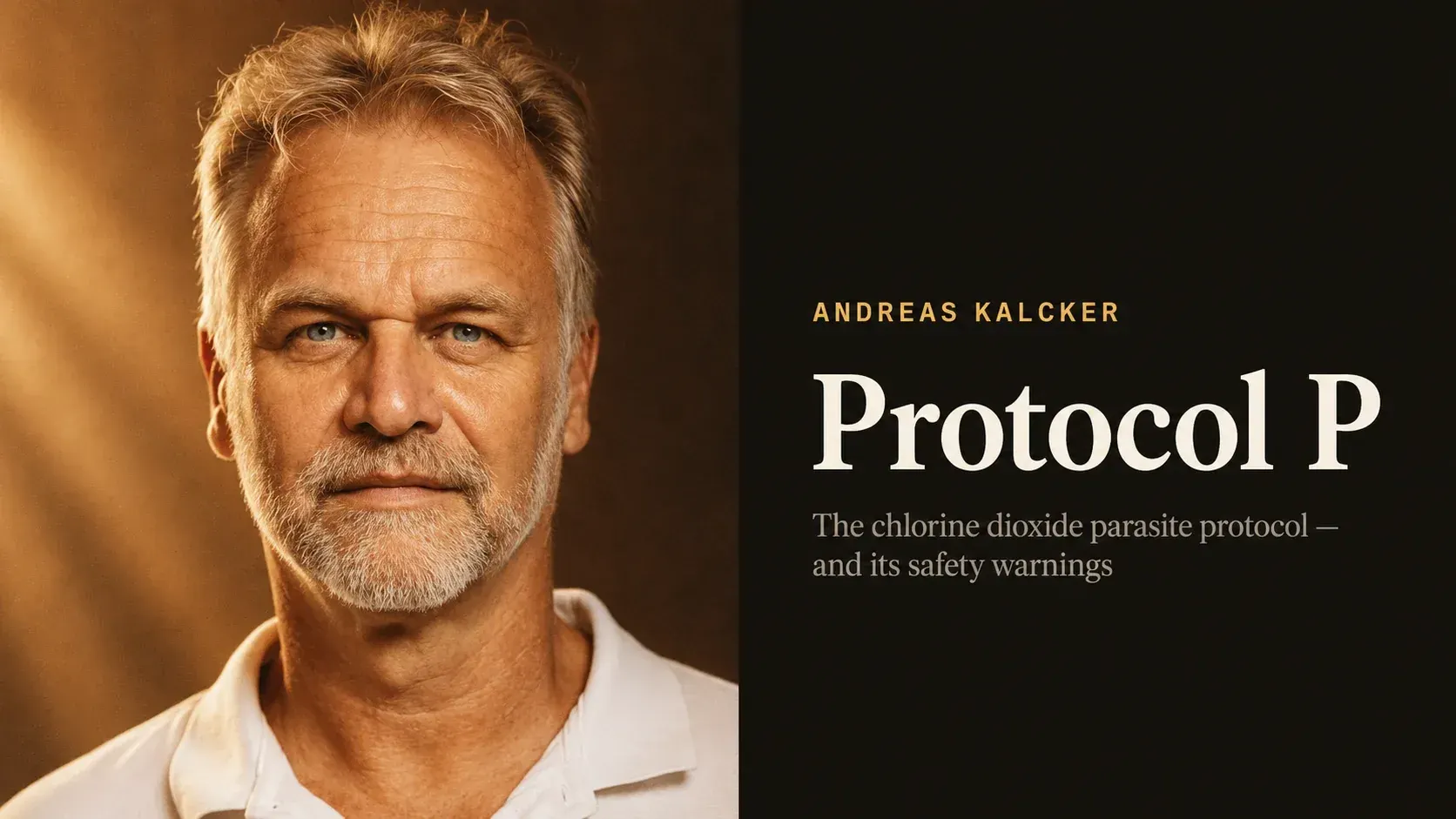
Protocol P by Andreas Kalcker
Quick Overview
- Author: Andreas Kalcker (Forbidden Health, 2019)
- Goal: Intensive parasite cleansing targeting a broad spectrum of intestinal and systemic parasites
- Duration: 30-day cycle (18 active days + 12 rest days)
- Key compounds: Pyrantel Pamoate, Mebendazole, Diatomaceous Earth, Castor Oil, Neem
- Cycles: Up to 3 consecutive monthly cycles, ideally timed around the full moon
⚠️ INFORMATIONAL ONLY: The following describes the protocol as published by Andreas Kalcker for informational purposes only. This is NOT a recommendation. Self-administering pharmaceutical drugs without medical supervision carries serious health risks. Always consult a licensed healthcare professional.
Overview
Protocol P is an antiparasitic regimen developed by Andreas Kalcker, a biophysicist and author best known for his research into chlorine dioxide and alternative health approaches. The protocol was formally described in his 2019 book Forbidden Health and has since circulated widely in integrative health communities seeking non-pharmaceutical or adjunct approaches to parasite elimination.
The protocol combines two pharmaceutical antiparasitic agents — Pyrantel Pamoate and Mebendazole — with several natural compounds, including Diatomaceous Earth, Castor Oil, Neem, and supportive enemas. The rationale for combining these agents is to target parasites through multiple simultaneous mechanisms: neuromuscular paralysis, disruption of glucose metabolism, and physical destruction of the parasite’s outer membrane.
The protocol runs on a 30-day cycle — 18 days of active intervention followed by 12 days of rest — and is designed to be repeated for up to three months. Timing cycles around the full moon is an optional traditional practice based on observations that parasitic activity may increase during this period, though this is not supported by clinical evidence.
🚫 WARNING: The following dosages involve pharmaceutical drugs that require medical supervision. Do NOT attempt to self-administer prescription or regulated medications without consulting a qualified healthcare provider. Incorrect dosing of Pyrantel Pamoate and Mebendazole can cause serious adverse effects including liver damage.
Dosage and Schedule
The full active phase spans Days 1 through 18. The schedule below reflects the protocol as described by Kalcker. All dosages are for adults. Dosages for children differ and are not covered here.
Days 1–5: Initial Antiparasitic Phase
- Day 1: Pyrantel Pamoate — single dose of 11 mg/kg body weight (standard adult dose: approximately 750 mg), taken with food. Diatomaceous Earth — 1 heaped tablespoon in water, taken in the morning on an empty stomach.
- Day 2: Mebendazole — 100 mg twice daily (morning and evening), taken with food. Diatomaceous Earth — 1 heaped tablespoon in water, morning.
- Day 3: Mebendazole — 100 mg twice daily. Diatomaceous Earth — 1 heaped tablespoon, morning. Castor Oil — 1–2 tablespoons taken in the morning to stimulate intestinal evacuation.
- Day 4: Mebendazole — 100 mg twice daily. Diatomaceous Earth — 1 heaped tablespoon, morning.
- Day 5: Pyrantel Pamoate — repeat dose as on Day 1. Diatomaceous Earth — 1 heaped tablespoon, morning.
Days 6–8: Consolidation Phase
- Day 6: Mebendazole — 100 mg twice daily. Castor Oil — 1–2 tablespoons in the morning. Diatomaceous Earth — 1 heaped tablespoon, morning.
- Day 7: Mebendazole — 100 mg twice daily. Diatomaceous Earth — 1 heaped tablespoon, morning.
- Day 8: Mebendazole — 100 mg twice daily. Diatomaceous Earth — 1 heaped tablespoon, morning.
Days 9–18: Maintenance and Elimination Phase
- Castor Oil — 1–2 tablespoons every other day to support intestinal transit and evacuation of paralyzed parasites.
- Diatomaceous Earth — 1 heaped tablespoon in water each morning.
- Neem infusion — 1–2 cups of neem leaf tea daily, prepared by steeping dried neem leaves in hot water for 10–15 minutes.
- Enemas — performed every 2–3 days using lukewarm water or a neem infusion to mechanically remove parasites and debris from the lower colon.
Days 19–30: Rest Phase
No active antiparasitic agents are taken during this period. This phase allows the body to recover, permits surviving parasite eggs to hatch (making the organism more vulnerable to subsequent cycles), and reduces the risk of adverse effects from prolonged pharmaceutical use. Adequate hydration and a diet low in refined sugars is recommended during rest.
Drug Interaction Warnings
Critical interaction — Mebendazole and Metronidazole: Co-administration of Mebendazole and Metronidazole (Flagyl) is contraindicated. This combination has been associated with Stevens-Johnson syndrome, a severe and potentially life-threatening skin reaction. Do not use these two agents together under any circumstances.
Additional interactions to be aware of when taking Mebendazole:
- Cimetidine (Tagamet): May increase plasma levels of Mebendazole, potentially increasing toxicity risk.
- Ethotoin and other hydantoin anticonvulsants: Mebendazole may alter the metabolism of these drugs.
- Penicillin: Potential pharmacokinetic interaction; use with caution.
- Carbamazepine and phenytoin: These anticonvulsants may reduce Mebendazole plasma levels, potentially reducing efficacy.
Consult a pharmacist or physician before combining Mebendazole with any prescription medication.
Mechanism of Action
Pyrantel Pamoate
Pyrantel Pamoate is a depolarizing neuromuscular blocking agent. It acts as an agonist at nicotinic acetylcholine receptors on the muscle cells of susceptible helminths, causing spastic paralysis. Once paralyzed, worms are unable to maintain their position in the intestinal tract and are expelled through normal peristaltic movement. The drug is poorly absorbed systemically, meaning its activity is concentrated within the gastrointestinal lumen. It is effective against roundworms (Ascaris lumbricoides), pinworms (Enterobius vermicularis), and hookworms (Ancylostoma duodenale, Necator americanus).
Mebendazole
Mebendazole is a broad-spectrum benzimidazole anthelmintic. Its primary mechanism is selective inhibition of tubulin polymerization in susceptible helminths. By binding to beta-tubulin, Mebendazole prevents the formation of microtubules, which are essential for glucose uptake and cell division in parasites. Without adequate glucose, worm energy stores are depleted and the organism dies. Because human tubulin binds Mebendazole with much lower affinity, the drug shows selective toxicity toward parasites. It is active against whipworm (Trichuris trichiura), hookworms, roundworms, and pinworms.
Diatomaceous Earth
Food-grade Diatomaceous Earth (DE) is composed of the fossilized silica skeletons of microscopic algae called diatoms. The material is mechanically abrasive at a microscopic scale. When ingested, the sharp silica particles are proposed to damage the protective outer cuticle of intestinal parasites through physical abrasion, leading to dehydration and death of the organism. DE has no known pharmacological mechanism and does not enter systemic circulation. Human clinical evidence for its antiparasitic efficacy is limited; most support comes from animal husbandry and in vitro studies.
Neem (Azadirachta indica)
Neem is a tree native to South Asia whose leaves, bark, and seeds have been used for centuries in Ayurvedic medicine. The primary bioactive compounds in neem — particularly azadirachtin, nimbin, and nimbolide — have demonstrated broad antimicrobial, antifungal, antiviral, and anthelmintic properties in laboratory and animal studies. Azadirachtin is believed to disrupt hormonal signaling and molting in arthropods and helminths, impair reproduction, and inhibit larval development. In vitro studies have shown neem extracts to be active against a range of intestinal parasites, though controlled human clinical trial data remain limited.
Castor Oil
Castor Oil is derived from the seeds of Ricinus communis. When ingested, ricinoleic acid — the principal fatty acid in castor oil — is released in the small intestine and acts as a stimulant laxative by binding to prostaglandin EP3 receptors in intestinal smooth muscle, promoting strong peristaltic contractions. In the context of Protocol P, Castor Oil serves a mechanical function: it accelerates intestinal transit, facilitating the physical expulsion of paralyzed or weakened parasites and accumulated debris before they can recover or re-anchor.
Enemas
Enemas are used during the latter phase of the active cycle to mechanically cleanse the lower colon. By introducing a volume of water or neem infusion into the rectum and sigmoid colon, peristalsis is stimulated and accumulated material — including dead or paralyzed parasites, mucus, and biofilm — is evacuated. Proponents argue that this step reduces the reabsorption of die-off toxins (a process sometimes referred to as the Herxheimer reaction) and improves the overall effectiveness of the elimination phase. There is no clinical trial evidence supporting the routine use of enemas in parasite cleansing protocols.
🚨 ESPECIALLY CONCERNING: Reports indicate CDS/MMS has been administered to children as part of Kalcker's other protocols. Medical authorities consider this child endangerment. Kalcker's broader body of work includes protocols involving chlorine dioxide that have been linked to child deaths. No unproven protocol should ever be administered to children without proper medical oversight.
Andreas Kalcker: Who Is He?
Given that Protocol P was developed by Andreas Kalcker, readers should understand who he is and the context of his work:
- Qualifications: Kalcker describes himself as a "biophysicist" and "researcher in electromolecular biophysics." However, investigative reporting has found no documentation of formal medical, scientific, or biophysical training from accredited institutions. His doctoral credentials include a purchased online doctorate and an honorary degree (Dr. h.c.) from the Executive University of the State of Mexico — neither of which represents earned academic qualifications.
- Primary advocacy: Kalcker is best known globally for promoting chlorine dioxide (CDS/MMS) as a treatment for a wide range of conditions including COVID-19, cancer, HIV/AIDS, and autism. This promotion has been unanimously condemned by health authorities worldwide.
- Legal record: Arrested in Spain (2012), investigated by the Spanish Attorney General (2019), charged in Argentina with illegal practice of medicine and sale of fake medicines (2021). Faces up to 25 years in prison if convicted of charges linked to patient deaths.
- Book bans: His book Forbidden Health was removed from Amazon for promoting medical misinformation.
- COVID-19 misinformation: Kalcker played a central role in a misinformation campaign across Latin America that led Bolivia to temporarily legalize chlorine dioxide as a COVID-19 treatment, overriding the country's own health ministry — resulting in documented hospitalizations and deaths.
Context for this protocol: While Protocol P itself uses conventional antiparasitic drugs (Pyrantel Pamoate, Mebendazole) rather than chlorine dioxide, it is important to understand the broader context of Kalcker's work and the credibility concerns associated with his recommendations. Readers should rely on licensed healthcare professionals rather than self-published protocols from individuals without verified medical credentials.
What Authorities Say About Kalcker's Recommendations
While Protocol P itself uses conventional antiparasitic drugs, Andreas Kalcker is best known for promoting chlorine dioxide — and multiple health authorities have issued urgent warnings about his work:
U.S. Food and Drug Administration (FDA): "The FDA has received reports of consumers who have suffered from severe vomiting, severe diarrhea, life-threatening low blood pressure caused by dehydration, and acute liver failure after drinking these products." The FDA explicitly states that drinking chlorine dioxide products is equivalent to drinking industrial bleach and has issued multiple enforcement actions against sellers. (FDA Consumer Update)
World Health Organization (WHO) / Pan American Health Organization: PAHO has warned that "there is no evidence that chlorine dioxide taken orally or parenterally serves to cure any disease" and that its consumption "could cause serious adverse effects." The organization issued specific warnings about chlorine dioxide misinformation during the COVID-19 pandemic.
Centers for Disease Control and Prevention (CDC): The CDC's Agency for Toxic Substances and Disease Registry (ATSDR) classifies chlorine dioxide as a toxic substance. Ingestion can cause methemoglobinemia (inability of blood to carry oxygen), acute kidney injury, and gastrointestinal damage. Infants are especially vulnerable. (CDC ToxFAQs)
Additional regulatory actions:
- Spain: The Spanish Agency for Medicines and Medical Devices (AEMPS) has warned against all chlorine dioxide products marketed for health purposes.
- Argentina: ANMAT (National Administration of Drugs, Food and Medical Technology) issued emergency warnings and launched criminal investigations following deaths linked to CDS.
- Amazon: Removed Kalcker's book Forbidden Health for promoting dangerous medical misinformation.
Documented Harm Linked to CDS/MMS
The following cases illustrate why health authorities have taken such strong positions against chlorine dioxide products promoted by Kalcker and others:
Deaths
- Argentina, August 2020: A five-year-old boy in the province of Neuquén died from multiple organ failure after his parents administered chlorine dioxide as a COVID-19 preventative. This case led directly to criminal charges against Andreas Kalcker.
- Argentina, 2020: A 51-year-old man in the province of Jujuy died after ingesting chlorine dioxide solution, also as a purported COVID-19 treatment.
- Multiple countries: The FDA has confirmed receiving reports of deaths linked to consumption of MMS/CDS products in the United States.
Criminal Convictions
- Genesis II Church (USA): In October 2023, Mark Grenon and his three sons were sentenced to federal prison (up to 12.5 years) for selling MMS as a "miracle cure." They manufactured the toxic solution in a backyard shed in Florida containing nearly 10,000 pounds of sodium chlorite. Their operation generated over $1 million in revenue. (DOJ Press Release)
- Andreas Kalcker (Argentina): In September 2021, Kalcker was formally charged with illegal practice of medicine and sale of fake medicines by Argentine authorities. If convicted of crimes resulting in death, he faces up to 25 years in prison.
- Andreas Kalcker (Spain): Arrested in Ibiza in 2012 by the Spanish Civil Guard for promoting fraudulent health treatments. In 2019, the Spanish Attorney General launched a separate investigation for crimes against public health.
Hospitalizations and Injuries
- Severe cases of methemoglobinemia (blood unable to carry oxygen)
- Acute kidney injury requiring dialysis
- Intestinal perforation from chronic consumption
- Cerebral salt-wasting syndrome with dangerous hyponatremia
- Respiratory failure requiring mechanical ventilation
Why This Is Different from Fenbendazole
The Fenbendazole is committed to responsible, evidence-based reporting. It is important to distinguish between the different substances discussed on this site:
| Aspect | Fenbendazole | Chlorine Dioxide (CDS/MMS) |
|---|---|---|
| Regulatory status | FDA-approved veterinary anthelmintic with decades of safe use in animals | Industrial bleaching chemical with NO approval for human consumption by any regulatory body |
| Scientific research | Peer-reviewed studies exploring anticancer and antiparasitic mechanisms (e.g., Dogra et al., 2018; Sci Reports) | Zero clinical trials. No peer-reviewed evidence supporting any medical use. |
| Safety profile | Well-established safety data. Generally well-tolerated in animal studies and reported human off-label use | Known to cause organ failure, respiratory failure, methemoglobinemia, and death |
| Mechanism | Selective beta-tubulin inhibitor — targets parasite/cancer cell microtubules with limited effect on human cells | Indiscriminate oxidizing agent that damages all biological tissue it contacts |
| Medical deaths | No reported deaths attributable to fenbendazole at standard doses | Multiple documented deaths including a 5-year-old child |
| Legal status of promoters | No legal actions against researchers or advocates | Multiple arrests, convictions, and ongoing criminal investigations |
The Fenbendazole reports on fenbendazole research because there is legitimate scientific interest in this compound. We include this protocol by Kalcker because it circulates widely and people need accurate, contextual information — not because we endorse Kalcker or his broader work, especially anything involving chlorine dioxide.
Important Considerations
Protocol P combines pharmaceutical drugs with natural supplements in a self-administered regimen that has not been evaluated in formal clinical trials as a combined treatment. Each individual compound has its own safety profile, and combining them introduces interaction risks that have not been systematically studied.
Medication status: Pyrantel Pamoate and Mebendazole are prescription or regulated medications in many jurisdictions. Their use should be discussed with and supervised by a licensed healthcare provider who can confirm diagnosis, appropriate dosing, and contraindications based on individual health status.
Pregnancy and breastfeeding: Mebendazole is generally not recommended during pregnancy, particularly in the first trimester. Pyrantel Pamoate should be used with caution. Neither compound has been adequately studied in breastfeeding women. Neem has documented uterotonic properties and should be avoided during pregnancy.
Liver function: Both Mebendazole and Pyrantel Pamoate are hepatically metabolized. Individuals with pre-existing liver disease should not use these agents without medical supervision.
Diatomaceous Earth: Only food-grade DE should be used. Industrial or pool-grade DE contains crystalline silica and is hazardous if inhaled or ingested. Even food-grade DE should not be inhaled.
Parasite die-off symptoms: As parasites are killed, the body may experience a temporary increase in symptoms including fatigue, headache, bloating, or flu-like symptoms. This is commonly referred to as a Herxheimer-type reaction. Staying well-hydrated and ensuring regular bowel movements can help minimize this effect.
This protocol has not been evaluated in formal clinical trials as a combined regimen. The information presented is for educational purposes only. Always consult a qualified healthcare professional before starting any new treatment protocol.
Sources
Free · No spam · Unsubscribe anytime
Get the research before the sellers spin it
Join readers getting evidence-based fenbendazole protocols, dosing guides, and honest product investigations — straight to your inbox. We read the studies so you don’t get sold a story.
Subscribe free →📚 References & Sources
References to be added.
Frequently Asked Questions
What is Protocol P?
A parasite cleanse protocol by Andreas Kalcker — a controversial figure with no verified medical credentials — using antiparasitic drugs. Note: Kalcker is primarily known for promoting chlorine dioxide (industrial bleach) as a medical treatment, which the FDA warns is dangerous.
How long is the treatment?
Several weeks with cycling. Duration varies by infection. Consult a healthcare provider.
Is it scientifically validated?
Not tested in clinical trials. Individual drugs have established efficacy but the combination lacks validation.
⚖️ Conflict of Interest Disclosure
This article is an independent, evidence-based review. We have no financial relationship, sponsorship, or affiliate agreement with any product manufacturer mentioned. Our assessments are based on publicly available data including laboratory analyses, manufacturing certifications, and published research. We receive no compensation for favorable or unfavorable reviews.
Disclaimer — This content is published for educational, informational, and public safety purposes only. It does not constitute medical advice and should not be interpreted as an endorsement of any protocol described herein. Andreas Kalcker's broader work, particularly involving chlorine dioxide, has been condemned by the FDA, WHO, CDC, and numerous other health authorities. The Fenbendazole does NOT endorse or recommend the use of chlorine dioxide products under any circumstances. Always consult a qualified, licensed healthcare professional before starting any treatment protocol. If you have consumed CDS/MMS and feel unwell, contact Poison Control at 1-800-222-1222 or call emergency services immediately.
Related Protocols and Further Reading
Compare this regimen with other sourced protocol analyses on this site:
- Fenbendazole, Berberine & Curcumin Protocol
- High-Dose Fenbendazole Protocol
- Care Oncology Clinic (COC) Protocol
- Fenbendazole + DCA Protocol
- The Joe Tippens Protocol
🔬 How we research & review this article
This article is an independent, evidence-based review. Every clinical claim is sourced from primary literature (PubMed, ClinicalTrials.gov, FDA/WHO). Sources are selected for methodological quality, uncertainties are stated plainly, and conflicts of interest are disclosed. Content is reviewed and updated on a rolling schedule — see the “Last reviewed” date at the top (July 2026).