⚠️ CRITICAL SAFETY WARNING
This protocol has NOT been validated in human clinical trials for cancer treatment. The substances described carry serious risks including toxicity from supratherapeutic ivermectin doses and unknown long-term effects from high-dose fenbendazole. Fenbendazole is approved only as a veterinary anthelmintic (dewormer); it is not an approved human cancer therapy.
Do NOT attempt this protocol without direct supervision by a board-certified oncologist. Self-medicating with unproven substances can delay effective treatment and cause serious harm. This article is published for educational purposes only and does not constitute medical advice.
⚠️ IVERMECTIN NOTE: While ivermectin is FDA-approved as an antiparasitic, its use in oncology is entirely experimental. Anti-cancer effects observed in vitro require concentrations far exceeding safe human blood levels. The FDA has not approved ivermectin for cancer treatment. Source: Juarez et al., Acta Tropica 2018 (PMID: 29595784).
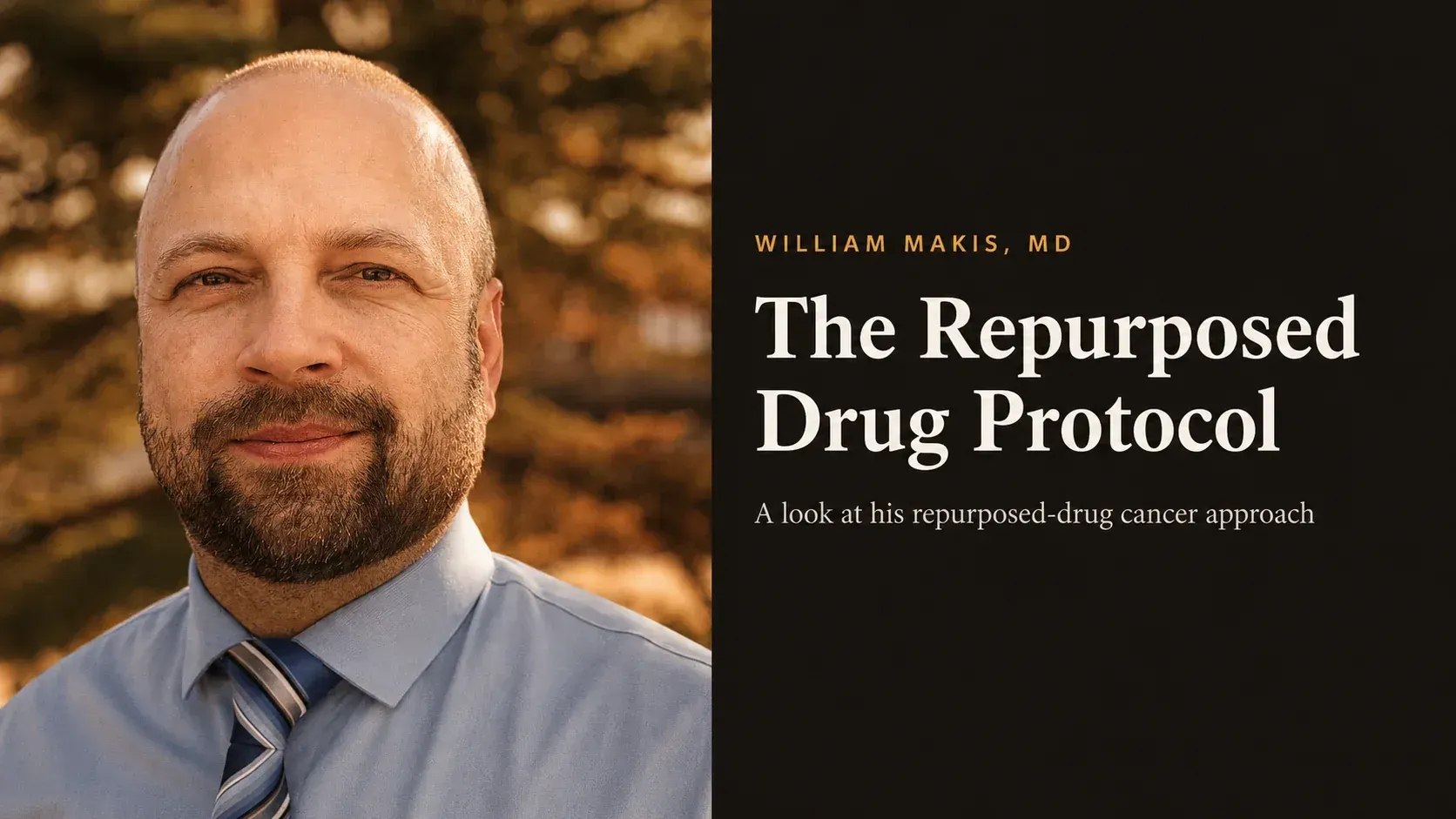
Dr. William Makis Repurposed Drug Protocol
Quick Overview
- Author: Dr. William Makis, MD (Canadian radiologist and nuclear medicine physician)
- Goal: Treat aggressive cancers using high-dose antiparasitic drugs combined with metabolic support compounds to induce cancer cell apoptosis, target cancer stem cells, and restore mitochondrial function
- Duration: 12 weeks primary course (3 cycles of 3 weeks on / 1 week off); ongoing maintenance thereafter. May extend to 6–12 months for aggressive disease.
- Key compounds: Ivermectin (high-dose, weight-based), Mebendazole or Fenbendazole, Doxycycline, Metformin, Curcumin, Berberine, Vitamin D3, Milk Thistle/Silymarin
- Cycles: 3 weeks on / 1 week off (primary cycle); ivermectin and mebendazole: 6 days on / 1 day off per week
Overview
Dr. William Makis is a Canadian radiologist and nuclear medicine physician with over 100 peer-reviewed publications, formerly affiliated with the Cross Cancer Institute in Edmonton, Alberta. His repurposed drug protocol gained international attention from 2022 onward as he began documenting cancer patients developing unusually aggressive, rapidly-progressing cancers. He became a prominent proponent of repurposing antiparasitic drugs — particularly high-dose ivermectin — for cancer treatment, based on accumulating preclinical evidence and clinical case observations.
The theoretical foundation of the Makis protocol centers on the mitochondrial-stem cell connection in cancer biology. Malignant cells, particularly cancer stem cells (CSCs), rely on dysfunctional mitochondria and the Warburg effect — the preferential use of aerobic glycolysis — for energy. Ivermectin disrupts this through multiple mitochondrial mechanisms, while benzimidazoles (mebendazole or fenbendazole) target tubulin-dependent processes and directly impair glucose and glutamine uptake. Together, these compounds are proposed to create synthetic lethality in cancer stem cells. Makis emphasizes that the combination appears superior to either drug alone, and that synergy with standard chemotherapy has been observed in clinical case reports.
On September 19, 2024, Dr. Makis co-authored a peer-reviewed paper with Dr. Ilyes Baghli and Dr. Paul Marik titled “Targeting the Mitochondrial-Stem Cell Connection in Cancer Treatment: A Hybrid Orthomolecular Protocol,” published in the Journal of Orthomolecular Medicine (Vol. 39.3). This represents the first formally peer-reviewed publication of the protocol, providing dosing rationale referenced against clinical and safety studies. Makis maintains an active clinical presence and documents ongoing patient cases through public channels.
Credentials and Professional Standing: Radiologist vs Oncologist
Dr. William Makis holds an MD from McGill University (2005) and has professional experience in nuclear medicine and diagnostic radiology — specifically PET/CT imaging and targeted radionuclide therapy. He worked at the Cross Cancer Institute in Edmonton, Alberta, and served as Director of Nuclear Medicine at Brandon Regional Health Centre and Assistant Clinical Professor at the University of Alberta. His training and board certification are in diagnostic imaging, not in medical oncology or radiation oncology.
This distinction matters because medical oncology and radiation oncology are distinct specialties with separate training pathways, board certifications, and scopes of practice:
- Diagnostic/nuclear radiologists interpret imaging studies (CT, MRI, PET/CT) to diagnose and stage disease. They do not design or prescribe systemic cancer therapies (chemotherapy, immunotherapy, targeted agents, or repurposed drug protocols).
- Medical oncologists complete fellowship training specifically in systemic cancer treatment, pharmacology, drug interactions, tumor biology, and clinical trial design. They are certified by the American Board of Internal Medicine (Oncology) or equivalent.
- Radiation oncologists are certified by the American Board of Radiology (Radiation Oncology track) and specialize in using ionizing radiation to treat cancer. While they work within the ABR umbrella, they are functionally separate from diagnostic radiologists and do not prescribe systemic drug regimens.
Prescribing multi-drug cancer treatment protocols — particularly those involving off-label use of antiparasitics, antibiotics, and supplements — is outside the standard scope of diagnostic radiology practice. Medical oncologists undergo years of specialized training in chemotherapy toxicity management, drug-drug interactions, supportive care, and evidence interpretation that diagnostic radiologists do not receive in their residency curriculum.
Analogy: A cardiologist interpreting an echocardiogram is highly trained in cardiac imaging. That does not make them qualified to design neurosurgical protocols for brain tumors. Similarly, expertise in interpreting PET/CT scans does not confer expertise in prescribing systemic cancer therapies.
Regulatory Status and Licensing History
Dr. Makis's medical licensing history in Canada is relevant to evaluating the professional oversight of his practice. As of 2019, his medical license in Alberta became inactive amidst regulatory restrictions on his practice. Public statements from Dr. Makis indicate he has been involved in legal disputes regarding his credentials and license status in Alberta. The circumstances surrounding the inactivation have not been fully disclosed in accessible public records, but inactive licensure typically results from voluntary relinquishment, failure to meet continuing medical education requirements, or disciplinary proceedings.
In February 2026, Dr. Makis reported obtaining a medical license in Florida. He currently operates multiple online platforms (drmakisw.com, drmakismd.com, makiswmed.life) offering "personalized oncology protocols," "advanced cancer diagnostics," and consultations. These services are promoted heavily via social media (Substack, Twitter) and position him as an authority on repurposed drug cancer treatment.
The shift from an in-person, hospital-affiliated practice in Canada to online-based cancer consultation raises several concerns:
- Jurisdictional practice. Providing medical advice or prescriptions to patients in states or countries where a physician is not licensed is a violation of medical practice acts in most jurisdictions. Online consultations can inadvertently establish a physician-patient relationship, triggering a duty of care and potential liability.
- Professional liability coverage. Standard malpractice insurance policies cover "medical incidents" within the scope of professional duties. Because social media-based cancer consultation is typically outside the scope of diagnostic radiology employment, it may not be covered by institutional malpractice insurance, leaving the physician personally exposed.
- Regulatory oversight. State medical boards have the authority to discipline physicians for unprofessional online conduct, including misrepresentation of credentials, violations of patient confidentiality, or providing medical advice outside the standard of care. Documented violations have led to sanctions ranging from reprimands to license revocation.
The Federation of State Medical Boards and other regulatory bodies explicitly state that patient care should never occur on personal social media platforms. Posting educational content is one thing; responding to specific patient questions or offering protocol recommendations crosses into the practice of medicine and requires formal licensure, documentation, informed consent, and liability coverage.
Dosage and Schedule
Dosing in the Makis protocol is stratified by cancer grade and aggressiveness. Ivermectin dosing is weight-based and increases with disease severity. All benzimidazoles require co-administration with fat for adequate bioavailability. The cycling schedule for the primary treatment phase is 3 weeks on / 1 week off, repeated for at least 3–4 cycles.
| Compound | Low-Grade Disease | Intermediate-Grade | High-Grade / Aggressive |
|---|---|---|---|
| Ivermectin | 0.5 mg/kg, 3×/week | 1.0 mg/kg, 3×/week or daily | 1.0–2.0 mg/kg/day (6 days on / 1 day off) |
| Mebendazole | 200 mg/day | 400 mg/day | 1000–1500 mg/day (up to 4 g/day in trials) |
| Fenbendazole (alt.) | 222 mg active/day | 222–444 mg active/day | 444 mg active/day (6 days on / 1 day off) |
| Doxycycline | 100 mg/day, continuous (all grades) | ||
| Metformin | 500 mg twice daily (all grades) | ||
| Curcumin (bioavailable) | 600 mg/day (all grades) | ||
| Berberine | 500 mg/day (all grades) | ||
| Vitamin D3 | 2500 IU/day (all grades) | ||
| Milk Thistle / Silymarin | 250–350 mg with each benzimidazole dose (hepatoprotection) | ||
Titration note: Ivermectin should be started at the lower end of the dose range and titrated upward over 2–4 weeks based on tolerance. A minimum starting dose of 24 mg/day (approximately 0.3 mg/kg for an 80 kg individual) is recommended before increasing toward weight-based therapeutic doses. A 2020 Phase I safety study established that ivermectin doses up to 1 mg/kg/day for up to 180 consecutive days were not associated with serious adverse events in cancer patients.
Fenbendazole scheduling note: If fenbendazole is substituted for mebendazole, the standard schedule is 3 days on / 4 days off (not daily). For high-grade disease, some practitioners use 6 days on / 1 day off. Both compounds must always be taken with a fatty meal or added fat (olive oil, avocado) to achieve adequate plasma levels.
Mechanism of Action
The Makis protocol combines agents that target cancer stem cells and mitochondrial function through complementary and synergistic mechanisms. The primary rationale is that cancer stem cells — the subpopulation responsible for tumor maintenance, metastasis, and treatment resistance — are selectively vulnerable to mitochondrial disruption and microtubule inhibition.
Ivermectin
Ivermectin inhibits PAK1 kinase via proteasome-mediated ubiquitination, disrupting Wnt/β-catenin, Akt/mTOR, Hippo, and MAPK signaling pathways that are critical for cancer cell proliferation and survival. It induces PAK1-mediated cytostatic autophagy and caspase-dependent apoptosis, and directly impairs mitochondrial function through disruption of mitochondrial membrane potential and induction of oxidative stress. A 2020 review in Pharmacological Research documented these mechanisms comprehensively. Ivermectin specifically targets cancer stem cells, inhibiting self-renewal more effectively than paclitaxel in breast cancer models, and has shown greater efficacy than gemcitabine (standard chemotherapy) at reducing tumor volume in pancreatic cancer in preclinical studies.
Mebendazole / Fenbendazole
Mebendazole and its veterinary equivalent fenbendazole are benzimidazole compounds that impair microtubule assembly by binding to beta-tubulin, causing mitotic arrest and apoptosis. They specifically restrict glucose and glutamine uptake by cancer cells through GLUT transporter disruption and metabolic enzyme inhibition, and activate the p53 tumor suppressor pathway. Both target cancer stem cells by depleting ALDH1+ populations and inhibiting hedgehog and Wnt pathways. Mebendazole additionally inhibits VEGFR2 kinase (anti-angiogenic) and has demonstrated activity superior to standard chemotherapy in glioblastoma preclinical models. The synergy between ivermectin and benzimidazoles in cancer stem cell elimination has been noted in multiple preclinical studies.
Doxycycline
Doxycycline inhibits the mitochondrial 70S ribosome, blocking synthesis of oxidative phosphorylation complex proteins. It selectively induces apoptosis in cancer stem cells via mitochondria-associated endoplasmic reticulum membrane (MAM) disruption and ER stress through the ATF4/PUMA pathway. Doxycycline also reduces cancer stemness markers including Oct4, Sox2, Nanog, and CD44, making it a targeted anti-CSC agent that complements ivermectin’s mitochondrial activity.
Metformin
Metformin activates AMPK, leading to mTOR inhibition and suppression of the Warburg effect and HIF-1α transcription. It reduces IGF-1 and insulin signaling, complementing ivermectin’s mitochondrial targeting by simultaneously suppressing glycolytic energy production.
Curcumin
Curcumin (in a bioavailable formulation) is a pleiotropic anti-inflammatory agent that inhibits NF-kB, COX-2, and STAT3 signaling — all of which are upregulated in cancer and contribute to treatment resistance. It is also anti-angiogenic via VEGF suppression and may enhance the bioavailability and cellular uptake of co-administered compounds.
Berberine
Berberine provides additional AMPK activation that inhibits mTOR and NF-kB, while also blocking fatty acid synthesis. It reduces cancer cells’ access to both glucose and lipid fuel lines, reinforcing the metabolic blockade established by metformin and the benzimidazoles.
Evidence Base: Case Reports vs Randomized Trials
The Makis protocol is primarily supported by case reports and case series — anecdotal accounts of individual patients who reported clinical benefit after using the repurposed drug regimen. Dr. Makis frequently shares these stories on social media, often with dramatic language suggesting exceptional responses. Understanding where case reports sit in the evidence hierarchy is essential to evaluating these claims.
In the Oxford Centre for Evidence-Based Medicine (OCEBM) scale, case reports and case series are classified as Level 4 evidence — the lowest tier, above only expert opinion. Systematic reviews and meta-analyses of randomized controlled trials occupy the top tier (Level 1). The grading reflects methodological rigor: case reports lack randomization, control groups, blinding, and statistical power to control for confounding variables.
Why case reports are insufficient to prove causality:
- No comparison group. Without a control arm, it is impossible to determine whether the observed outcome (tumor shrinkage, stable disease, symptom improvement) was caused by the repurposed drugs, by concurrent standard treatment (chemotherapy, radiation, immunotherapy), by natural disease variability, or by chance.
- Publication bias. Physicians and patients are far more likely to share success stories than failures. If 100 patients try the protocol and 3 experience dramatic responses, those 3 will be featured in case reports while the 97 non-responders remain invisible. This creates a distorted perception of efficacy.
- Confounders. Cancer patients using repurposed drug protocols are often simultaneously receiving conventional therapies. Attributing benefit to the add-on drugs when the patient is also on chemotherapy, targeted agents, or immunotherapy is speculative.
- Spontaneous remission and placebo effects. Rare spontaneous regressions occur in nearly all cancer types (estimated ~1 in 100,000 cases). Psychological factors, improved nutrition, reduced stress, and placebo effects can all influence quality-of-life metrics and even tumor markers.
Case reports do have value: they generate hypotheses, identify rare adverse events, and document novel disease presentations. The early identification of HIV/AIDS began with case reports of Kaposi's sarcoma in homosexual men. But hypothesis generation is not proof. The next step — which has not occurred for the Makis protocol — is a prospective, controlled clinical trial.
A case series can suggest "this is worth studying." It cannot conclude "this works." Recommending a multi-drug regimen to cancer patients based solely on case reports is practicing outside the evidence base.
Component Evidence Update: What Has Changed Since Publication?
The Makis protocol includes ivermectin, mebendazole/fenbendazole, doxycycline, metformin, curcumin, and berberine. Some of these overlap with other protocols (COC, McLelland), but ivermectin and curcumin are particularly prominent in Makis's messaging. What is the current state of human evidence for these agents?
| Component | Proposed mechanism | Current human evidence (2026) | Key limitations |
|---|---|---|---|
| Ivermectin | Immunomodulation, "cold-to-hot" tumor conversion | Phase I/II trial registered (NCT05318469): metastatic TNBC + immunotherapy. No completed RCT results published. | Trial is safety/feasibility study, not efficacy proof. Observational data is hypothesis-generating only. Mechanism in humans unproven. |
| Curcumin | Multi-target polyphenol (NF-κB, COX-2, apoptosis) | Phase I trials up to 8,000 mg/day show safety but plasma levels ~0.01 μM (far below in vitro IC50). Bioavailability catastrophically low. | Free curcumin undetectable in plasma; only conjugated metabolites present. Tissue levels outside GI tract negligible. Enhanced formulations unproven in cancer RCTs. |
| Mebendazole/Fenbendazole | Microtubule disruption, glucose uptake inhibition | No human cancer RCT. Case reports only. | Fenbendazole solubility ~0.3 μg/mL; human plasma levels far below preclinical IC50. Mebendazole hepatotoxicity documented. |
| Doxycycline | Mitochondrial translation inhibition (cancer stem cells) | No cancer-specific RCT. Observational periodontal disease data only. | Dosing borrowed from infection treatment, not oncology. Mechanism in human tumors unproven. |
| Metformin | AMPK activation, mTOR inhibition | Multiple large RCTs in non-diabetic cancer patients (MA.32 breast, STAMPEDE prostate) showed no survival benefit. | Negative RCT results contradict observational hype. Diabetic confounding likely explains earlier positive associations. |
| Berberine | AMPK activation, glucose modulation | 6-year RCT for colorectal adenoma recurrence prevention. | Adenoma prevention ≠ advanced cancer treatment. No RCT in metastatic disease. |
The critical observation: ivermectin, the most prominently marketed agent in the Makis protocol, has exactly one ongoing early-phase trial (NCT05318469) combining it with immunotherapy in metastatic triple-negative breast cancer. That trial is a Phase I/II safety and feasibility study — it is not designed to prove efficacy, and results have not been published. The hypothesis that ivermectin converts "cold" tumors into "hot" ones (increasing T-cell infiltration to enhance immune checkpoint inhibitor response) is plausible in theory, but unproven in humans.
For curcumin, the bioavailability problem is so severe that oral supplementation — even at very high doses — fails to achieve the plasma concentrations (typically 10–50 μM) required for the anti-cancer effects observed in cell culture. The National Cancer Institute's PDQ summary explicitly states: "Due to the small sample sizes and pilot nature of studies, curcumin-containing products are not recommended for the treatment of cancer or as an adjunct to traditional cancer therapy."
Social Media Medicine: Reach vs Accountability
Dr. Makis has leveraged social media platforms — particularly Substack and Twitter — to build a substantial following and promote his repurposed drug protocols. This approach offers broad reach and direct patient engagement, but it also raises serious concerns about medical liability, regulatory oversight, and the quality of information being disseminated.
The physician-patient relationship problem: When a physician responds to a specific individual's medical question on social media — even in a public forum — they risk establishing a physician-patient relationship, which triggers a duty of care. Standard professional liability insurance typically covers injuries arising from a "medical incident" within the scope of employment. Because social media cancer consultation is generally outside the scope of diagnostic radiology practice, it may not be covered, leaving the physician personally exposed to malpractice claims.
Regulatory standards apply online: State medical boards emphasize that physicians must maintain the same ethical and professional standards online as in clinical practice. Documented violations leading to disciplinary action include:
- Inappropriate contact with patients or blurred professional boundaries
- Violations of patient confidentiality (posting identifiable case details without consent)
- Misrepresentation of credentials, outcomes, or clinical evidence
- Discriminatory or derogatory remarks about patients or colleagues
The Federation of State Medical Boards has issued explicit guidance: patient care should not occur on personal social media platforms. Posting general educational content is permissible, but offering specific protocol recommendations, interpreting individual cases, or suggesting treatment changes crosses into the practice of medicine and requires formal documentation, informed consent, and liability coverage.
Disrepute clauses and employment risk: Physicians employed by hospitals or group practices are typically subject to contracts containing "disrepute" or "good name" clauses. These provisions allow employers to discipline or terminate physicians whose online conduct — even if personal — harms the institution's reputation. Because the First Amendment does not protect private employees from termination for their speech, physicians have limited recourse if controversial social media activity leads to public backlash or loss of business.
In Dr. Makis's case, the shift from hospital-affiliated practice to independent online consultation sidesteps institutional oversight but does not eliminate regulatory accountability. State medical boards retain jurisdiction over licensed physicians regardless of practice setting, and patients who experience adverse outcomes while following social media-promoted protocols can file complaints or lawsuits.
Important Considerations
Important:
This protocol has not been evaluated in formal clinical trials as a combined regimen. The information presented is for educational purposes only. Always consult a qualified healthcare professional before starting any new treatment protocol.
- The protocol’s evidence base consists of preclinical studies, case reports, and observational data. No randomized controlled trial has evaluated this combination.
- Ivermectin at doses of 1 mg/kg/day or higher requires medical supervision; neurological side effects have been reported at very high doses.
- Liver function tests (ALT, AST) should be monitored every 4–6 weeks, especially when using mebendazole or fenbendazole.
- If fenbendazole is substituted for mebendazole, note the different cycling schedule (3 days on / 4 days off, not daily).
- A fatty meal is essential when taking any benzimidazole compound. Without co-administered fat, plasma absorption may be substantially reduced.
- Complete blood count (CBC) should be monitored periodically, particularly at higher mebendazole doses, due to a reported risk of thrombocytopenia.
- Patients should disclose all agents to their oncologist, particularly before or during chemotherapy, due to potential drug-drug interactions.
- The 2024 Journal of Orthomolecular Medicine paper provides the formal published rationale for the protocol’s mechanistic basis, though it is not a clinical trial report.
- Milk thistle / silymarin is recommended co-administration with each benzimidazole dose as a hepatoprotective measure.
Sources
Free · No spam · Unsubscribe anytime
Get the research before the sellers spin it
Join readers getting evidence-based fenbendazole protocols, dosing guides, and honest product investigations — straight to your inbox. We read the studies so you don’t get sold a story.
Subscribe free →📚 Key References & Sources
- Son DS et al. "Fenbendazole has anti-cancer properties." (key preclinical study).
- Dogra N, Kumar A, Mukhopadhyay T. "Fenbendazole acts as a moderate microtubule destabilizing agent." Sci Rep. 2018;8(1):11926. PMID: 30093705 — PubMed.
- FDA Center for Veterinary Medicine: fenbendazole is approved only for veterinary use (animal dewormer) — FDA CVM.
- National Cancer Institute / ClinicalTrials.gov: no completed clinical trials of fenbendazole for human cancer treatment — ClinicalTrials.gov.
- Juarez M et al. "The multitargeted drug ivermectin..." Acta Tropica. 2018;183:67-73. PMID: 29595784 — PubMed.
- FDA: "Why You Should Not Use Ivermectin to Treat or Prevent COVID-19" (applies to off-label cancer context) — FDA.
Frequently Asked Questions
What is the Dr. Makis protocol?
An aggressive multi-target approach combining fenbendazole, ivermectin, mebendazole, and other off-label medications for advanced cancers.
Is it evidence-based?
Individual components have preclinical evidence, but the combination is untested in clinical trials. The associated case series was retracted.
How does it differ from the Tippens protocol?
It is more aggressive with more drugs at higher doses. Tippens uses only fenbendazole 222 mg with vitamin E, curcumin, and CBD oil.
Is Dr. Makis a medical oncologist?
No. He is a diagnostic/nuclear radiologist (MD McGill 2005) with expertise in PET/CT imaging. Medical oncology is a separate specialty requiring fellowship training in systemic cancer treatment, pharmacology, and clinical trial design. Prescribing multi-drug cancer protocols is outside the standard scope of diagnostic radiology.
What is Dr. Makis's current licensing status?
His Alberta medical license became inactive in 2019 amidst regulatory restrictions. He reported obtaining a Florida license in February 2026. He currently offers online cancer consultations via multiple websites and social media platforms.
What level of evidence supports the Makis protocol?
Case reports and case series only — Level 4 evidence (lowest tier) in the OCEBM hierarchy. No randomized controlled trials have tested this specific combination. Case reports cannot prove causality due to lack of control groups, confounders (concurrent standard treatment), and publication bias.
Has ivermectin been proven effective against cancer in humans?
No. One Phase I/II trial (NCT05318469) is testing ivermectin + immunotherapy in metastatic triple-negative breast cancer. Results not yet published. The trial is a safety/feasibility study, not proof of efficacy. No completed RCT exists.
Why is curcumin's bioavailability a problem?
Oral curcumin is rapidly conjugated in the liver/intestines. Plasma levels are ~0.01 μM after 3.6g dose — far below the 10-50 μM required for anti-cancer effects seen in cell culture. Only conjugated metabolites (not free curcumin) are detectable in blood. Tissue levels outside GI tract are negligible.
Can physicians provide cancer treatment advice on social media?
General education is permissible, but specific protocol recommendations establish a physician-patient relationship and trigger a duty of care. State medical boards state patient care should NOT occur on personal social media. Professional liability coverage typically does not extend to online consultations outside employment scope.
What makes this protocol different from COC or McLelland?
COC is clinic-based with one observational study (METRICS). McLelland is a survivor's personalized framework. Makis is social-media-promoted case reports by a radiologist practicing outside specialty training. All lack RCT proof, but Makis has unique credentialing/regulatory concerns and the most prominent ivermectin emphasis.
⚖️ Conflict of Interest Disclosure
Transparency matters. Readers should be aware of the following potential conflicts of interest associated with this protocol:
- Dr. William Makis operates a paid Substack newsletter and social-media presence that monetizes cancer-protocol content. He is not a practicing oncologist and does not hold board certification in oncology. His recommendations are not peer-reviewed.
- Joe Tippens gained fame through a viral blog post about his cancer remission. He received concurrent conventional immunotherapy (Keytruda), which likely contributed to his remission. Multiple fenbendazole supplement brands have used his story for marketing, and Tippens has commercial connections to the fenbendazole supplement industry.
- ISOM (International Society for Orthomolecular Medicine) promotes high-dose vitamin therapies. Many ISOM-affiliated practitioners profit from selling IV vitamin infusions and supplements directly to patients. The organization's recommendations are not endorsed by mainstream oncology bodies (ASCO, ESMO, NCCN).
- This post may contain affiliate or commission-based links. The blog may receive compensation for purchases made through these links.
Disclaimer — This content is for educational and informational purposes only. It does not constitute medical advice. Always consult a qualified healthcare professional before starting any treatment protocol.
Related Protocols and Further Reading
Compare this regimen with other sourced protocol analyses on this site:
- Fenbendazole, Berberine & Curcumin Protocol
- High-Dose Fenbendazole Protocol
- Care Oncology Clinic (COC) Protocol
- Fenbendazole + DCA Protocol
- The Joe Tippens Protocol
🔬 How we research & review this article
This article is an independent, evidence-based review. Every clinical claim is sourced from primary literature (PubMed, ClinicalTrials.gov, FDA/WHO). Sources are selected for methodological quality, uncertainties are stated plainly, and conflicts of interest are disclosed. Content is reviewed and updated on a rolling schedule — see the “Last reviewed” date at the top (July 2026).