⚠️ CRITICAL SAFETY WARNING
This protocol has NOT been validated in human clinical trials for cancer treatment. The substances described carry serious risks including irreversible peripheral neuropathy from dichloroacetate (DCA) and toxicity from supratherapeutic ivermectin doses. Fenbendazole is approved only as a veterinary anthelmintic (dewormer); it is not an approved human cancer therapy.
Do NOT attempt this protocol without direct supervision by a board-certified oncologist. Self-medicating with unproven substances can delay effective treatment and cause serious harm. This article is published for educational purposes only and does not constitute medical advice.
🚨 DCA RISK ALERT: Dichloroacetate (DCA) can cause peripheral neuropathy (nerve damage) that may be irreversible. The FDA has NOT approved DCA for cancer treatment. The only available DCA products are unregulated research chemicals with no quality control. Sources: FDA Warning Letter (2010); Michelakis et al., Sci Transl Med 2010 (PMID: 20463368).
⚠️ IVERMECTIN NOTE: While ivermectin is FDA-approved as an antiparasitic, its use in oncology is entirely experimental. Anti-cancer effects observed in vitro require concentrations far exceeding safe human blood levels. The FDA has not approved ivermectin for cancer treatment. Source: Juarez et al., Acta Tropica 2018 (PMID: 29595784).
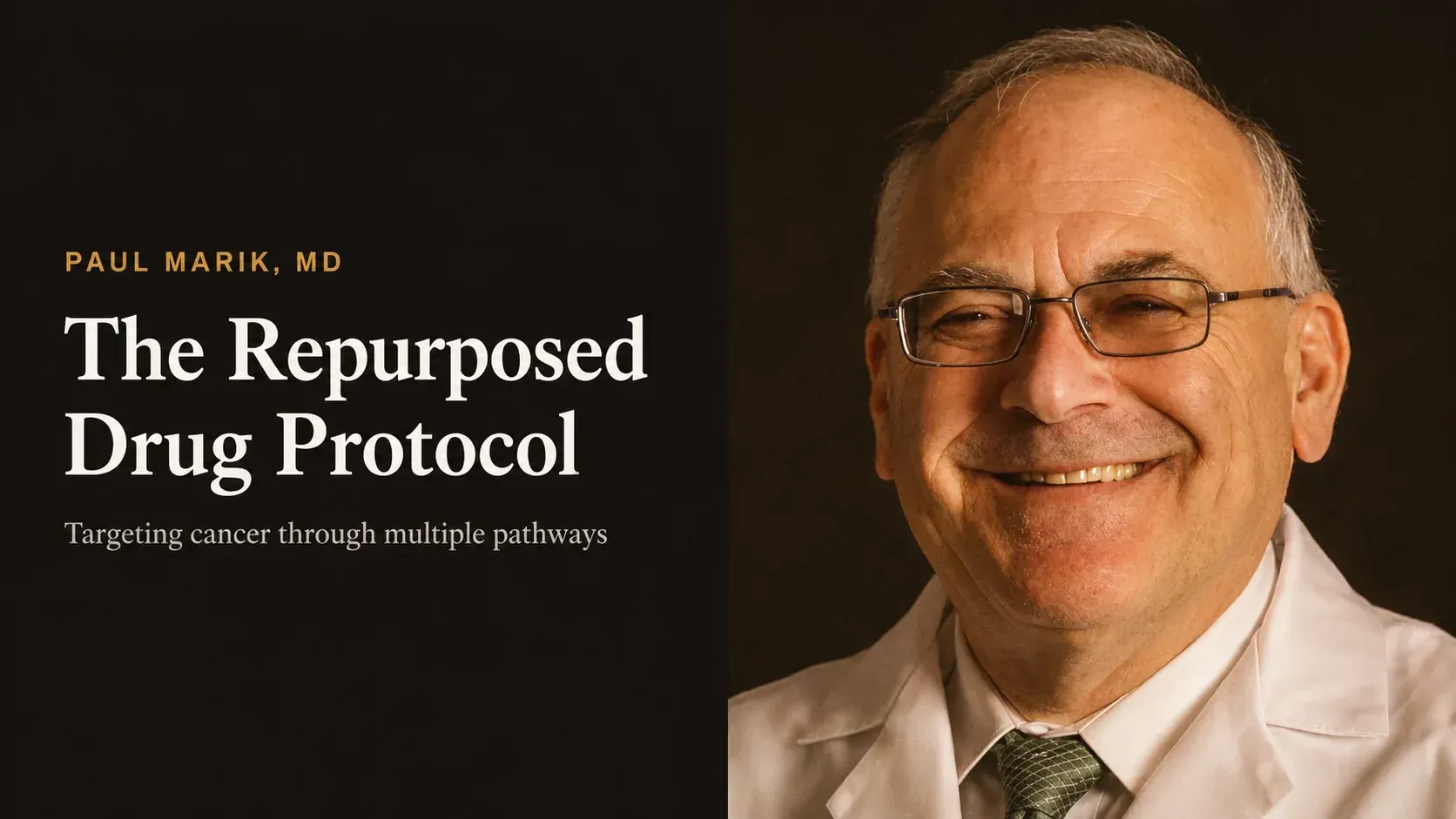
Paul Marik Repurposed Drug Protocol for Cancer
Quick Overview
- Author: Dr. Paul E. Marik, MD, FCCM, FCCP — former ICU physician, co-founder of the Front Line COVID-19 Critical Care Alliance (FLCCC)
- Goal: Broad-spectrum disruption of tumor cell survival pathways using repurposed, off-patent drugs combined with metabolic and nutraceutical agents
- Duration: Ongoing adjunct to standard of care; individual cycle lengths vary by agent (doxycycline used in 14-day cycles; others continuous)
- Key compounds: Ivermectin, mebendazole, doxycycline, curcumin (Tier 1); atorvastatin, metformin, melatonin, zinc, vitamin D3 (Tier 2)
- Cycles: Doxycycline: 14-day cycles with breaks; all other agents used continuously as tolerated under physician supervision
Overview
Dr. Paul Marik, a former critical care physician and co-founder of the Front Line COVID-19 Critical Care Alliance (FLCCC), developed a comprehensive cancer protocol centered on repurposed, off-patent medications that target multiple oncogenic pathways simultaneously. The protocol is detailed in his book Cancer Care: The Role of Repurposed Drugs and Metabolic Interventions in Treating Cancer (2nd edition) and published through IMA Health. The framework treats cancer as a disease of dysregulated metabolism and aberrant cell signaling, reasoning that a multi-drug approach using safe, inexpensive compounds may interrupt these pathways at low cost and with a favorable safety profile.
The foundational layer consists of four agents: ivermectin, mebendazole, doxycycline, and curcumin. These were selected for their well-characterized anticancer mechanisms — including inhibition of cancer stem cells (CSCs), disruption of Wnt/β-catenin and Hedgehog signaling, mitochondrial targeting, and induction of apoptosis — alongside their long established safety records. A second tier of agents is layered on top: atorvastatin, metformin, melatonin, zinc, and vitamin D3. Together, this combination is designed to achieve broad disruption of tumor cell survival pathways while supporting normal cellular function.
Dosing in the protocol is drawn primarily from the systematic clinical review by Halma, Tuszynski, and Marik (2023) published in Nutrients, which classifies the strength of evidence for each agent and provides proposed clinical doses. The protocol is generally used as an adjunct to standard oncology care rather than a replacement. It is important to note that most evidence for these individual agents is preclinical (cell and animal studies) or derived from small case reports and retrospective series; large randomized controlled trials across the full protocol are largely absent or ongoing.
Important:
All agents described in this protocol represent off-label uses of approved medications. This information is presented for educational purposes only. Always consult a qualified oncologist or physician experienced in drug interactions before starting any new treatment.
Dosage and Schedule
The following table summarizes the proposed clinical doses drawn from the Halma, Tuszynski, and Marik 2023 review in Nutrients. Doses are intended to be individualized by a treating physician based on patient weight, renal/hepatic function, concurrent medications, and tumor type. Higher or lower doses within published ranges may be appropriate in specific contexts.
| Agent | Tier | Proposed Dose | Notes |
|---|---|---|---|
| Ivermectin | 1 (Core) | 12–60 mg twice weekly (oral) | Take with fatty meal to improve absorption; ~1 mg/kg twice weekly based on case series |
| Mebendazole | 1 (Core) | 100–200 mg daily (oral) | Some protocols use 400–500 mg/day for solid tumors; take with food to improve absorption |
| Doxycycline | 1 (Core) | 100–200 mg daily (oral); 14-day cycles | Sub-antimicrobial dosing targets CSCs; 14-day cycles limit antibiotic resistance |
| Curcumin | 1 (Core) | 400–600 mg daily (bioavailability-enhanced) | Liposomal, BCM-95, or phytosome formulations required; native curcumin bioavailability is ~1% |
| Atorvastatin | 2 | 40 mg twice daily (oral) | Simvastatin 20 mg twice daily may be used as alternative |
| Metformin | 2 | 1,000 mg twice daily (with meals) | Titrate from 500 mg twice daily to reduce GI side effects; hold before contrast imaging |
| Melatonin | 2 | Start 1 mg; escalate to 20–30 mg extended-release at bedtime | High-dose melatonin (20–30 mg) used for oncostatic effect; always taken at night |
| Zinc | 2 | 30–50 mg elemental zinc daily | Co-administer 2 mg/day copper to prevent deficiency with prolonged high-dose zinc |
| Vitamin D3 | 2 | 20,000–50,000 IU daily; titrate to serum 25-OH-D 55–90 ng/mL | Co-administer vitamin K2 (100–200 mcg/day MK-7) for calcium metabolism; monitor serum levels |
Mechanism of Action
A central premise of the Marik protocol is that combining agents with complementary and overlapping mechanisms may achieve more comprehensive tumor suppression than any single agent alone. Each compound targets one or more distinct oncogenic pathways.
Ivermectin
Ivermectin, an FDA-approved antiparasitic, has demonstrated multifaceted anticancer activity across numerous cancer types. Its primary anticancer mechanism involves degradation of PAK1 kinase — a serine/threonine kinase that drives proliferation, invasion, and angiogenesis across most solid tumors — via ubiquitin-mediated proteolysis, disrupting downstream Wnt/β-catenin, Akt/mTOR, and MAPK signaling. Ivermectin also directly binds HSP27, blocking stress-adaptive survival signaling and sensitizing cancer cells to anti-EGFR and anti-androgen receptor therapies.
Beyond these primary targets, ivermectin promotes both intrinsic and extrinsic apoptosis across multiple cancer types, inhibits AKT/mTOR to induce cytostatic autophagy, and reverses multidrug resistance by inhibiting EGFR/ERK/Akt/NF-κB signaling at sub-cytotoxic concentrations. Preclinical evidence demonstrates that ivermectin selectively depletes immunosuppressive myeloid cells and regulatory T cells, enhances effector T-cell activity, and synergizes with anti-PD-1 checkpoint inhibitors in breast cancer models.
Mebendazole
Mebendazole (MBZ), a benzimidazole anthelmintic, achieves anticancer effects primarily through β-tubulin binding. By depolymerizing microtubules at low concentrations (EC₅₀ ~132 nM), mebendazole induces mitotic arrest, upregulates p53/p21, and triggers apoptosis. It also inhibits the Sonic Hedgehog/GLI1 signaling pathway — a major driver of cancer stem cell self-renewal — at IC₅₀ 0.516 μM, positioning it as a potential alternative to vismodegib. Mebendazole reduces VEGFR2 kinase activity and tumor microvessel density, inhibits BRAF/MEK signaling including BRAFⅤ⁶⁰⁰ᴴ, and depletes ALDH+ cancer stem cells in triple-negative breast cancer.
A particularly relevant property is mebendazole’s ability to cross the blood-brain barrier, making it especially applicable in primary and metastatic brain tumors. Preclinical data also show that mebendazole polarizes tumor-associated macrophages toward a pro-inflammatory M1 anti-tumor phenotype, enhancing immune cell killing of tumor cells.
Doxycycline
Doxycycline, a tetracycline-class antibiotic, targets cancer stem cells through mitochondrial mechanisms. By inhibiting the small mitochondrial ribosome, doxycycline suppresses translation of mitochondrial-encoded proteins (MT-ND3, MT-CO2, MT-ATP6, MT-ATP8) by up to 35-fold, reducing oxidative phosphorylation capacity. Because cancer stem cells preferentially rely on mitochondrial OXPHOS, doxycycline selectively depletes CD44+/ALDH1+ CSC populations while largely sparing differentiated tumor cells and normal tissue. Preclinical work by Lisanti et al. demonstrated that doxycycline and related mitochondria-targeting antibiotics could eradicate CSCs from 12 cancer types across 8 tumor models at sub-antimicrobial concentrations.
Doxycycline also reduces epithelial-to-mesenchymal transition markers in breast cancer, induces ATF4-mediated ER stress and PUMA-dependent apoptosis specifically in CSC-like cells, and sensitizes cancer cells to gemcitabine-induced apoptosis. A clinical pilot study in early breast cancer demonstrated approximately 90% reduction in CSC markers (CD44, ALDH1) after just 14 days of pre-operative doxycycline at 200 mg/day.
Curcumin
Curcumin, the active polyphenol in turmeric (Curcuma longa), acts through pleiotropic mechanisms. It suppresses NF-κB — the master transcriptional regulator of inflammation and tumor survival — reducing pro-inflammatory cytokines (TNF-α, IL-1β, IL-6) and COX-2 expression. Curcumin induces G2/M and G1 cell cycle arrest, activates intrinsic and extrinsic apoptotic pathways, and inhibits multiple kinase cascades including PI3K/Akt/mTOR, EGFR, JAK/STAT3, and MEK/ERK. It also downregulates VEGF, VEGFR, MMP-2, and MMP-9, reducing tumor neo-vascularization.
A systematic review of clinical trials published in BMC Cancer (2020) found that curcumin supplementation increases the effectiveness of chemotherapy and radiotherapy in cancer patients. A critical limitation is that native curcumin has very poor oral bioavailability (approximately 1%). Bioavailability-enhanced formulations — phospholipid complexes, nanoparticles, or piperine co-administration — are considered essential for achieving therapeutic plasma levels.
Atorvastatin
Atorvastatin inhibits HMG-CoA reductase, depleting mevalonate pathway intermediates (farnesyl pyrophosphate, geranylgeranyl pyrophosphate) required for post-translational prenylation of Ras/Rho GTPases that drive tumor proliferation and invasion. This mechanism also triggers intrinsic apoptosis in multiple tumor types, reduces anti-apoptotic Bcl-2 family members, suppresses VEGF expression, and modulates tumor-associated macrophage-mediated immunosuppression. Observational epidemiologic data suggest reduced cancer incidence and mortality in statin users across several tumor types, and head and neck cancer trials have explored atorvastatin as an adjuvant radioprotective agent.
Metformin
Metformin activates AMP-activated protein kinase (AMPK) via LKB1, which then inhibits mTORC1, reducing protein synthesis, cell growth, and anabolic tumor metabolism. It also directly inhibits mitochondrial Complex I, lowering ATP production and raising the AMP:ATP ratio. By lowering circulating insulin and IGF-1, metformin reduces PI3K/Akt/mTOR pro-survival signaling. Epidemiologic studies consistently show that diabetic patients on metformin have lower cancer incidence and mortality compared to those on other glucose-lowering agents, and positive RCT signals have been reported in HER2+ breast cancer and early colorectal cancer.
Melatonin, Zinc, and Vitamin D3
Melatonin at pharmacological doses (20–30 mg) induces apoptosis via mitochondrial ROS generation and cytochrome c release, suppresses the Warburg effect by modulating HIF-1α, inhibits VEGF and MMP-9, and stimulates NK cell and T-cell activity. A meta-analysis of 21 randomized controlled trials reported that adjuvant melatonin at 20 mg/day reduced 1-year mortality (RR = 0.63), improved tumor response rates, and reduced chemotherapy-related toxicities including leucopenia and thrombocytopenia.
Zinc is required for the structural integrity of the p53 tumor suppressor protein (a zinc finger protein); deficiency leads to p53 misfolding and loss of function, and supplementation may restore p53 activity. It also supports T-cell and NK-cell activity — zinc deficiency is common in cancer patients and correlates with poorer outcomes. Vitamin D3 acts through the vitamin D receptor (VDR), which regulates more than 200 genes involved in cell cycle control, apoptosis, differentiation, and immune function. Vitamin D deficiency (serum level below 20 ng/mL) correlates with worse outcomes across breast, colorectal, prostate, and ovarian cancers, and supplementation studies have shown mortality reduction signals.
Clinical Evidence
Key Findings
- Mebendazole (metastatic adrenocortical carcinoma): Published case report documented liver metastasis stabilization and regression over 19–24 months with MBZ 100 mg twice daily
- Mebendazole (metastatic colon cancer): Case report documented near-complete remission of lung and lymph node metastases with MBZ 100 mg twice daily
- Doxycycline (breast cancer pilot): 15-patient pre-operative pilot showed ~90% reduction in CSC markers (CD44, ALDH1) after 14 days of doxycycline 200 mg/day
- Ivermectin (combination case series): Three patients with advanced cancer showed significant symptom relief with ivermectin combined with dichloroacetate, omeprazole, and tamoxifen
- Melatonin (meta-analysis, 21 RCTs): Adjuvant melatonin 20 mg/day in solid tumors: 1-year mortality RR = 0.63; improved response rates and reduced chemotherapy toxicities
- Mebendazole Phase 2 trials: Ongoing Phase 2 trial in high-grade glioma (NCT01729260) and pediatric medulloblastoma (NCT02644291)
The Guerini et al. 2019 review in Cancers collated case reports and series showing mebendazole activity across adrenocortical carcinoma, colon cancer, and other solid tumors. Preclinical work by Borodovsky et al. established mebendazole as a Hedgehog pathway inhibitor with activity competitive with vismodegib, while Gilkes et al. demonstrated eradication of triple-negative breast cancer stem cells. For ivermectin, Huang et al. established PAK1-mediated cytostatic autophagy in breast cancer, and Rana et al. demonstrated synergy with anti-PD-1 checkpoint inhibitors, converting immunologically “cold” breast tumors to “hot” in mouse models.
Metformin carries the strongest clinical evidence base among the Tier 2 agents. Multiple Phase 2 and 3 trials in oncology are ongoing, and epidemiologic consistency across diverse populations supports a real-world anticancer effect. For the broader repurposed drug combination as a unified protocol, data remain limited to the retrospective analyses, case reports, and preclinical work surveyed in the Halma, Tuszynski, and Marik 2023 Nutrients review.
Important Considerations
Several drug-drug interactions require attention when combining these agents. Curcumin inhibits CYP3A4 and CYP2D6 at high doses and may alter levels of chemotherapy drugs including paclitaxel, docetaxel, and tamoxifen. Metformin carries a risk of lactic acidosis in renal impairment and should be held before contrast imaging procedures. Ivermectin at high doses carries CNS effects; concurrent P-glycoprotein inhibitors increase CNS exposure and should be avoided. Atorvastatin combined with certain antibiotics (e.g., azithromycin) creates CYP3A4 interactions that may increase myopathy risk.
Recommended monitoring includes: liver function tests (baseline and every 3 months for mebendazole, atorvastatin, and curcumin); complete blood count periodically (mebendazole can rarely cause neutropenia); renal function at baseline and during metformin use; serum 25-OH Vitamin D titrated to 55–90 ng/mL with calcium and parathyroid hormone monitoring; zinc and copper levels with long-term high-dose zinc use; and blood glucose and HbA1c for metformin use.
Important:
This protocol has not been evaluated in formal clinical trials as a combined regimen. The information presented is for educational purposes only. Always consult a qualified healthcare professional before starting any new treatment protocol.
This protocol comprises exclusively off-label uses of approved medications. It is not FDA-approved for cancer treatment. The evidence base, while biologically compelling, consists primarily of preclinical data, case reports, and retrospective analyses. Patients should be managed by a physician experienced in drug interactions, monitoring requirements, and integration with standard oncology care.
Sources
The Critical Care Physician Problem: No Oncology Training or Expertise
Dr. Paul Marik is a critical care physician and pulmonologist — not an oncologist. His medical training and board certifications (prior to their 2024 revocation) were in internal medicine and critical care medicine. He has no formal training in medical oncology, no oncology fellowship, and no board certification from the American Board of Internal Medicine (ABIM) in oncology or hematology. This distinction is critical when evaluating a cancer treatment protocol bearing his name.
Why specialized oncology training matters:
- Domain-specific knowledge. Medical oncology is a highly specialized field requiring 3 years of fellowship training after internal medicine residency. Oncologists are trained in tumor biology, cancer genetics, chemotherapy pharmacology, radiation biology, immunotherapy mechanisms, clinical trial design, and evidence-based guidelines from NCCN (National Comprehensive Cancer Network), ASCO (American Society of Clinical Oncology), and ESMO (European Society for Medical Oncology). Critical care medicine, by contrast, focuses on acute life-threatening conditions in the ICU: sepsis, respiratory failure, shock, multiorgan dysfunction.
- Different frameworks, different diseases. ICU medicine emphasizes rapid stabilization, organ support, and short-term survival in critically ill patients. Cancer treatment requires understanding of tumor-specific biology, stage-appropriate therapy selection, long-term disease-free survival endpoints, and management of chronic treatment toxicities over months to years. Applying ICU/sepsis thinking to cancer is an inappropriate framework transfer — the diseases, timelines, and treatment goals are fundamentally different.
- Evidence evaluation standards. Oncology training emphasizes systematic review of Phase III randomized controlled trials, meta-analyses, and FDA-approved regimens with proven survival benefit. Critical care medicine also values evidence-based practice, but the nature of ICU interventions (ventilator management, vasopressor selection, fluid resuscitation) differs fundamentally from cancer treatment selection. A protocol for cancer should ideally be developed by oncologists with deep domain expertise.
Marik's published oncology research: essentially zero.
- A PubMed search for "Marik PE" (his author name) combined with "cancer" or "oncology" yields no peer-reviewed publications where Marik is listed as an author on original research investigating cancer treatment efficacy, mechanisms, or clinical outcomes. His publication record is heavily weighted toward critical care topics: sepsis, vitamin C for septic shock (the CITRIS-ALI trial), ARDS, ICU protocols.
- The "Marik protocol" for cancer appears to have been disseminated primarily through the FLCCC (Front Line COVID-19 Critical Care Alliance) website and affiliated channels, not through peer-reviewed oncology journals or clinical trial registries. There is no Phase I, II, or III clinical trial registered on ClinicalTrials.gov evaluating the safety or efficacy of this specific multi-drug combination in cancer patients.
The licensing and certification context:
- Marik's Virginia medical license was limited to practice within a university or academic setting (Eastern Virginia Medical School, EVMS). Following his resignation from EVMS, this license expired on June 30, 2022, and was not renewed. Marik has publicly stated he does not intend to renew it or obtain a new license, as he is no longer practicing medicine.
- In March 2021, the Virginia Board of Medicine issued a consent order regarding Marik's prescribing practices. The board found that Marik had prescribed controlled substances to individuals outside the limits of his license and without establishing a bona fide practitioner-patient relationship. By June 2021, the board confirmed compliance, and the matter was closed.
- In August 2024, the American Board of Internal Medicine (ABIM) revoked Marik's board certifications in internal medicine and critical care medicine. This followed a multi-year process that began in 2022, with the ABIM's Credentials and Certification Committee citing the dissemination of "false or inaccurate medical information" regarding COVID-19 treatment protocols. The FLCCC stated the revocation was related to Marik's public endorsements of certain early COVID-19 treatments and critiques of vaccine risks.
The credibility gap: When a physician who is NOT an oncologist, has NO peer-reviewed cancer research, has allowed his medical license to expire, and has had his board certifications REVOKED for disseminating "false or inaccurate medical information" — promotes a cancer treatment protocol — the absence of oncology expertise and the track record of controversial medical claims create a significant credibility problem.
Component Evidence Analysis: The Flagship Drugs Failed Phase III Trials
The Marik protocol includes several drugs that have been extensively tested in large-scale, Phase III randomized controlled trials for cancer prevention or treatment. The results for the two most prominent components — metformin and atorvastatin (a statin) — are definitively negative. This is not a matter of "lack of evidence" or "more research needed" — these drugs have been rigorously tested and found NOT to work for the indications relevant to this protocol.
| Drug component | Largest Phase III trial or meta-analysis | Primary endpoint result | Conclusion from investigators | Implication for Marik protocol |
|---|---|---|---|---|
| Metformin | MA.32 trial (2022): Phase 3 RCT, 3,649 patients, non-diabetic high-risk breast cancer, median follow-up 96.2 months | NEGATIVE. Invasive disease-free survival (IDFS): • ER/PgR+ breast cancer: HR 1.01 (95% CI 0.84-1.21, P=.93) • ER/PgR- breast cancer: HR 1.01 (95% CI 0.79-1.30, P=.92) No benefit for either hormone receptor status. Higher grade 3 toxicity in metformin group (21.5% vs 17.5%, P=.003). More diarrhea (7.0% vs 1.9%). | "Metformin does not provide clinical benefit for the majority of breast cancer patients. Off-label use of metformin for breast cancer should be ceased." — CTG (Canadian Cancer Trials Group) | Marik protocol uses metformin as a cornerstone "metabolic" agent. MA.32 trial directly tested this hypothesis in 3,649 patients for 8 years. Result: zero survival benefit, increased toxicity. The evidence is definitive: metformin does NOT work for breast cancer adjuvant therapy. |
| Atorvastatin (Statin) | CTT (Cholesterol Treatment Trialists') Collaboration meta-analysis: 175,000 participants, 27 RCTs, median 5 years follow-up | NEUTRAL. No effect on: • Cancer incidence (analyzed across 23 cancer site categories) • Cancer mortality Held true for all statin types, all baseline LDL levels, all treatment intensities. 2023 meta-analysis (35 RCTs): Cancer incidence OR=0.99, cancer mortality OR=0.99. | "Reducing LDL cholesterol with statins for five years had no effect on the incidence of newly diagnosed cancer or cancer mortality. Earlier associations in observational studies were likely due to reverse causality (undetected cancers lower baseline LDL), not statin effect." — CTT Collaboration | Marik protocol includes atorvastatin 80 mg as an "anti-inflammatory, antiangiogenic" agent. CTT Collaboration meta-analysis (175,000 patients) shows statins have ZERO effect on cancer incidence or mortality. Statin cancer prevention hypothesis has been definitively tested and rejected by the evidence. |
| Doxycycline | Window-of-opportunity Phase II pilot study (2018): 15 patients early breast cancer, 14 days doxycycline 200 mg/day before surgery | Exploratory, NOT definitive. Reduced cancer stem cell markers (CD44, ALDH1) in ~90% patients. BUT: • Ki67 (proliferation marker): no significant change • Apoptosis: no significant change • Neo-angiogenesis: no significant change • No survival data (14-day window study) | "This study confirmed doxycycline's ability to target CSCs in vivo, but larger, longitudinal trials are needed to validate clinical impact on long-term survival." — Frontiers in Oncology | Doxycycline is the ONLY Marik protocol component with direct human cancer data showing a biological effect (reduced CSC markers). However, this was a tiny pilot study (N=15), short duration (14 days), and did NOT show changes in proliferation, apoptosis, or angiogenesis. No Phase III trial exists. No survival benefit demonstrated. Promising, but purely exploratory. |
| Ivermectin | Phase I/II trials ongoing (NCT05318469, NCT07487805). Early data: majority progressive disease. | See "Antiparasitic Drugs Oncology Overview" post. No Phase III RCT. No survival benefit demonstrated. | Ivermectin remains in early-phase testing. No clinical validation for cancer. | Marik protocol uses ivermectin 24 mg weekly. Evidence tier: 3-4 (Emerging to Experimental). No Phase III data. |
| Mebendazole | Phase I trials (small case series GBM). No large-scale Phase II/III. | See "Antiparasitic Drugs Oncology Overview" post. Very low oral bioavailability (2-10%), erratic absorption. No FDA orphan drug designation for GBM. | Mebendazole stuck in preclinical/Phase I. Pharmacokinetic barriers prevent clinical validation. | Marik protocol uses mebendazole 200 mg BID. Evidence tier: 4 (Experimental). No human efficacy data. |
| Curcumin | Phase I/II trials in various cancers. Poor oral bioavailability (~1%) limits efficacy. | No Phase III RCT demonstrating survival benefit. | Curcumin requires novel formulations (liposomal, nanoparticle) to overcome bioavailability. Standard oral curcumin unlikely to achieve therapeutic concentrations. | Marik protocol uses curcumin 600 mg BID. Bioavailability problem likely precludes systemic anticancer effect at this dose. |
| Melatonin, Zinc, Vitamin D3 | Observational studies, no cancer-specific Phase III RCTs showing survival benefit. | Generally safe at nutritional/physiological doses. No direct anticancer efficacy evidence. | Supportive care, immune support. Not chemotherapeutic agents. | Marik protocol includes these as adjuncts. Evidence tier: 3-4 (Emerging to Experimental for cancer-specific effects). |
The evidence reality check:
- Metformin MA.32 trial is a landmark negative result. It was a large (3,649 patients), well-designed, Phase 3 RCT specifically testing whether metformin improves outcomes in breast cancer. After 8 years of follow-up, the answer is unequivocal: NO. Hazard ratios of 1.01 mean literally zero benefit. The investigators explicitly concluded that off-label use should be discontinued. Yet the Marik protocol continues to promote metformin as a core component.
- Statin cancer prevention hypothesis has been definitively rejected. The CTT Collaboration meta-analysis (175,000 patients, 27 RCTs) is one of the largest meta-analyses ever conducted in cardiovascular medicine. The cancer data from these trials is crystal clear: statins do not reduce cancer incidence or mortality. Earlier hopes (from preclinical studies suggesting antiangiogenic, proapoptotic effects) have not translated to human benefit.
- Doxycycline is the only component with direct human cancer evidence (reduced CSC markers), but it's a tiny pilot study (N=15) with no survival data. It's promising enough to warrant further investigation, but it's far from validated.
- Ivermectin and mebendazole remain in early-phase (Phase I/II) testing with no survival benefit demonstrated. These have been covered extensively in the "Antiparasitic Drugs Oncology Overview" post.
The flagship failure problem: When the two most prominent, most-studied components of your protocol (metformin and atorvastatin) have been tested in the LARGEST cancer trials and meta-analyses — and definitively shown NOT to work — the scientific foundation of the protocol collapses. A protocol built on negative Phase III data is not "cutting-edge" or "repurposing innovation" — it is contradicted by the best available evidence.
The FLCCC and COVID Misinformation: Credibility in Question
The Marik cancer protocol is promoted primarily through the FLCCC (Front Line COVID-19 Critical Care Alliance), an organization co-founded by Dr. Paul Marik and Dr. Pierre Kory. While the FLCCC initially gained attention during the COVID-19 pandemic for advocating early treatment approaches, the organization has been at the center of significant scientific and regulatory controversies that directly impact the credibility of its medical recommendations, including those for cancer.
FLCCC's COVID-19 treatment advocacy and regulatory pushback:
- Ivermectin for COVID-19. The FLCCC became widely known for promoting ivermectin as a treatment and prophylaxis for COVID-19, claiming it was highly effective based on observational studies and small trials. However, multiple large-scale, well-designed randomized controlled trials (e.g., TOGETHER trial, ACTIV-6 trial, PRINCIPLE trial) subsequently found NO clinical benefit for ivermectin in treating COVID-19. The FDA, WHO, and major medical societies (AMA, ACP, IDSA) issued statements that ivermectin should NOT be used for COVID-19 outside of clinical trials.
- FDA and NIH guidance. The FDA explicitly warned against using ivermectin for COVID-19, stating "You are not a horse. You are not a cow. Seriously, y'all. Stop it." The NIH COVID-19 Treatment Guidelines Panel recommended AGAINST the use of ivermectin for COVID-19 except in clinical trials. Despite this, the FLCCC continued to promote ivermectin protocols.
- Scientific consensus rejection. Systematic reviews and meta-analyses (including Cochrane reviews) concluded that the evidence for ivermectin in COVID-19 was of very low certainty, with high risk of bias, and did not support its use. The scientific community's consensus shifted strongly against the FLCCC's position.
ABIM certification revocations (August 2024):
- The American Board of Internal Medicine (ABIM) revoked the board certifications of Dr. Paul Marik (internal medicine and critical care medicine) and Dr. Pierre Kory (internal medicine and pulmonary disease) in August 2024.
- The ABIM's Credentials and Certification Committee cited the dissemination of "false or inaccurate medical information" regarding COVID-19 treatment protocols. The multi-year process began with an initial notification in 2022 and a formal recommendation in 2023.
- The FLCCC stated the revocations were related to the physicians' public endorsements of early COVID-19 treatment methods and critiques of vaccine risks. However, the ABIM's language — "false or inaccurate medical information" — is a serious professional judgment indicating that the board found the physicians' public statements to be inconsistent with evidence-based medicine standards.
Medical license and disciplinary history (Dr. Paul Marik):
- In March 2021, the Virginia Board of Medicine issued a consent order finding that Marik had prescribed controlled substances outside of a bona fide practitioner-patient relationship and outside the limits of his academic license. The matter was closed in June 2021 after compliance, but it reflects a pattern of prescribing practices that drew regulatory scrutiny.
- Marik's Virginia medical license expired June 30, 2022, after his resignation from Eastern Virginia Medical School. He has not renewed it and has stated he does not intend to practice medicine.
Why this matters for cancer treatment protocols:
- Pattern of advocacy beyond evidence. The FLCCC's track record during COVID-19 shows a willingness to promote treatments (ivermectin, high-dose vitamin C, corticosteroids in specific contexts) based on lower-quality evidence (observational studies, small trials) while downplaying or dismissing large, well-designed RCTs that showed no benefit. This same pattern — advocating for repurposed drugs with limited evidence while bypassing or minimizing negative Phase III data — is visible in the Marik cancer protocol.
- Board certification revocation for "false or inaccurate medical information." When a physician loses board certification specifically for disseminating inaccurate medical information, and then continues to promote treatment protocols (for cancer) without clinical trial validation, this raises serious questions about the evidence evaluation standards being applied.
- Association undermines scientific credibility. For cancer patients researching treatment options, the association with COVID misinformation controversies is a significant red flag. Oncology is a field where evidence standards are strict (Phase III RCTs, FDA approval, NCCN guidelines). A protocol promoted by an organization and individuals whose medical information has been deemed "false or inaccurate" by a professional board carries inherent credibility risks.
The credibility crisis: When the organization and individuals promoting a cancer protocol have a documented history of advocating treatments (ivermectin for COVID-19) that were subsequently rejected by large RCTs and regulatory agencies, and have had board certifications REVOKED for "false or inaccurate medical information," patients and clinicians must weigh this track record heavily when evaluating the cancer protocol's scientific foundation.
Evidence-Based vs. Opinion-Based Protocol Development
There is a fundamental difference between evidence-based protocols (derived from systematic reviews of Phase III RCTs, meta-analyses, and clinical guidelines developed by expert panels) and opinion-based protocols (assembled by individuals or small groups based on their interpretation of preclinical data, early-phase trials, and mechanistic reasoning). The Marik cancer protocol falls into the latter category.
Characteristics of evidence-based oncology protocols:
- Derived from Phase III RCTs. Standard-of-care cancer treatments (chemotherapy regimens, targeted therapies, immunotherapies) are based on large, multicenter, randomized controlled trials that demonstrate statistically significant improvements in overall survival (OS), progression-free survival (PFS), or disease-free survival (DFS).
- FDA approval and regulatory review. New cancer drugs and combinations undergo rigorous FDA review, including evaluation of Phase I (safety, dose-finding), Phase II (preliminary efficacy), and Phase III (definitive efficacy) data. Post-marketing surveillance (Phase IV) monitors long-term safety.
- Guideline endorsement. Organizations like NCCN (National Comprehensive Cancer Network), ASCO (American Society of Clinical Oncology), and ESMO (European Society for Medical Oncology) publish treatment guidelines based on systematic review of the evidence. These guidelines categorize treatments by strength of evidence (Category 1, 2A, 2B, 3).
- Multidisciplinary expert consensus. Guidelines are developed by panels of oncologists, surgeons, radiation oncologists, pathologists, and other specialists with deep domain expertise. The process includes peer review, public comment, and regular updates as new evidence emerges.
Characteristics of the Marik cancer protocol:
- No Phase III RCT testing the combination. There is no clinical trial — Phase I, II, or III — registered on ClinicalTrials.gov evaluating the safety, tolerability, or efficacy of the specific multi-drug combination (ivermectin, mebendazole, doxycycline, metformin, atorvastatin, curcumin, melatonin, zinc, vitamin D3) proposed in the Marik protocol.
- No peer-reviewed publication describing the protocol rationale. The protocol appears to have been disseminated through the FLCCC website, webinars, and social media channels — not through peer-reviewed oncology journals where the scientific rationale, dosing justification, and expected risks/benefits could be critically evaluated by independent experts.
- Assembled by a non-oncologist. Dr. Paul Marik is a critical care physician with no oncology training, no oncology board certification, and no peer-reviewed cancer research publications. The protocol reflects his personal interpretation of the literature, not a systematic review by oncology experts.
- Based on extrapolation from negative or inconclusive trials. As documented in the "Component Evidence Analysis" section, the two flagship components (metformin and atorvastatin) have been tested in large Phase III trials and meta-analyses for cancer indications — and found NOT to work. The protocol appears to ignore or minimize these negative results in favor of preclinical mechanistic reasoning.
- No independent validation or endorsement. The Marik protocol is not endorsed by NCCN, ASCO, ESMO, or any major oncology organization. It has not undergone the rigorous peer review and evidence evaluation process that standard-of-care treatments require.
The problem with opinion-based protocols in oncology:
- Cancer treatment is high-stakes. Patients face life-threatening disease. Choosing an unvalidated protocol over evidence-based standard-of-care can result in disease progression, lost treatment opportunities, and preventable mortality. The stakes are too high to rely on untested combinations promoted by non-oncologists.
- Preclinical promise does not equal clinical benefit. Many drugs show anticancer activity in cell culture and animal models but fail in Phase III human trials. The graveyard of failed cancer drugs is vast. The only way to know if a treatment works in humans is to conduct rigorous clinical trials — which have not been done for the Marik protocol.
- Negative Phase III data cannot be dismissed. When metformin and atorvastatin have been tested in the largest cancer trials and found NOT to work, continuing to promote them as core components of a cancer protocol is not "innovative" — it is contrary to the evidence. Evidence-based medicine means changing recommendations when high-quality trials disprove a hypothesis.
The evidence gap: Opinion-based protocols assembled by non-oncologists, without Phase III RCT validation, without peer-reviewed publication, and contradicted by negative flagship trials (MA.32 metformin, CTT statin meta-analysis) — do not meet the standards of evidence-based oncology. Patients deserve treatments that have been rigorously tested and shown to work, not combinations based on one physician's interpretation of preclinical mechanisms.
Free · No spam · Unsubscribe anytime
Get the research before the sellers spin it
Join readers getting evidence-based fenbendazole protocols, dosing guides, and honest product investigations — straight to your inbox. We read the studies so you don’t get sold a story.
Subscribe free →📚 Key References & Sources
- Son DS et al. "Fenbendazole has anti-cancer properties." (key preclinical study).
- Dogra N, Kumar A, Mukhopadhyay T. "Fenbendazole acts as a moderate microtubule destabilizing agent." Sci Rep. 2018;8(1):11926. PMID: 30093705 — PubMed.
- FDA Center for Veterinary Medicine: fenbendazole is approved only for veterinary use (animal dewormer) — FDA CVM.
- National Cancer Institute / ClinicalTrials.gov: no completed clinical trials of fenbendazole for human cancer treatment — ClinicalTrials.gov.
- FDA Warning Letter to DCA sellers (2010) — FDA.
- Michelakis ED et al. "Metabolic modulation of glioblastoma with dichloroacetate." Sci Transl Med. 2010;2(31):31ra34. PMID: 20463368 — PubMed.
- Stacpoole PW. "The pharmacology of dichloroacetate." Metabolism. 1989;38(11):1124-44. PMID: 2554095 — PubMed.
- Juarez M et al. "The multitargeted drug ivermectin..." Acta Tropica. 2018;183:67-73. PMID: 29595784 — PubMed.
- FDA: "Why You Should Not Use Ivermectin to Treat or Prevent COVID-19" (applies to off-label cancer context) — FDA.
- MA.32 metformin breast cancer Phase 3 RCT negative HR 1.01 IDFS no benefit. PubMed 35608580. PMID
- MA.32 off-label metformin breast cancer should be ceased CTG. CTG News
- CTT Collaboration statins no effect cancer incidence mortality 175,000 patients 27 RCTs. PLoS One. Article
- Statins cancer prevention meta-analysis 35 RCTs OR 0.99 incidence mortality. Lipids Health Dis. PDF
- Doxycycline window-of-opportunity Phase II pilot 15 patients reduced CSC markers no Ki67 apoptosis angiogenesis changes. Front Oncol. Article
- Paul Marik Virginia license expired June 30 2022 not renewed consent order 2021 controlled substances. MedPage Today. Article
- ABIM revoked Marik board certifications August 2024 false inaccurate medical information COVID-19. MedPage Today. Article
- Virginia Board Medicine Marik consent order March 2021 prescribed outside bona fide practitioner-patient relationship. WAVY. Article
Frequently Asked Questions
What is the Marik protocol?
Ivermectin, mebendazole, metformin, atorvastatin, doxycycline, and supplements like curcumin and EGCG targeting multiple cancer pathways.
Who is Dr. Paul Marik?
A critical care physician, FLCCC Alliance co-founder, who has published extensively on repurposed drugs for cancer.
Is it the same as the FLCCC protocol?
Closely related—Dr. Marik's work informed the FLCCC guidelines, which may include community-reviewed modifications.
Is Dr. Paul Marik an oncologist?
No. Marik is critical care physician + pulmonologist. NO oncology training, NO oncology fellowship, NO board certification oncology/hematology. PubMed search "Marik PE" + "cancer": zero peer-reviewed cancer research publications. Licensed limited academic setting EVMS, license expired June 30 2022, not renewed. NOT practicing medicine currently.
What happened to Dr. Marik's board certifications?
August 2024: ABIM (American Board Internal Medicine) REVOKED Marik's internal medicine + critical care medicine certifications. ABIM Credentials Committee cited dissemination "false or inaccurate medical information" regarding COVID-19 treatment protocols. Multi-year process began 2022, formal recommendation 2023.
What were the results of the MA.32 metformin trial for breast cancer?
NEGATIVE. Phase 3 RCT, 3,649 patients, 96.2 months follow-up. Primary endpoint invasive disease-free survival (IDFS): HR 1.01 (95% CI 0.84-1.21, P=.93) ER/PgR+ breast cancer, HR 1.01 (95% CI 0.79-1.30, P=.92) ER/PgR- breast cancer. Zero survival benefit. Higher grade 3 toxicity metformin (21.5% vs 17.5%, P=.003). Investigators conclusion: "Off-label use metformin breast cancer should be CEASED."
Do statins reduce cancer risk?
No. CTT (Cholesterol Treatment Trialists') Collaboration meta-analysis: 175,000 participants, 27 RCTs, median 5 years. No effect cancer incidence or mortality. Held true 23 cancer site categories, all statin types, all baseline LDL levels, all treatment intensities. 2023 meta-analysis 35 RCTs: cancer incidence OR=0.99, cancer mortality OR=0.99. Statin cancer prevention hypothesis definitively rejected by evidence.
Is there a clinical trial testing the Marik protocol combination?
No. Zero Phase I, II, or III trials registered ClinicalTrials.gov evaluating safety/efficacy this specific multi-drug combination (ivermectin+mebendazole+doxycycline+metformin+atorvastatin+curcumin+melatonin+zinc+vitamin D3) cancer patients. Protocol disseminated through FLCCC website, NOT peer-reviewed oncology journals. No independent validation, no NCCN/ASCO/ESMO endorsement.
What is the FLCCC's track record with COVID-19 treatment recommendations?
FLCCC promoted ivermectin COVID-19 treatment/prophylaxis based observational studies + small trials. Multiple large RCTs (TOGETHER, ACTIV-6, PRINCIPLE) subsequently found NO clinical benefit. FDA, WHO, major medical societies (AMA, ACP, IDSA) issued statements ivermectin should NOT be used COVID-19 outside clinical trials. Cochrane reviews: evidence very low certainty, high risk bias. FLCCC recommendations rejected by scientific consensus + regulatory agencies.
Why does the protocol include metformin and atorvastatin if they failed Phase III trials?
Opinion-based vs evidence-based protocol development. Marik protocol assembled based personal interpretation preclinical data + mechanistic reasoning, NOT systematic review Phase III RCTs. MA.32 metformin trial (3,649 patients, 8 years): definitively negative. CTT statin meta-analysis (175,000 patients): definitively neutral. Evidence-based medicine means changing recommendations when high-quality trials disprove hypothesis. Marik protocol continues promote these components despite negative flagship data.
⚖️ Conflict of Interest Disclosure
Transparency matters. Readers should be aware of the following potential conflicts of interest associated with this protocol:
- Dr. Paul Marik is co-founder of the FLCCC Alliance, which has faced criticism for promoting unproven treatments. FLCCC has commercial relationships with supplement companies. Marik's medical license was subject to disciplinary proceedings in Virginia (2022).
Disclaimer — This content is for educational and informational purposes only. It does not constitute medical advice. Always consult a qualified healthcare professional before starting any treatment protocol.
Related Protocols and Further Reading
Compare this regimen with other sourced protocol analyses on this site:
- Fenbendazole, Berberine & Curcumin Protocol
- High-Dose Fenbendazole Protocol
- Care Oncology Clinic (COC) Protocol
- Fenbendazole + DCA Protocol
- The Joe Tippens Protocol
🔬 How we research & review this article
This article is an independent, evidence-based review. Every clinical claim is sourced from primary literature (PubMed, ClinicalTrials.gov, FDA/WHO). Sources are selected for methodological quality, uncertainties are stated plainly, and conflicts of interest are disclosed. Content is reviewed and updated on a rolling schedule — see the “Last reviewed” date at the top (July 2026).