⚠️ IMPORTANT SAFETY NOTICE
This protocol uses off-label medications that have not been approved by the FDA for cancer treatment. Available evidence is limited to preclinical studies and anecdotal reports. Always consult a qualified oncologist before considering any changes to your treatment plan. This article is for informational purposes only.
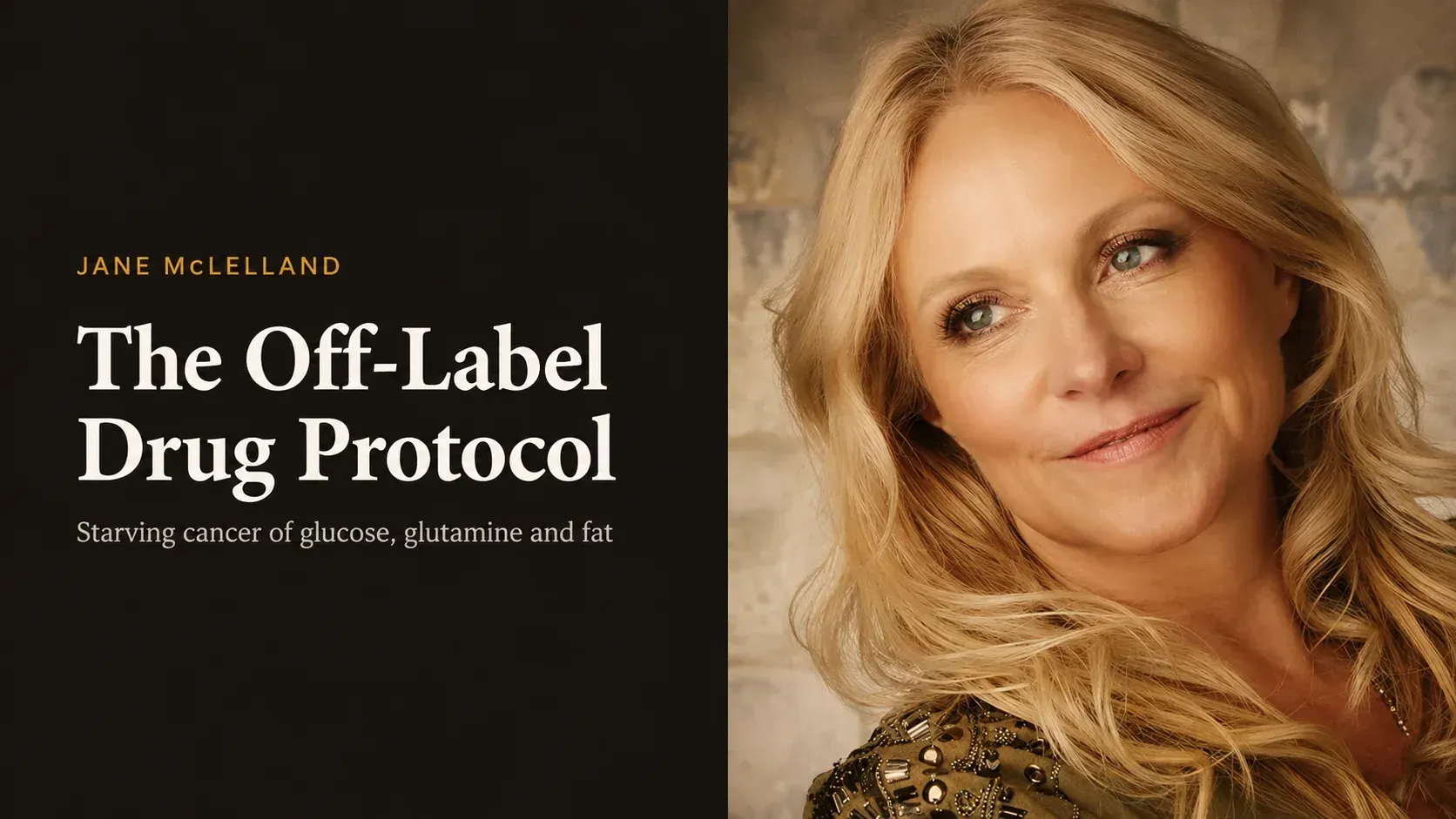
The Jane McLelland Off-Label Drug Protocol
Quick Overview
- Author: Jane McLelland (British physiotherapist and cancer survivor)
- Goal: Metabolically starve cancer cells by simultaneously blocking glucose, glutamine, and fatty acid fuel pathways using repurposed off-label drugs and targeted supplements
- Duration: Ongoing/long-term; no fixed endpoint. Typically initiated alongside or after standard-of-care treatment. Drugs phased in gradually over weeks to months.
- Key compounds: Metformin, Atorvastatin, Doxycycline, Mebendazole, Dipyridamole, Berberine, Hydroxycitrate (HCA)
- Cycles: Continuous daily dosing; individual drugs phased in over 2–4 weeks. Berberine cycled with a 4-week break every 8 weeks.
Overview
Jane McLelland is a British former chartered physiotherapist who survived stage IV cervical cancer (1994), secondary lung cancer (1999), and treatment-induced myelodysplasia (2003). After conventional treatments failed to provide long-term security, she undertook an extensive self-directed review of cancer metabolism research and assembled a combination of repurposed drugs that, together with dietary changes, caused her cancers to enter remission. She documented this approach in her 2018 book How to Starve Cancer Without Starving Yourself, which has been translated into 12 languages.
McLelland’s central insight is that cancer cells are metabolically dependent on three macronutrients — glucose, glutamine, and fatty acids — and that blocking all three simultaneously creates a synergistic starvation effect that no single drug can achieve. This multi-pathway blockade is intended to prevent the “metabolic rerouting” that occurs when only one fuel line is cut. A cancer cell deprived of glucose, for example, may upregulate glutamine or fatty acid utilization as an alternative energy source; closing all three pathways simultaneously appears to reduce this compensatory mechanism.
The conceptual framework McLelland developed is known as the “Metro Map” — a visual diagram modeled on a subway system where each tunnel represents a metabolic pathway supplying energy to cancer cells. Each station on the map corresponds to a drug or supplement that may block that pathway. The map is updated periodically (second edition 2021) and accounts for cancer metabolic plasticity, the ability of cancer cells to switch between oxidative phosphorylation (OXPHOS) and glycolysis when one pathway is suppressed. The protocol is highly personalized: McLelland teaches patients to identify which fuel pathways dominate in their specific cancer histology, then build a bespoke combination from the Metro Map. A core set of drugs appears across most cancer types, however, forming the basis of the protocol described here.
From Survivor to Protocol: The N=1 Problem
Jane McLelland is a long-term survivor of stage IV cervical, lung, and blood cancers — an outcome that is genuinely exceptional and deserving of attention. Her book How to Starve Cancer (also subtitled Without Starving Yourself) has inspired thousands of patients to explore metabolic approaches to cancer management. The protocol detailed in the book is not based on a clinical trial or a systematic observational study — it is a retrospective reconstruction of what McLelland herself used during her treatment and recovery, presented as a generalizable framework for others.
This raises a fundamental question in evidence-based medicine: what can we reliably infer from a single survivor's experience? In the hierarchy of medical evidence, individual anecdotes — even detailed, compelling ones — occupy the lowest tier. They are valuable for generating hypotheses and identifying phenomena worth investigating, but they cannot establish causality. When a patient receives surgery, chemotherapy, radiation, and a multi-drug/supplement metabolic cocktail, attributing survival to any one component is impossible without controlled comparison.
Several confounding variables complicate the interpretation:
- Prior conventional treatment. McLelland underwent surgery and chemotherapy before and during the period she implemented her metabolic approach. The observed remission could plausibly be a delayed effect of those treatments rather than, or in addition to, the off-label drugs and supplements.
- Spontaneous remission. While rare — estimated at roughly 1 in 100,000 cases — spontaneous remission of cancer does occur, and its biological mechanisms remain poorly understood. No credible scientific evidence demonstrates that specific diets or lifestyle changes can induce spontaneous remission, yet the phenomenon exists as a statistical reality that makes interpretation of uncontrolled cases difficult.
- Diagnostic accuracy and tumor heterogeneity. Not all stage IV diagnoses have identical prognoses; tumor biology, mutation profiles, and microenvironment vary enormously. Without access to McLelland's full medical records, genetic profiling, and pathology, it is not possible to determine whether her tumor carried features that might predict better-than-expected outcomes regardless of metabolic intervention.
The honest summary: Jane McLelland's survival is real and remarkable. Whether her metabolic protocol caused that survival, or whether it was one variable among many (including standard treatment and biological chance), is scientifically unknowable from a single case.
Dosage and Schedule
The McLelland protocol involves gradual titration of multiple compounds. Each drug is introduced sequentially over weeks to assess individual tolerance. The table below summarizes standard dosing as described in McLelland’s published materials and the Carter (2020) clinical reference document.
| Compound | Dose | Timing | Notes |
|---|---|---|---|
| Metformin | 500 mg, 2–3×/day (1000–1500 mg/day) | With or after meals; modified-release preferred | Supplement with methyl-B12, methylfolate, thiamine. Omit before contrast scans. |
| Atorvastatin | 40 mg twice/day (80 mg/day); simvastatin: 20 mg 3×/day | Evening meal or 1–2 hours before bedtime | Lipophilic statins preferred. Take with vitamins A, D, K, resveratrol. |
| Doxycycline | 100 mg once/day | Same time daily; sit upright for 30 minutes after | Avoid dairy and antacids within 2 hours of dose. |
| Mebendazole | 100–200 mg once/day | With fatty meal for bioavailability; can be chewed | Fenbendazole equivalent: 222 mg active/day (1 g granules), 3 days on / 4 days off. |
| Berberine | 100–500 mg, 2–3×/day | With meals; titrate up over 2–4 weeks | 4-week break every 8 weeks to allow liver recovery. Do not combine with glucose-lowering drugs without monitoring. |
| Dipyridamole | 50–100 mg, 3×/day | With meals | Particularly relevant for leukemia, myeloma; synergistic with chemotherapy agents. |
| Low-dose Aspirin (optional) | 81 mg enteric-coated, once/day | With food | Anti-inflammatory synergy with atorvastatin; avoid if on anticoagulants. |
Diet plays an integral role in the McLelland approach. A low-glycemic index diet with elimination of simple carbohydrates, dairy, and processed meats is recommended alongside the drug protocol. Regular moderate exercise and intermittent fasting (where tolerable given treatment status) are also emphasized. McLelland cautions that dietary restriction alone is insufficient: “dietary restriction doesn’t result in immediate depletion of nutrient at the tumor site,” which is why pharmacological agents are required to directly block metabolic pathways at the cellular level.
Mechanism of Action
Each compound in the McLelland protocol targets a distinct node in cancer cell metabolism. The combined effect is intended to block all primary fuel pathways simultaneously, preventing the metabolic flexibility that enables cancer cell survival when any single pathway is disrupted.
Metformin
Metformin activates AMPK (AMP-activated protein kinase), which inhibits mTOR signaling and suppresses the Warburg effect — the preferential use of aerobic glycolysis by cancer cells even in the presence of oxygen. It reduces IGF-1 and insulin signaling, depriving cancer cells of a key growth stimulus, and inhibits complex I of the mitochondrial electron transport chain. A 2021 peer-reviewed review confirmed metformin’s anticancer mechanism via AMPK activation and mTOR inhibition across multiple cancer models. Critically, metformin acts synergistically with statins by simultaneously blocking both OXPHOS and glycolytic pathways.
Atorvastatin
Atorvastatin (and other lipophilic statins) inhibits HMG-CoA reductase in the mevalonate pathway, blocking cholesterol synthesis and downstream isoprenoid products — farnesyl pyrophosphate and geranylgeranyl pyrophosphate — required for cancer cell membrane synthesis and proliferation. In cancer cells specifically, atorvastatin also blocks the Glut1 glucose surface receptor, reducing glucose uptake. A 2023 review in PMC documented statin mechanisms including cell cycle arrest, apoptosis via caspase activation, and YAP inactivation. The lipophilic formulation allows tissue penetration beyond the bloodstream, which is important for solid tumors.
Doxycycline
Doxycycline inhibits mitochondrial biogenesis by targeting the prokaryotic-type 70S mitoribosome present in cancer cell mitochondria, which is required for the synthesis of OXPHOS complex proteins. This mechanism selectively targets cancer stem cells (CSCs), which are highly dependent on mitochondrial OXPHOS for energy production. A 2017 study published in Cell Cycle demonstrated that doxycycline inhibits the cancer stem cell phenotype, downregulates EMT markers (N-cadherin, vimentin), and reduces cancer stemness markers (Oct4, Sox2, Nanog, CD44). This activity against CSCs is particularly significant because cancer stem cells are widely hypothesized to be responsible for tumor regrowth and treatment resistance.
Mebendazole
Mebendazole acts as an anti-tubulin agent, disrupting microtubule polymerization and preventing mitotic spindle assembly. This causes mitotic arrest followed by apoptosis. Additionally, mebendazole inhibits VEGFR2 kinase activity (reducing tumor angiogenesis), downregulates the oncogenic drivers MYC, COX-2, and Bcl-2, and depletes ALDH1+ cancer stem cell populations. A 2019 systematic review in Cancers (Basel) documented mebendazole’s activity across multiple tumor types. Notably, mebendazole can penetrate the blood-brain barrier, making it relevant for CNS malignancies. It also impairs glucose and glutamine uptake in cancer cells, contributing to the multi-pathway fuel blockade.
Berberine
Berberine activates AMPK independently and synergistically with metformin, further inhibiting mTOR signaling, NF-kB, and COX-2. It induces apoptosis via caspase-3 cleavage and cell cycle arrest at G1 and G2-M phases. A 2015 study in PMC showed berberine’s anti-cancer mechanism through AMPK activation, mTOR inhibition, NF-kB suppression, and caspase-3 induction in colorectal cancer. Berberine also blocks fatty acid synthesis via SREBP-1/2 and ACC inhibition and targets the mevalonate/cholesterol pathway, providing coverage of the lipid fuel line that complements atorvastatin.
Dipyridamole
Dipyridamole inhibits equilibrative nucleoside transporters (ENT1/ENT2), blocking the salvage pathway that cancer cells use to import nucleosides for DNA and RNA synthesis. This nucleoside starvation is particularly cytotoxic to rapidly dividing cancer cells. Dipyridamole also potentiates the cytotoxicity of antimetabolite chemotherapy agents (such as 5-FU and gemcitabine) by 2- to 10-fold by blocking nucleoside rescue. It is particularly relevant for blood cancers and protein-consuming cancers such as leukemia and myeloma.
The "Metro Map" Framework: Conceptual Model vs Clinical Validation
At the heart of McLelland's approach is what she calls the "Metro Map" — a visual diagram mapping the metabolic pathways that cancer cells use to generate energy and building blocks. The map identifies three primary fuel sources: glucose, glutamine, and fatty acids, each feeding into interconnected pathways that support proliferation, survival, and metastasis. The strategy is to "block" these pathways using specific drugs, supplements, and dietary interventions, thereby starving the cancer while leaving normal cells less affected.
As a conceptual framework, the Metro Map is rooted in legitimate cancer metabolism research. The Warburg effect (cancer cells' preference for aerobic glycolysis), glutamine addiction (reliance on glutamine for TCA cycle anaplerosis and redox balance), and lipid metabolism reprogramming (fatty acid synthesis for membranes and signaling) are all well-documented phenomena in oncology. Research into inhibiting these pathways — such as glutaminase inhibitors (CB-839/telaglenastat), ATP citrate lyase (ACLY) inhibitors, and glycolysis modulators — is an active area of drug development.
The challenge is that no validated clinical protocol exists for simultaneously blocking all three pathways in humans. Cancer cells exhibit remarkable metabolic plasticity — when one pathway is blocked, they often activate alternative routes to meet energy demands. Preclinical studies consistently show that single-agent metabolic inhibitors fail due to adaptive resistance, which is why researchers are testing combinations. But those combinations are being evaluated in controlled trials with defined doses, endpoints, and safety monitoring — not as a personalized cocktail assembled from a conceptual map.
McLelland's Metro Map is essentially a hypothesis visualization tool, not a validated treatment algorithm. It helps patients and practitioners conceptualize metabolic targeting, but it does not provide the pharmacokinetic data, interaction profiles, or dosing schedules necessary to implement it safely and reproducibly. Two patients following the "same" Metro Map might end up with entirely different drug/supplement combinations based on their interpretation of which pathways are dominant, and neither combination would have clinical trial support.
Component Evidence Analysis: What Has Been Tested in Humans?
The McLelland protocol incorporates both drugs previously analyzed in the COC Protocol section (metformin, atorvastatin, doxycycline, mebendazole) and additional agents unique to her approach. The table below assesses the human cancer evidence for McLelland-specific components.
| Component | Proposed mechanism (Metro Map) | Highest level of human evidence | Key findings / limitations |
|---|---|---|---|
| Berberine | AMPK activation, glucose uptake inhibition | Randomized trial (colorectal adenoma recurrence prevention, 6-year follow-up, 5000+ participants) | Safety profile favorable; GI tolerance main limitation. Adenoma prevention shown, but extrapolation to advanced cancer unproven. |
| Dipyridamole | PDE inhibition, adenosine modulation, "protein pathway blocker" | Preclinical only for cancer; clinical use as antiplatelet agent | Contradictory preclinical data: pro-apoptotic in some cell lines, pro-proliferative in others (HCT-8, U937). Chemotherapy adjuvant potential but no RCT proof. |
| Hydroxycitrate (HCA) | ATP citrate lyase (ACLY) inhibition, blocks fatty acid synthesis | Preclinical models only | Reverses tamoxifen resistance in breast cancer cells, induces autophagy. No human cancer trial data. Known primarily as weight-loss supplement (Garcinia cambogia). |
| High-dose IV vitamin C | Oxidative stress in cancer stem cells, pro-oxidant at high doses | Phase I/II trials in pancreatic, ovarian cancer | Requires IV administration for pharmacologic (millimolar) concentrations; oral vitamin C cannot achieve these levels. Safety established, efficacy signals mixed. |
| Curcumin, quercetin, EGCG | Multi-target polyphenols (NF-κB, COX-2, mTOR, etc.) | Numerous small trials, no definitive RCT | Bioavailability challenges limit systemic exposure; most absorbed curcumin/quercetin is rapidly conjugated and excreted. Effects likely confined to GI tract unless using enhanced formulations. |
The pattern is consistent with the COC Protocol findings: individual components have varying levels of preclinical support and small-scale human data, but none has proven efficacy as a cancer treatment in a randomized controlled trial. Berberine stands out for having the most robust human data, but that data is for adenoma prevention (a precursor lesion), not treatment of established malignancy. Dipyridamole's contradictory preclinical profile raises a red flag — if a compound can be pro-proliferative in some cancer cell lines, using it without knowing a patient's specific tumor biology is a gamble.
The Polypharmacy Problem: Interactions and Monitoring
The McLelland protocol is not a four-drug regimen like COC — it is a highly individualized polypharmacy approach that can involve ten or more prescription medications plus an extensive supplement list (curcumin, quercetin, berberine, vitamin D, omega-3, alpha-lipoic acid, hydroxycitrate, EGCG, and others). While each agent may have a plausible mechanistic rationale, the safety and pharmacokinetic profile of such combinations is entirely unstudied.
Key interaction concerns include:
- Hepatic metabolism overload. Multiple components (atorvastatin, mebendazole, berberine, curcumin, quercetin) are substrates or modulators of CYP450 enzymes, particularly CYP3A4 and CYP2C19. Concurrent use can lead to unpredictable drug levels — either sub-therapeutic (accelerated clearance) or toxic (inhibited clearance). Berberine, for example, is a known CYP3A4 inhibitor, which could increase atorvastatin levels and elevate the risk of myopathy or rhabdomyolysis.
- Additive liver stress. Statins, benzimidazoles (mebendazole), and high-dose supplements all carry hepatotoxicity risk. Layering them without systematic liver function monitoring (ALT, AST, bilirubin, alkaline phosphatase) increases the likelihood of drug-induced liver injury going undetected until it is severe.
- Anticoagulant effects. Dipyridamole is an antiplatelet agent; combining it with omega-3 fatty acids (which have mild anticoagulant properties), high-dose vitamin E (if included), or aspirin (sometimes added to metabolic protocols) significantly raises bleeding risk, particularly peri-operatively or if a patient develops thrombocytopenia from chemotherapy.
- Gastrointestinal intolerance. Metformin, berberine, doxycycline, and mebendazole all commonly cause GI side effects (nausea, diarrhea, abdominal discomfort). Taking them concurrently can produce cumulative GI distress that reduces quality of life and medication adherence.
Because the Metro Map is individualized, there is no standard monitoring protocol. Patients and their prescribers are left to devise their own lab schedules, which — in the absence of specialized integrative oncology training — may miss critical red flags. This stands in contrast to conventional cancer therapies, which have defined toxicity monitoring built into treatment protocols based on decades of clinical trial safety data.
Can a Personal Protocol Be Reproduced?
The central tension in the McLelland protocol is that it was designed retrospectively for one person and is now being applied prospectively to thousands. Jane McLelland had specific tumor biology, specific prior treatments, specific genetic and metabolic baseline characteristics, and a specific sequence of interventions. Her Metro Map attempts to abstract those specifics into a generalizable framework, but the framework itself has not been validated for reproducibility.
Consider what "following the McLelland protocol" actually entails:
- Pathway identification. A patient must determine which metabolic pathways are dominant in their tumor. McLelland suggests using biomarkers, imaging characteristics, and tumor type to infer pathway reliance — but this is speculative. Without functional metabolic profiling (e.g., 18F-FDG PET for glycolysis, glutamine PET tracers, lipidomics), the choice of which pathways to block is educated guesswork.
- Agent selection and dosing. The book provides suggested doses for various drugs and supplements, but these are largely borrowed from other contexts (diabetes dosing for metformin, cardiovascular dosing for statins, anti-parasitic dosing for mebendazole) rather than established through oncology trials. There is no guidance on how to adjust doses based on response or toxicity.
- Treatment duration and sequencing. How long should each agent be continued? When should one be stopped and another started? McLelland's own regimen evolved over years as she gathered more information, but patients today are often implementing the entire cocktail simultaneously without the iterative learning process she underwent.
- Outcome measurement. In a clinical trial, endpoints are pre-defined: overall survival, progression-free survival, tumor response rate. In the McLelland framework, patients are left to define success for themselves — stable disease, shrinking tumors, improved quality of life, normalized biomarkers — with no standardized metric to distinguish signal from noise or natural disease variability.
The result is that no two implementations of the "McLelland protocol" are likely identical, and there is no centralized registry or database collecting outcomes data to determine whether the approach is working at a population level. Anecdotal success stories circulate, but anecdotal failures (disease progression, intolerable side effects, financial burden without benefit) are less visible, creating survivorship bias in the narrative.
A protocol is reproducible when independent practitioners can follow a defined procedure and achieve consistent results. By that standard, the McLelland approach is better described as a personalized framework than a protocol — conceptually interesting, but clinically unvalidated.
Important Considerations
Important:
This protocol has not been evaluated in formal clinical trials as a combined regimen. The information presented is for educational purposes only. Always consult a qualified healthcare professional before starting any new treatment protocol.
- The protocol must be personalized: identifying the dominant metabolic pathways in a specific cancer histology is essential before building a drug combination.
- It is not a replacement for standard-of-care oncology; it is intended as an adjunct to surgery, chemotherapy, and radiation.
- Metformin must be accompanied by B-vitamin supplementation (methyl-B12, methylfolate, thiamine), as chronic metformin use may deplete these vitamins.
- Statin plus metformin synergy is a cornerstone of the approach: simultaneously blocking both OXPHOS and glycolysis appears to be more effective than targeting either alone.
- Mebendazole and its veterinary equivalent fenbendazole require co-administration with fat for adequate bioavailability; without a fatty meal, absorption may be substantially reduced.
- Berberine has significant interactions with diabetes medications; blood glucose monitoring is required when used alongside metformin or other glucose-lowering agents.
- Dipyridamole can interact with adenosine and anticoagulants; it should be avoided in patients on blood thinners without specialist guidance.
- Liver function tests should be monitored regularly, particularly given the combination of mebendazole/fenbendazole with statins.
- Community implementation data suggests that coverage of all three fuel lines simultaneously is critical — blocking only one or two may lead to metabolic rerouting and disease progression.
- The protocol is detailed in McLelland’s book but should be discussed with an integrative or functional medicine oncologist for appropriate supervision.
Sources
Free · No spam · Unsubscribe anytime
Get the research before the sellers spin it
Join readers getting evidence-based fenbendazole protocols, dosing guides, and honest product investigations — straight to your inbox. We read the studies so you don’t get sold a story.
Subscribe free →📚 Key References & Sources
- Son DS et al. "Fenbendazole has anti-cancer properties." (key preclinical study).
- Dogra N, Kumar A, Mukhopadhyay T. "Fenbendazole acts as a moderate microtubule destabilizing agent." Sci Rep. 2018;8(1):11926. PMID: 30093705 — PubMed.
- FDA Center for Veterinary Medicine: fenbendazole is approved only for veterinary use (animal dewormer) — FDA CVM.
- National Cancer Institute / ClinicalTrials.gov: no completed clinical trials of fenbendazole for human cancer treatment — ClinicalTrials.gov.
Frequently Asked Questions
What is the McLelland protocol?
Off-label drugs (statins, metformin, doxycycline, mebendazole) and supplements targeting cancer metabolic pathways, detailed in 'How to Starve Cancer.'
Did Jane McLelland survive cancer?
Yes—stage III cervical cancer and secondary lung cancer. She credits her protocol combined with standard treatment.
What drugs does it include?
Metformin, doxycycline, atorvastatin, mebendazole, dipyridamole—tailored to cancer type.
Can we know if Jane McLelland's protocol caused her survival?
No. Her survival is real and exceptional, but she also received surgery, chemotherapy, and radiation. Without controlled comparison, it's impossible to isolate which variable(s) — standard treatment, metabolic cocktail, tumor biology, or statistical chance (spontaneous remission is ~1 in 100,000) — caused the outcome.
What is the "Metro Map" and is it clinically validated?
The Metro Map is a conceptual framework visualizing cancer's metabolic pathways (glucose, glutamine, fatty acids) and agents that block them. It's rooted in legitimate cancer biology but has never been validated in a clinical trial. It's a hypothesis visualization tool, not a treatment algorithm.
Which McLelland-specific component has the strongest human evidence?
Berberine has a 6-year randomized trial showing colorectal adenoma recurrence prevention in 5,000+ participants. However, adenoma prevention (a precursor lesion) is not the same as treating established advanced cancer. Dipyridamole, hydroxycitrate, and most supplements have only preclinical data.
What are the drug interaction risks with this protocol?
High. Multiple components (atorvastatin, mebendazole, berberine, curcumin) are CYP450 substrates or inhibitors, risking unpredictable drug levels. Cumulative hepatotoxicity, antiplatelet effects (dipyridamole + omega-3), and GI intolerance from layering multiple drugs are significant concerns. No standard interaction profile exists for this combination.
Is the McLelland protocol reproducible?
No in the strict sense. It was designed retrospectively for one person. "Following" it requires individualized decisions about pathway identification, agent selection, dosing, and sequencing — all without clinical trial validation. No two implementations are likely identical. It's better described as a personalized framework than a standardized protocol.
How does this differ from the COC Protocol?
COC is a standardized four-drug clinic-based regimen with one observational study (METRICS). McLelland is a highly individualized polypharmacy framework (10+ agents possible) based on a single survivor story. COC has structured oversight; McLelland implementations vary widely. Neither has RCT proof, but COC has more consistency.
What would it take to validate the McLelland approach scientifically?
A prospective registry collecting standardized outcome data from patients using the Metro Map framework, followed by a randomized trial comparing the metabolic cocktail + standard care vs standard care alone. Functional metabolic profiling (PET tracers, lipidomics) would be needed to guide pathway-specific targeting. This infrastructure does not currently exist.
⚖️ Conflict of Interest Disclosure
Transparency matters. Readers should be aware of the following potential conflicts of interest associated with this protocol:
- Jane McLelland is the author of "How to Starve Cancer" and profits from book sales and associated online community memberships. She is a patient advocate, not a medical professional. Her protocol is based on personal experience, not controlled studies.
Disclaimer — This content is for educational and informational purposes only. It does not constitute medical advice. Always consult a qualified healthcare professional before starting any treatment protocol.
Related Protocols and Further Reading
Compare this regimen with other sourced protocol analyses on this site:
- Fenbendazole, Berberine & Curcumin Protocol
- High-Dose Fenbendazole Protocol
- Care Oncology Clinic (COC) Protocol
- Fenbendazole + DCA Protocol
- The Joe Tippens Protocol
🔬 How we research & review this article
This article is an independent, evidence-based review. Every clinical claim is sourced from primary literature (PubMed, ClinicalTrials.gov, FDA/WHO). Sources are selected for methodological quality, uncertainties are stated plainly, and conflicts of interest are disclosed. Content is reviewed and updated on a rolling schedule — see the “Last reviewed” date at the top (July 2026).