


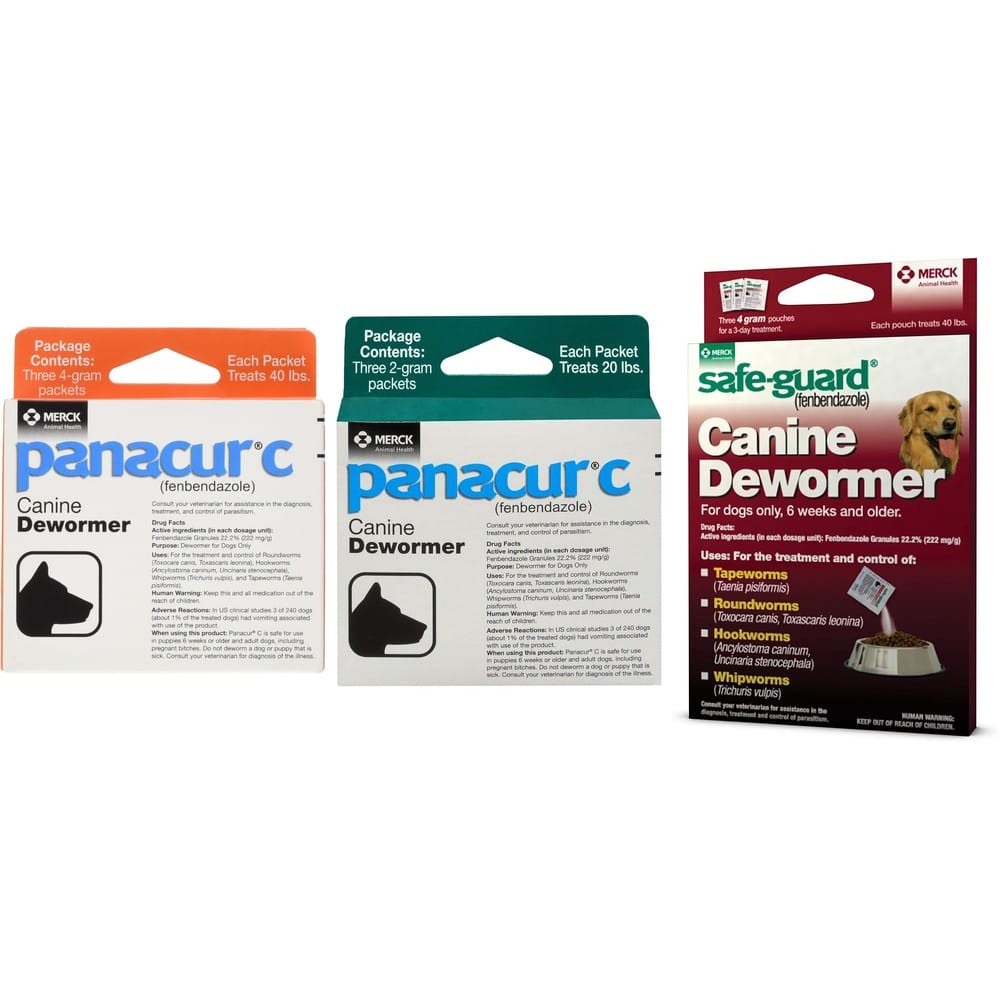
Panacur C by Merck Animal Health is the most recognized veterinary fenbendazole product, widely adopted since the Joe Tippens Protocol gained popularity. While the product itself is legitimate and manufactured by a reputable company, there is a critical transparency issue: only 22.2% of what you consume is fenbendazole — the remaining 77.8% is undisclosed excipients.
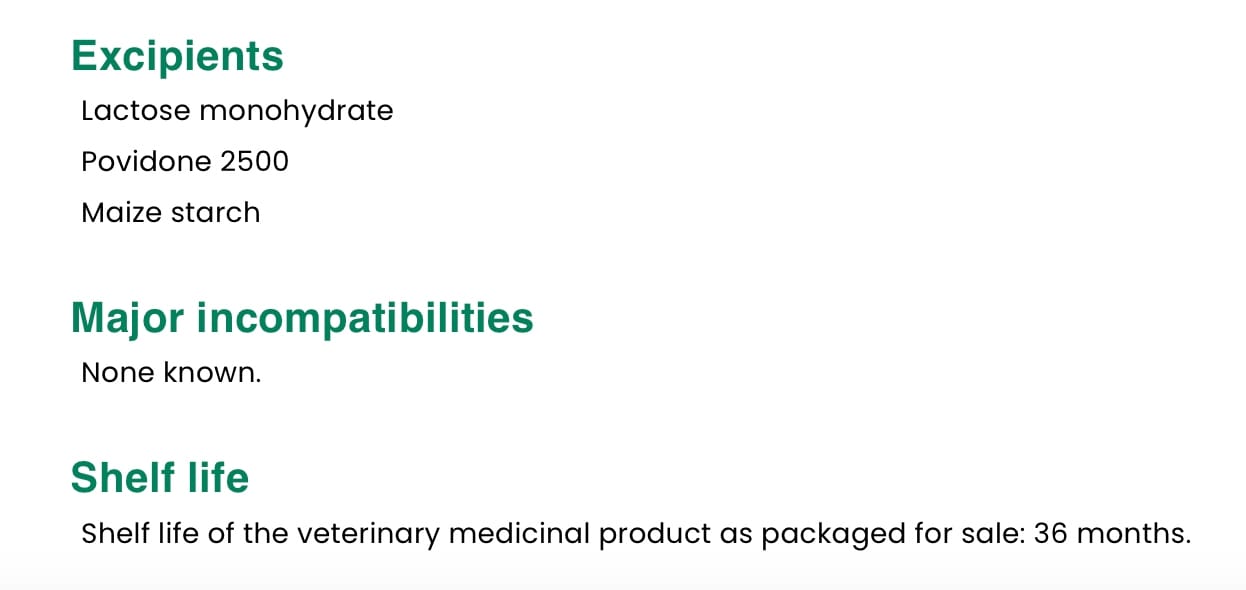
The label lists only Fenbendazole Granules 22.2% — no inactive ingredients, no allergen warnings. This is legal because Panacur C is a veterinary product. But UK regulatory documents (VMD Summary of Product Characteristics) reveal three excipients:
Documented allergen. Found in 37% of medications. Can cause anaphylaxis in corn-allergic individuals.
Synthetic polymer. Published cases of anaphylactic shock from povidone itself (not povidone-iodine).
May contain trace milk proteins. EMA warns of anaphylaxis risk for severe milk allergy patients.
Per dose (1g packet): ~222 mg fenbendazole + ~778 mg of undisclosed excipients. Over a standard monthly cycle, that's approximately 9–10 grams of ingredients you didn't know you were consuming.
Sources: UK VMD SPC Document • MJA 2024 — Hidden maize starch excipient allergy • Annals of Allergy 1996 — Povidone anaphylaxis
UK VMD confirms the hidden excipients: The official Summary of Product Characteristics lists Lactose monohydrate, Povidone 2500, and Maize starch — none of which appear on the consumer packaging.
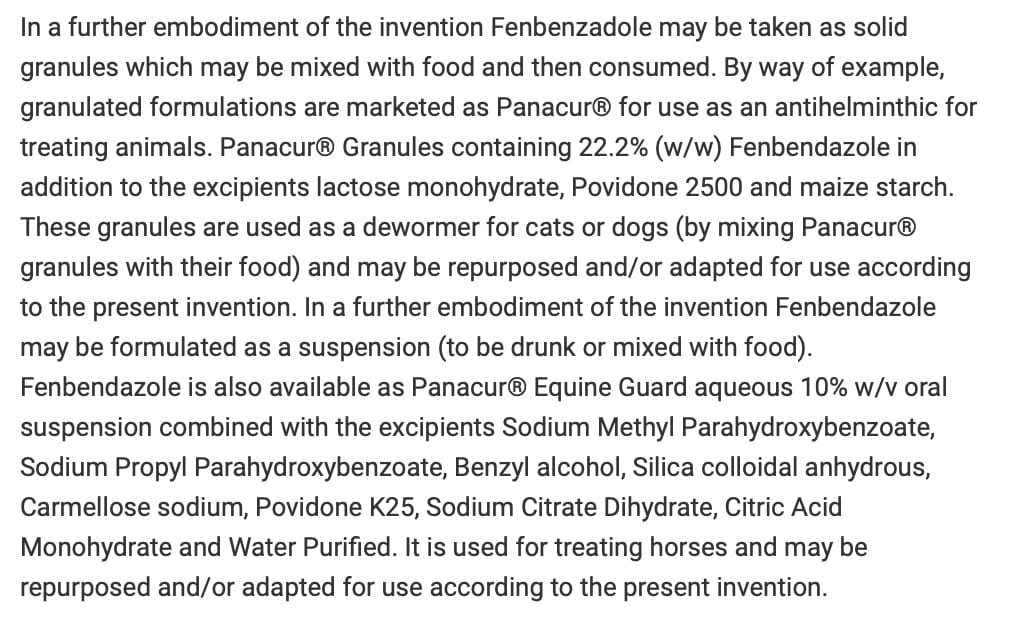
US Patent confirms the composition: Patent documentation explicitly states that Panacur Granules contain 22.2% (w/w) Fenbendazole "in addition to the excipients lactose monohydrate, Povidone 2500 and maize starch." Information the label never tells you.
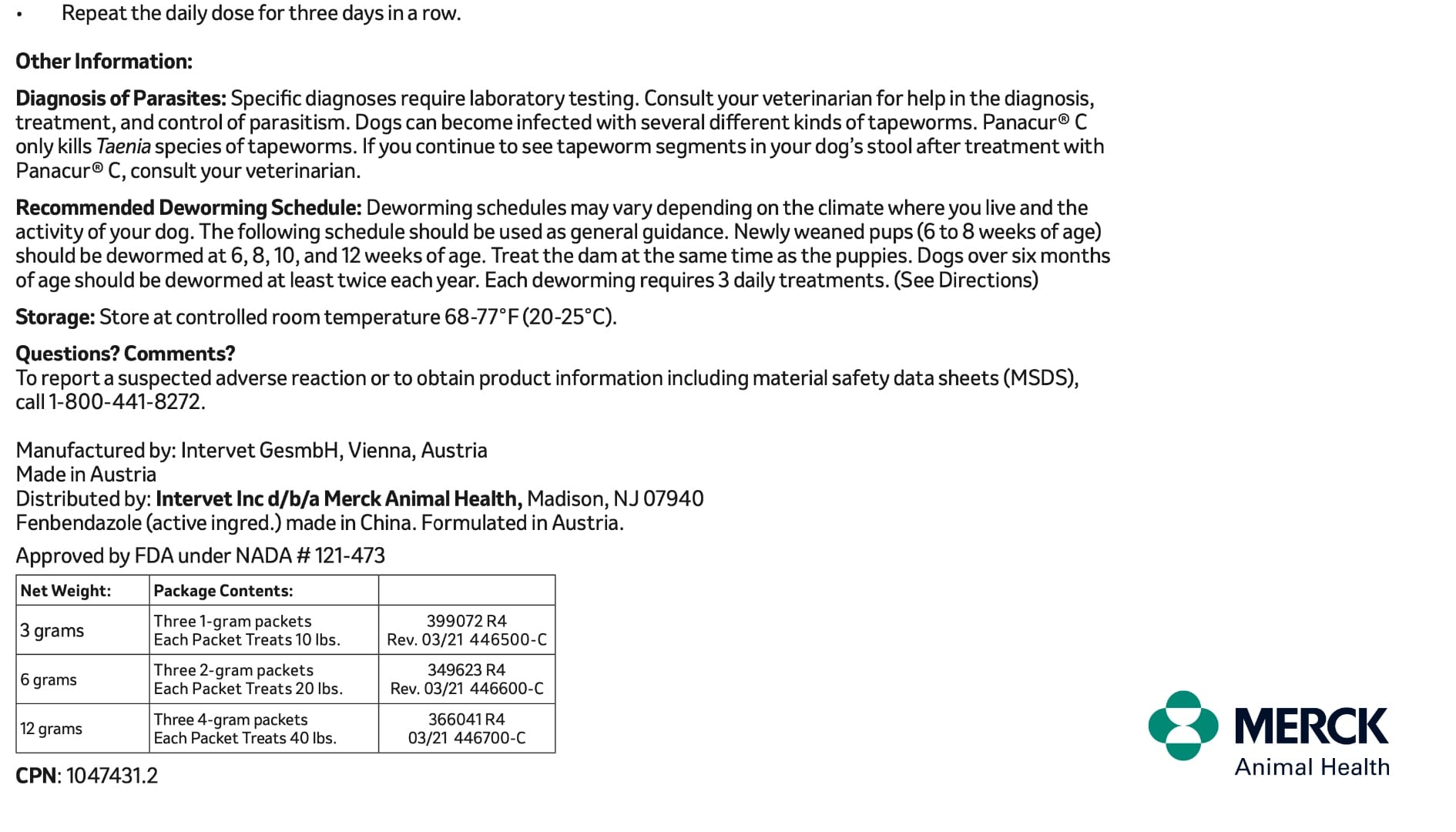
Active ingredient made in China: Merck Animal Health's own labeling states: "Fenbendazole (active ingred.) made in China. Formulated in Austria." The raw fenbendazole powder is Chinese-sourced, then mixed with excipients and packaged in Austria by Intervet GesmbH, Vienna.
Panacur C is not a scam — it's a legitimate veterinary product from a major manufacturer. But it was never designed for human consumption. If you choose to use it off-label, know that nearly 4 out of every 5 milligrams is not fenbendazole, and those milligrams contain substances with documented allergenic potential. People with corn, milk protein, or PVP sensitivities should be especially cautious.
Disclaimer — This review is for informational purposes only. TheFenbendazole.com is an independent research blog. Product ratings reflect publicly available data, lab testing availability, manufacturer transparency, and community feedback. Always consult a healthcare professional.


