


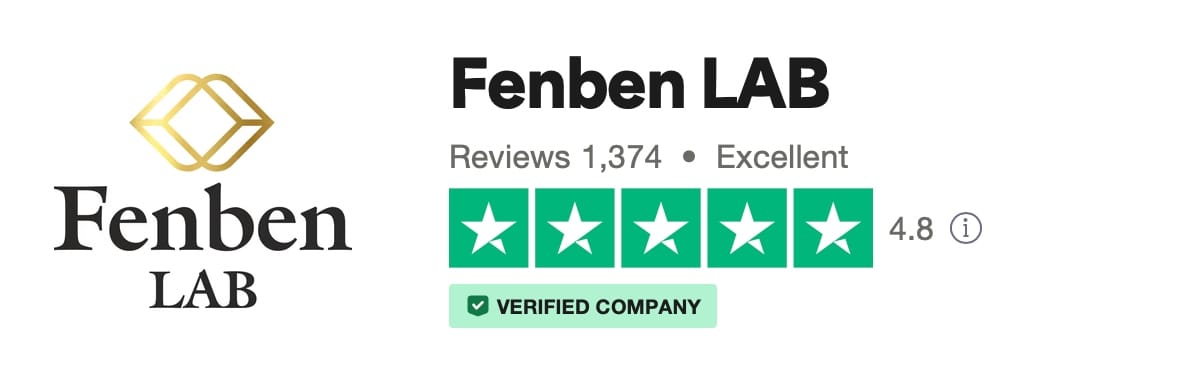
Fenben Lab is one of the most established brands in the fenbendazole market, registered in Lithuania and operating for over 20 years. They maintain a 4.8/5 Trustpilot rating with 1,374 reviews, offer phone and email support, and claim U.S. warehouses for domestic shipping. On the surface, this looks like a solid operation. But our investigation uncovered a network of subsidiary brands, self-issued certificates, and troubling purity questions that paint a more complex picture.
Fenben Lab has built genuine market presence: 4.8/5 on Trustpilot with 1,374 reviews, 4.7/5 on Amazon with 36 ratings, phone support, and fast U.S. shipping. The company has been in the market longer than most competitors.

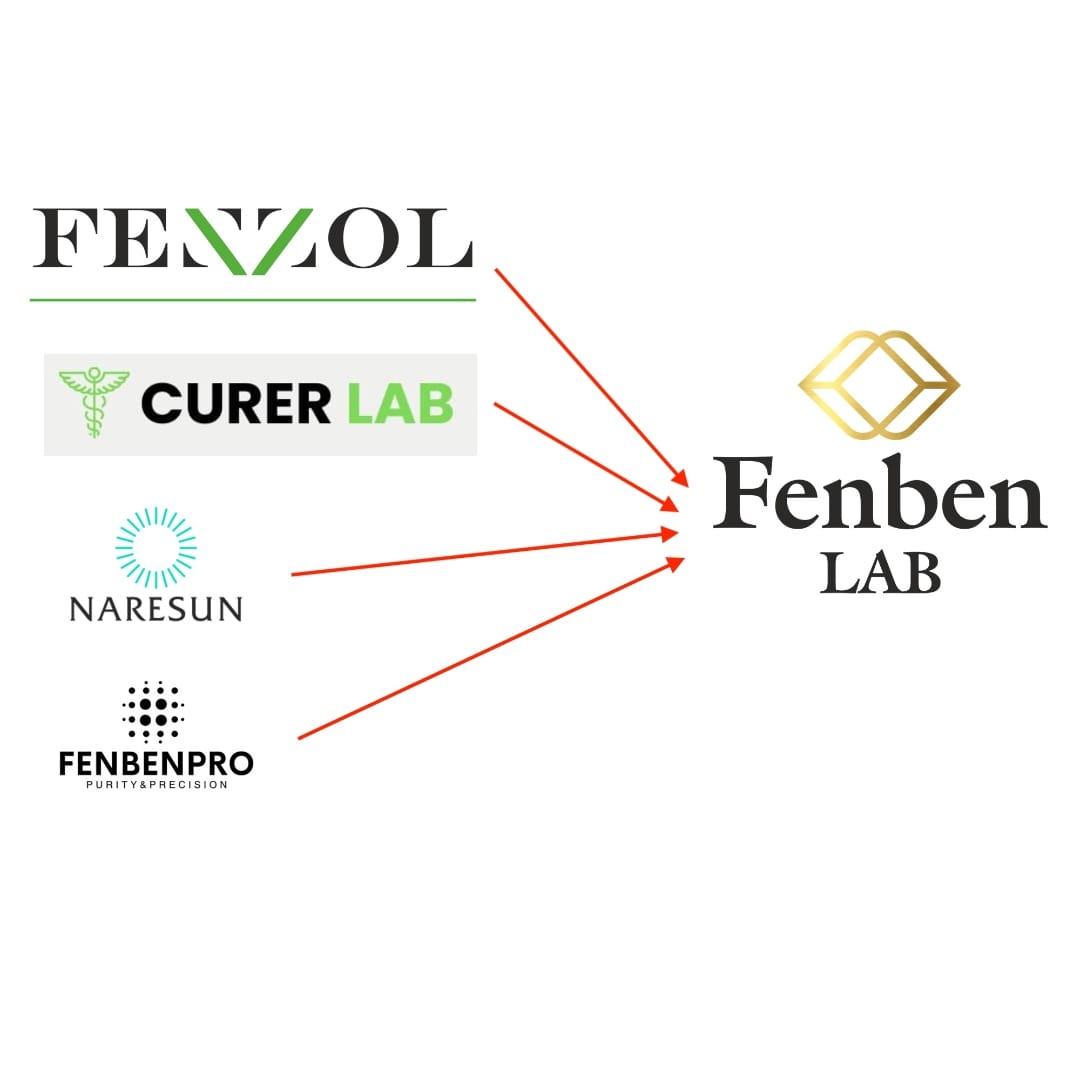
Fenben Lab controls at least four subsidiary brands: Naresun, Fenzol, FenbenPro, and Curer Lab. Three of these are registered in Lithuania, with multiple sharing the same city — Vilnius. The entity Adisant UAB/LTD appears across certificates for both Naresun and Fenzol. Customers entering the fenbendazole market see what appears to be five different companies competing — but they're all controlled by the same operation.
Fenben Lab's Certificate of Analysis is issued by Canchema UAB (Piliakalnio st. 7, 06229 Vilnius, Lithuania) — which appears to be their own production facility, not an independent third-party lab. The same certificate template, with identical test results and dates, travels across subsidiary brands. When creating a certificate for Fenzol, they forgot to change the email from info@naresun.com. Both Naresun and Fenzol certificates share the same date (December 21, 2023) and identical purity result (99.21%).
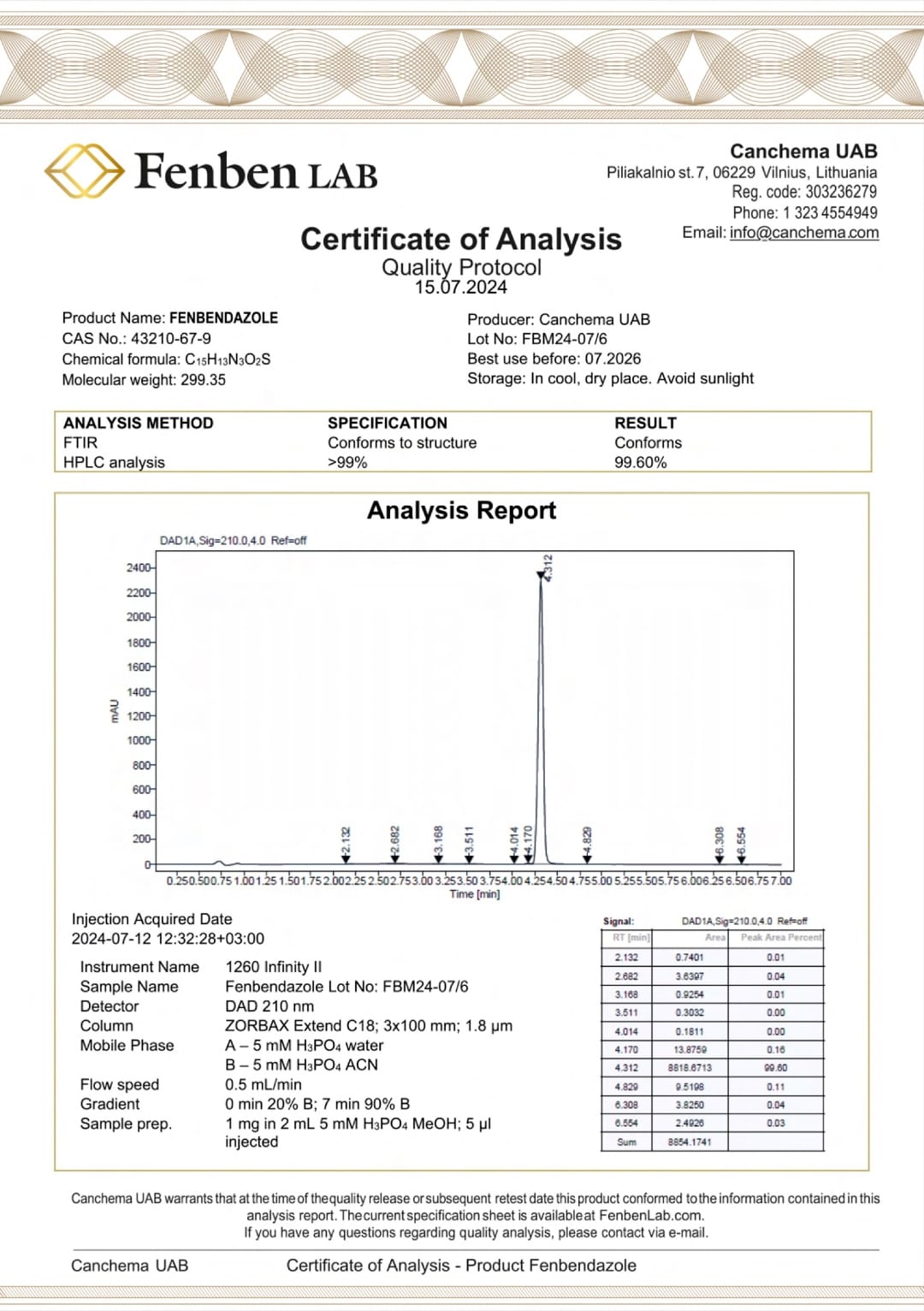
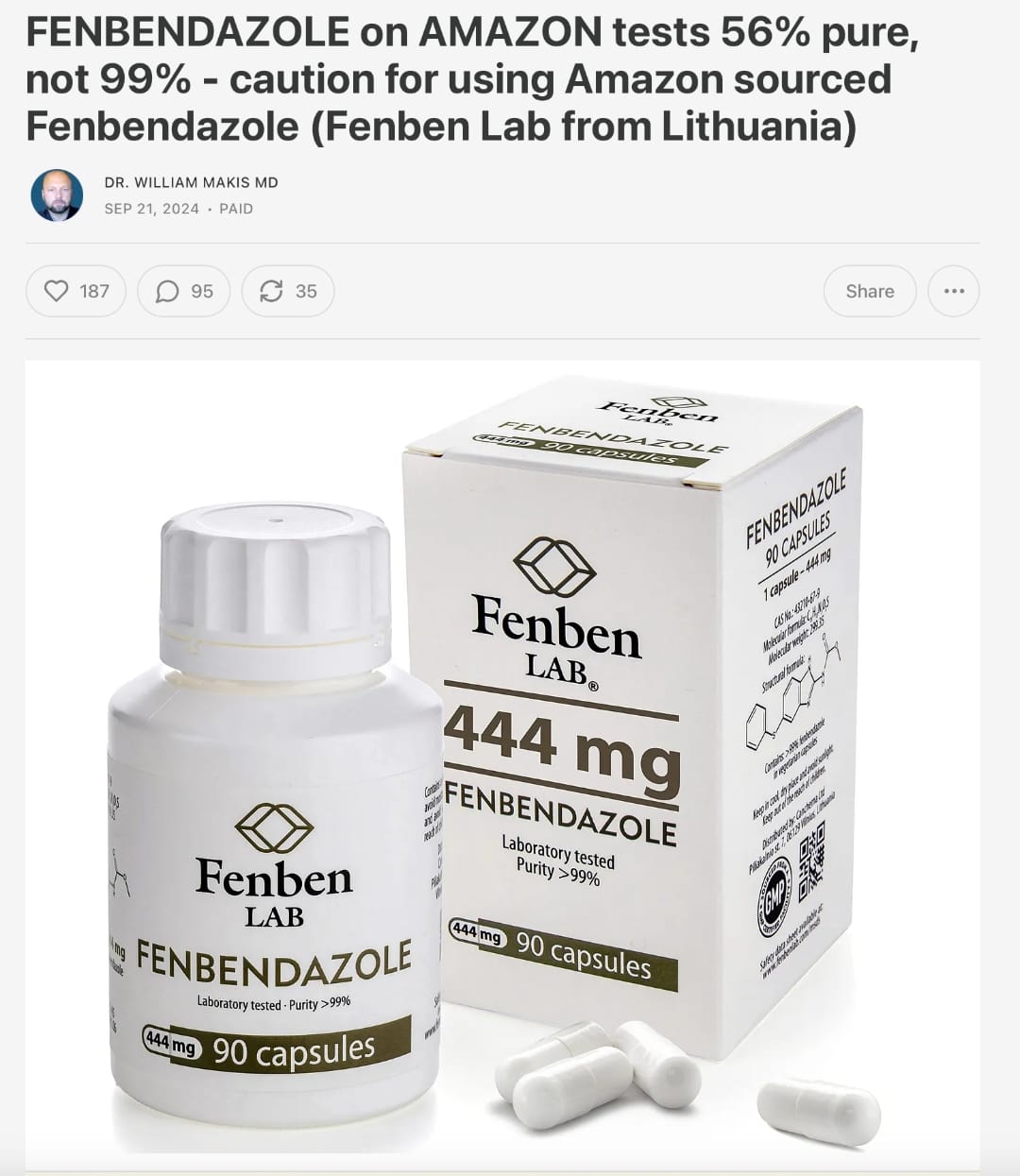
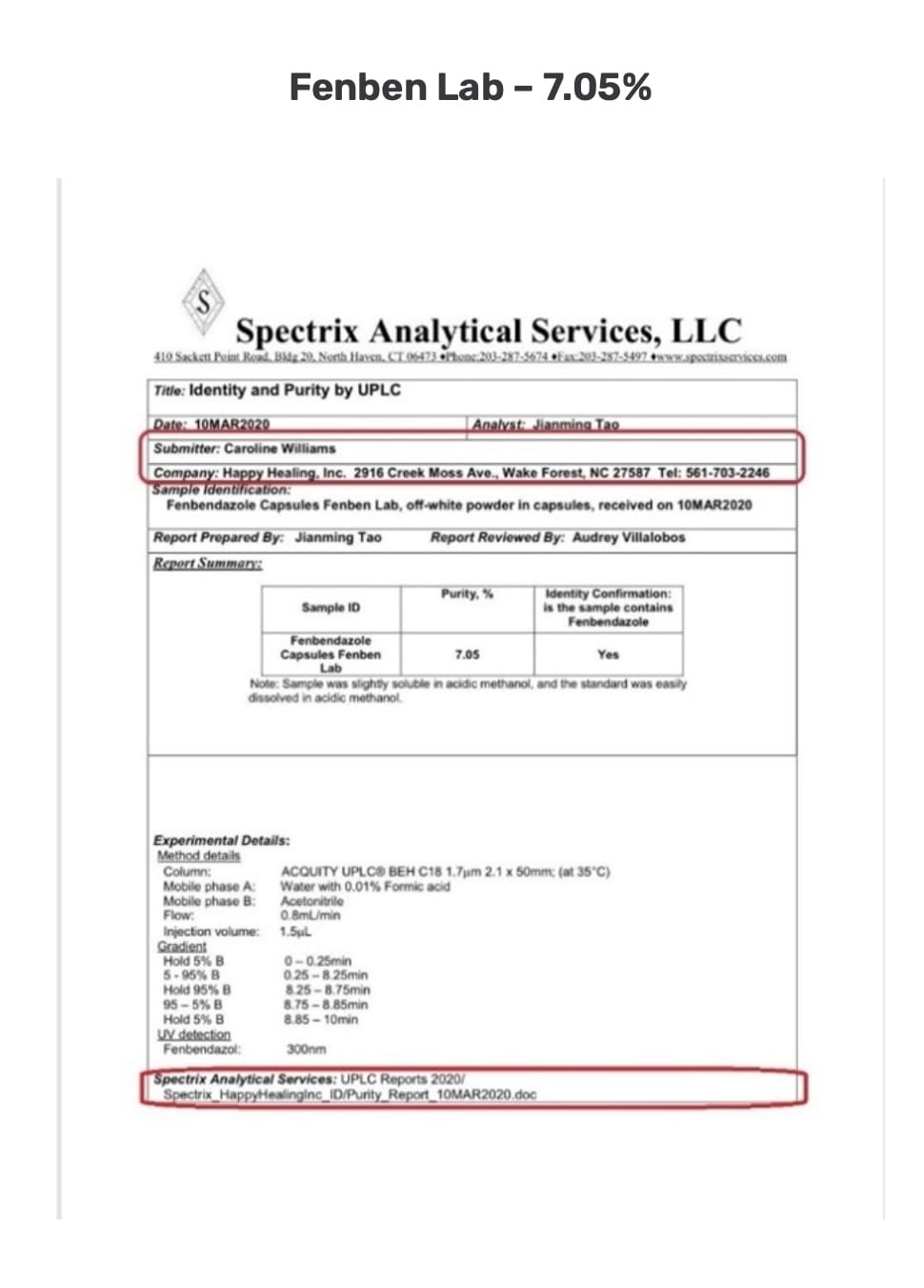
Dr. William Makis MD published a report claiming Fenben Lab's fenbendazole tested at just 56% purity — far below the 99%+ advertised. Additionally, a Spectrix Analytical Services lab report (submitted by Happy Healing, Inc.) tested Fenben Lab capsules and found only 7.05% purity. Fenben Lab claims 99.6% on their website. We cannot independently verify either side, but the existence of multiple independent tests showing dramatically low purity — combined with self-issued certificates — raises serious questions.
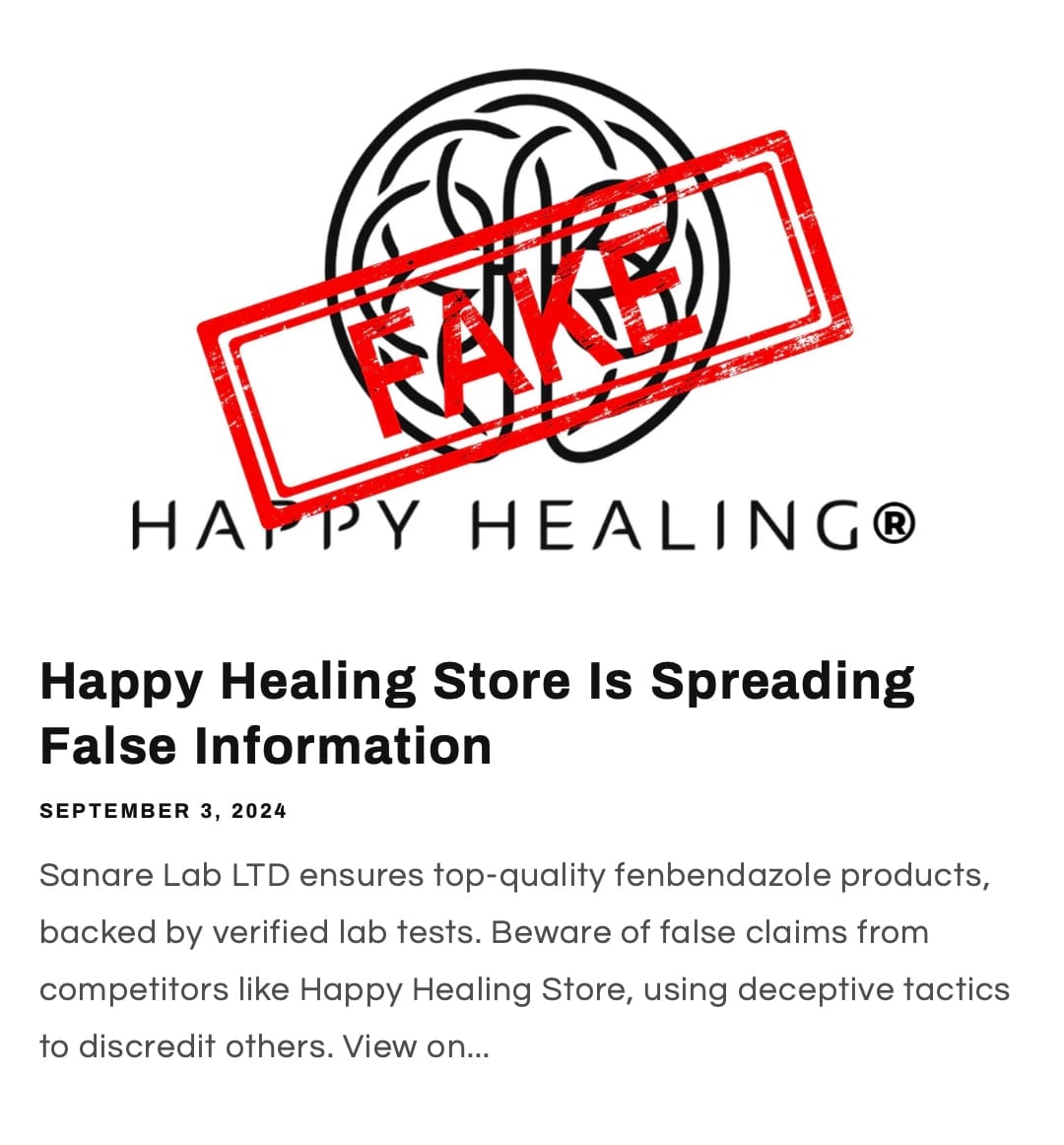
Fenben Lab has been documented publishing articles attacking competitors. For example, their website featured a post titled "Happy Healing Store Is Spreading False Information" — using inflammatory imagery and accusations. Whether these claims are justified is debatable, but the pattern of a company running multiple hidden brands while publicly attacking competitors raises additional questions about their business ethics.
Fenben Lab is not a fly-by-night operation — they have real customer support, years of market presence, strong Trustpilot reviews, and fast shipping. Had we not discovered the subsidiary network, this would be a B-rated brand. But the combination of at least four hidden subsidiary brands, self-issued certificates recycled across companies, multiple independent tests showing dramatically low purity, and attacks on competitors forces a C rating. The operation may deliver a functional product, but the corporate transparency is deeply lacking.
Disclaimer — This review is for informational purposes only. TheFenbendazole.com is an independent research blog. Product ratings reflect publicly available data, lab testing availability, manufacturer transparency, and community feedback. Always consult a healthcare professional.


