


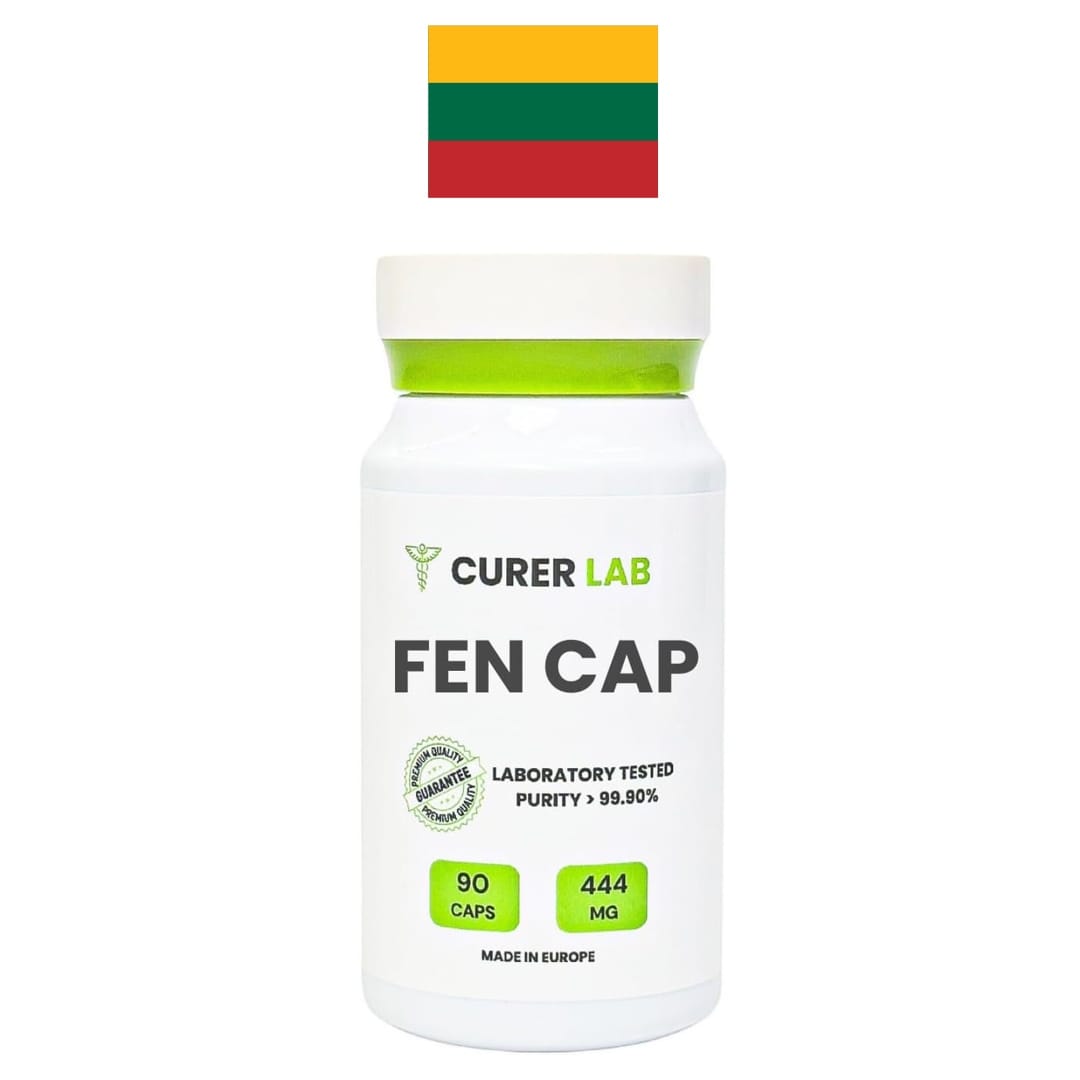
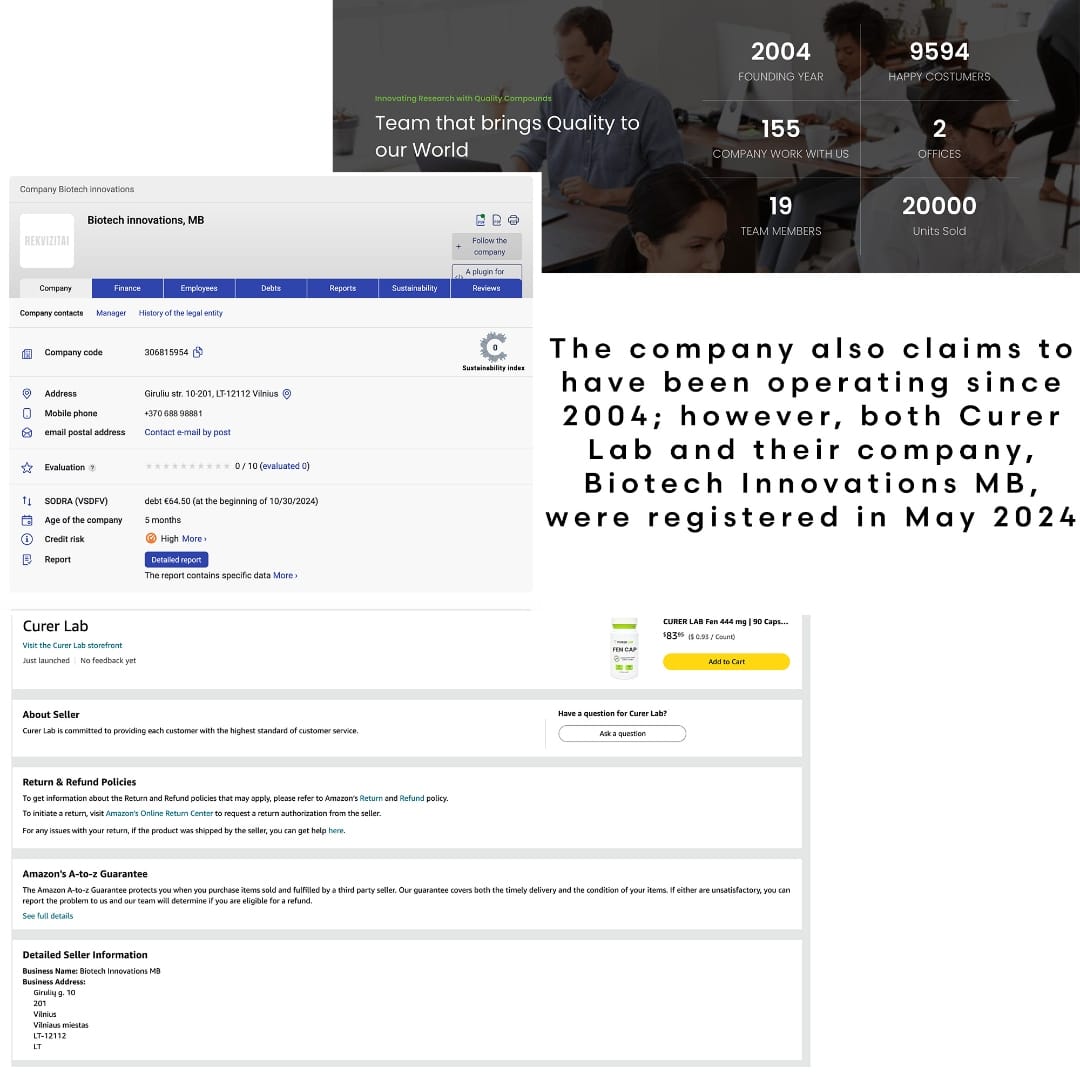
Curer Lab appeared on the fenbendazole market in the summer of 2024 and is registered in Lithuania under the company name Biotech Innovations MB. While we cannot confirm a direct corporate link to Fenben Lab with absolute certainty, the operational patterns, geographic proximity, and certificate irregularities make the connection highly plausible. The company maintains a website and lists a customer support phone number — which, upon testing, redirects to nothing.
Curer Lab claims on its website to have been established in 2004, yet Lithuanian business records show that both Curer Lab and its parent entity, Biotech Innovations MB, were registered in May–June 2024 — making the company only 5 months old at the time of investigation. Their website also boasts "155 companies work with us," "2 offices," "19 team members," and "9,594 happy customers" — figures that strain credulity for a company that has existed for mere months.
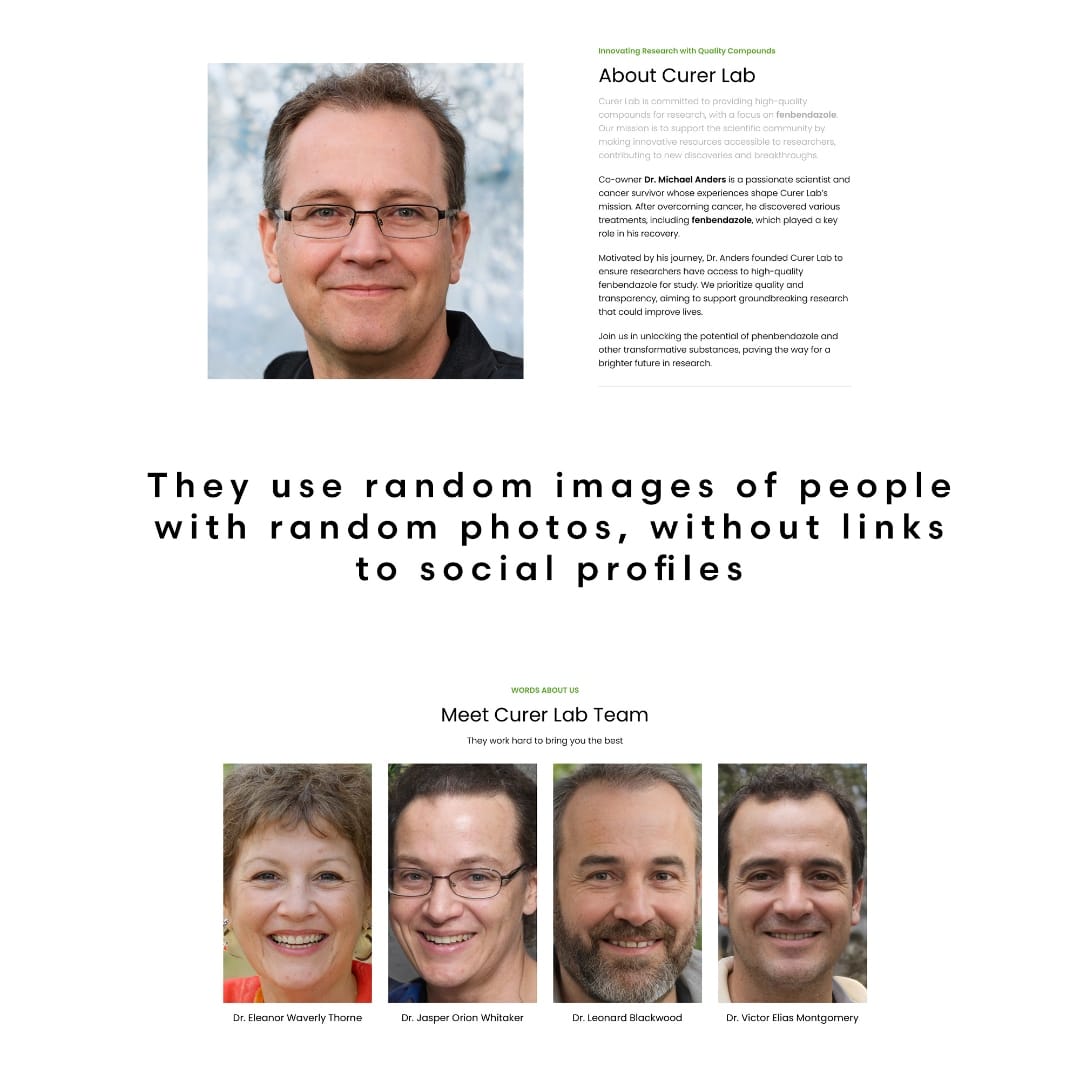
The supposed founder, "Dr. Michael Anders," is presented as a U.S.-based scientist who inexplicably chose to register his company in Lithuania. No LinkedIn profile, no publications, no verifiable identity exists for this person. The accompanying photo is a stock image. The "team" — Dr. Eleanor Waverly Thorne, Dr. Jasper Orion Whitaker, Dr. Leonard Blackwood, and Dr. Victor Elias Montgomery — are equally unverifiable. None have social media profiles, published papers, or any digital footprint whatsoever.
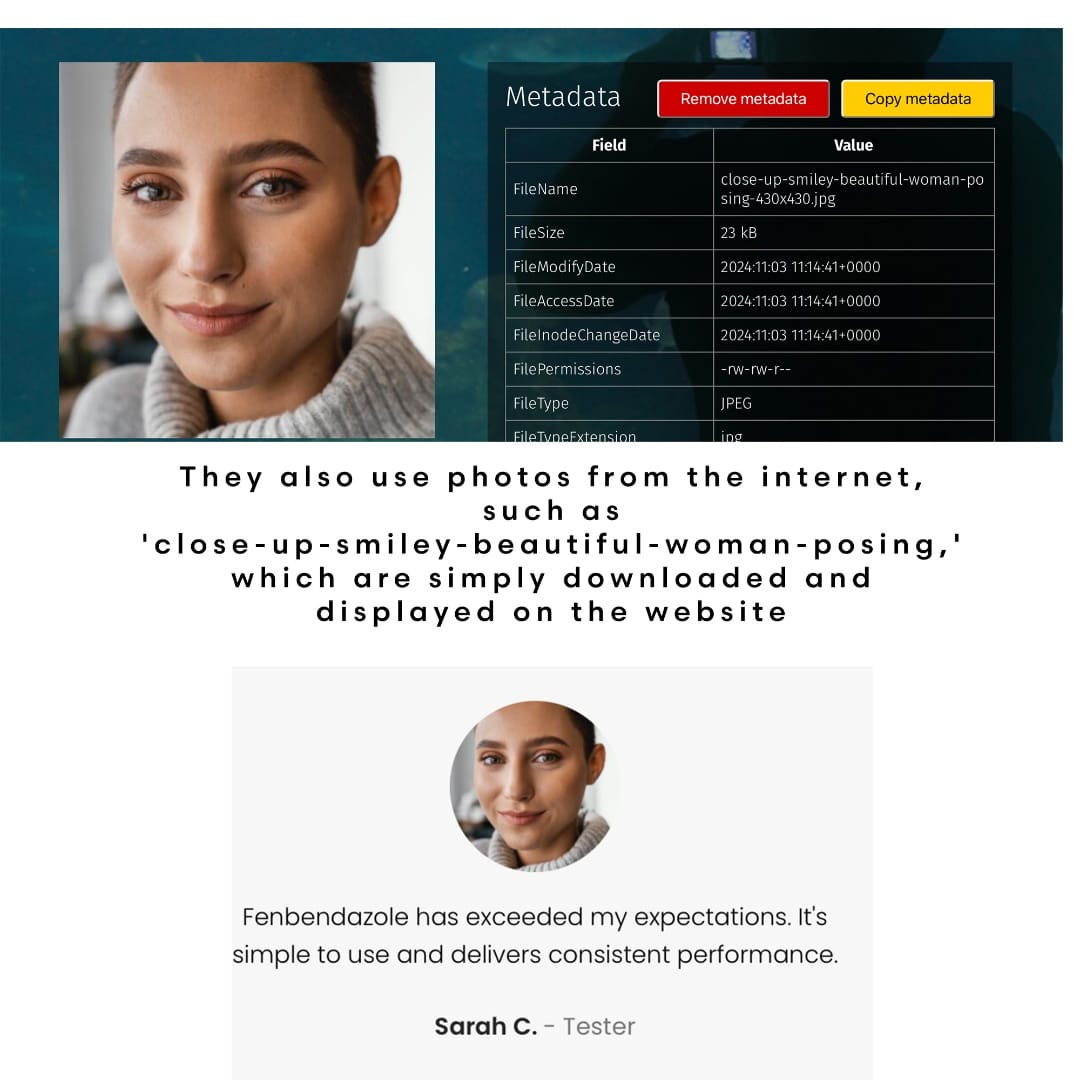
The website features glowing "customer reviews" with photos — but the team forgot to strip EXIF metadata. The image for "Sarah C." is a stock photo with the filename "close-up-smiley-beautiful-woman-posing-430x430.jpg" — a generic stock photo download. Every "satisfied customer" on the site is fiction.
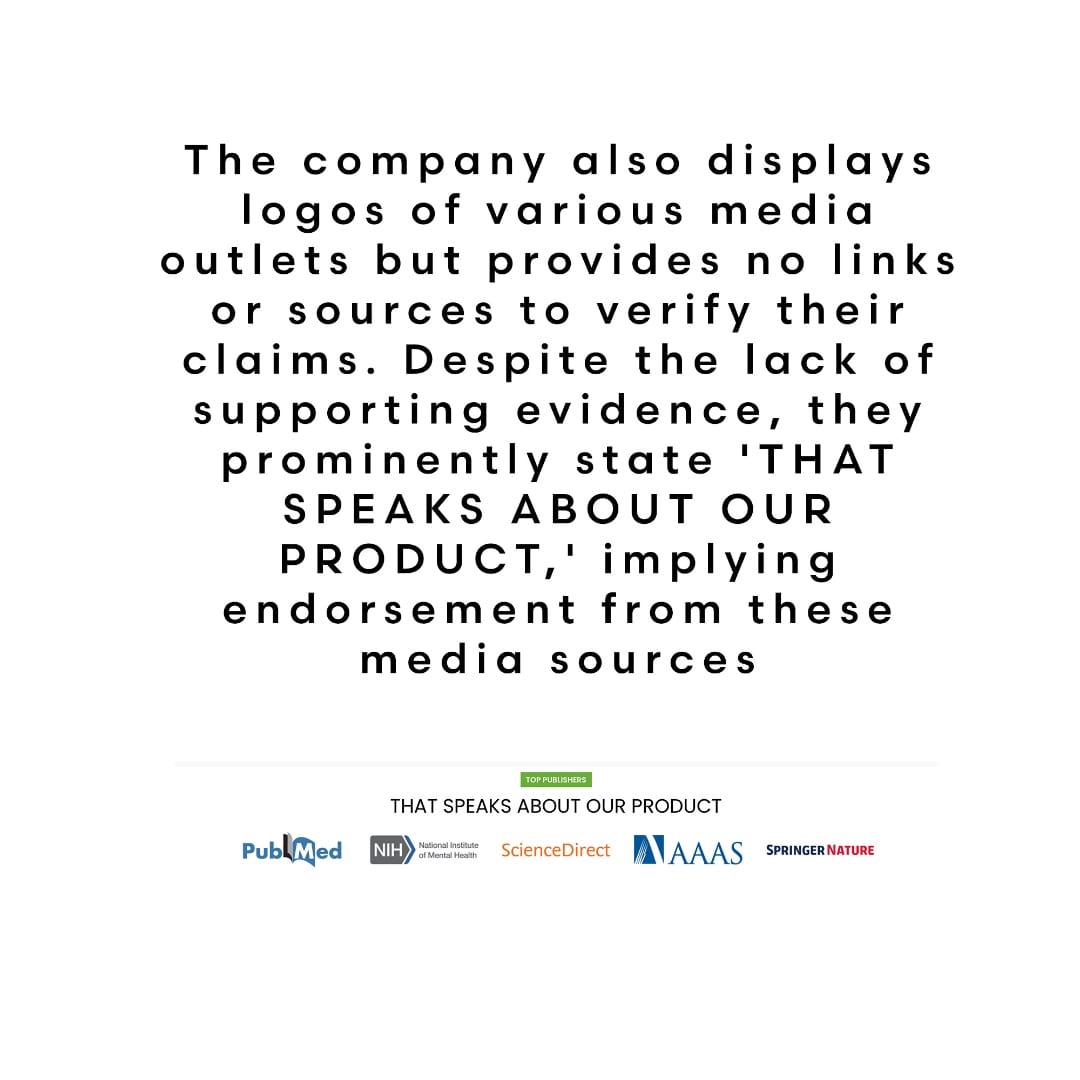
Curer Lab prominently displays logos of PubMed, NIH, ScienceDirect, AAAS, and Springer Nature under the heading "THAT SPEAKS ABOUT OUR PRODUCT" — implying these organizations endorse or reference their product. No citations, links, or actual references are provided. This is a blatant misrepresentation designed to manufacture trust.
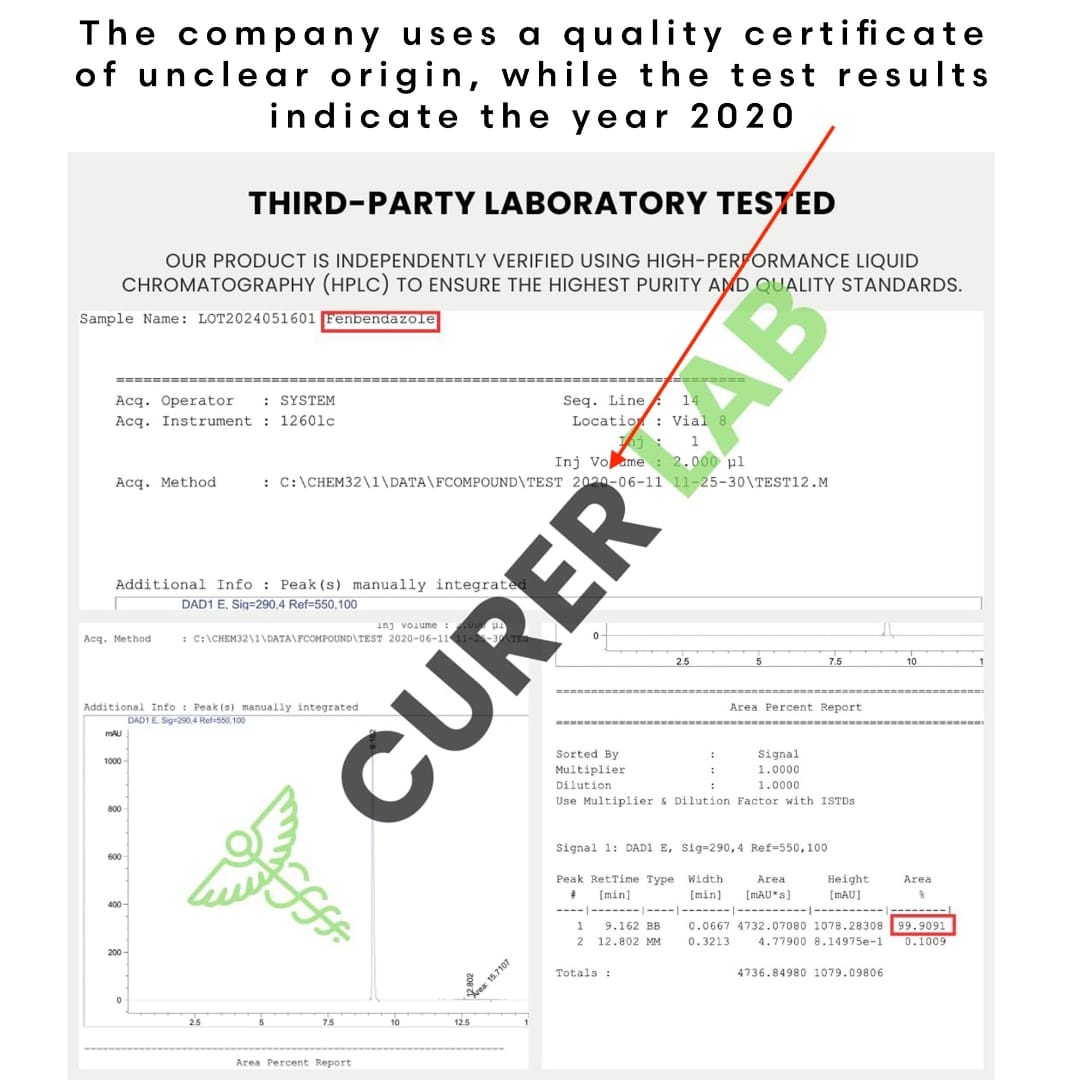
Curer Lab claims 99.9% purity — "the highest on the market" — but provides zero independent lab evidence. The only certificate visible on Amazon is self-issued, and the test results reference the year 2020 — four years before the company even existed. The acquisition method path in the certificate reads "C:\CHEM32\1\DATA\FCOMPOUND\TEST 2020-06-11", a telltale sign of recycled or fabricated documentation, eerily reminiscent of Fenben Lab's certificate irregularities.
The Terms and Conditions on Curer Lab's website contain the placeholder text: "These Terms shall be governed by and construed in accordance with the laws of the State of [Insert State]" — they didn't even bother filling in the template. This level of carelessness permeates the entire operation.
Curer Lab is, by every measurable standard, a fabricated entity. A company registered in 2024 claiming two decades of history. A founder no one can verify. A team of doctors who don't exist. Customers who are stock photos. Scientific endorsements that are nothing but stolen logos. A purity certificate dated four years before the company was born. Every layer of this company's public presence appears to be manufactured fiction. While their fenbendazole capsules do receive some positive Amazon reviews, the complete absence of transparency, verifiable identity, or honest representation makes Curer Lab one of the most concerning operations in the fenbendazole market.
Disclaimer — This review is for informational purposes only. TheFenbendazole.com is an independent research blog. Product ratings reflect publicly available data, lab testing availability, manufacturer transparency, and community feedback. Always consult a healthcare professional.


